Watch Toroboro: The Name of the Plants (2024) Online Free
A botanical expedition in Ecuador's Amazon becomes a medium for an indigenous Huaorani community to remember the genocidal colonization it suffered in the 1960s. Meanwhile, a group of ecologists from the capital tries to stop oil exploitation in the last remaining forests where the isolated Huaoranis still live, who to this day refuse to come into contact with civilization.
More Like This
buen vivir – ñutse canseye
Oil extraction in the Amazon region is contaminating the land and water of a natural paradise. A slow process that threatens the health and traditional culture of local communities. Thirteen women raise their voices against the destruction of their land. Through protests and silent resistance, they confront an opaque global power structure.
2025

Guyane, vivre avec le jaguar
2024

Phoenix
With its moving personal approach, careful artistic direction, and inspired sound design, this skillfully symbolic work embodies the importance of transmission.
2024
Amazônia, a Nova Minamata?
2022
For Love
In this searing documentary, Indigenous people share heartbreaking stories that reveal the injustices inflicted by the Canadian child welfare system.
2022
Amazon Mirror
A black and white film about the people who live near one of the world’s largest hydroelectric plants in Amazonia. In the shadow of this environmentally destructive project, they eke out involuntarily meagre lives, without electricity or infrastructure.
2022
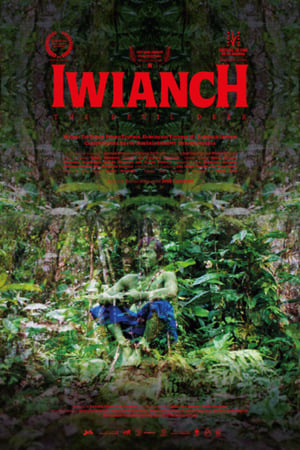
Iwianch, the Devil Deer
An enigmatic presence haunts the depths of the Amazon rainforest, where an indigenous Achuar teenager has disappeared. During the search for the young man, his family decides to consult with a Shaman, who, immersed in trance, reveals that the young man was taken by the devil, but that he has intervened by showing him the way back to his home. While waiting for his return, secrets of the rainforest and Amazonian visions of life after death are touched, vanishing the documentary filmmaker’s concepts of reality.
2021
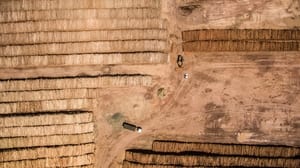
Mata
Faced with the advancement of eucalyptus plantations, a farmer and an indigenous community stand as resistance and reveal the impact of monoculture on the environment, in contrast to traditional ways of life. The enemy can also be green.
2020
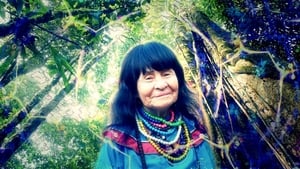
Shipibo: Learning Through the Light
Shipibo healer Ricardo Amaringo describes how he prepares, teaches, and shares the plant medicine ayahuasca. Olivia and Julian Arévalo sing examples of icaros (healing songs) in the Shipibo language.
2018
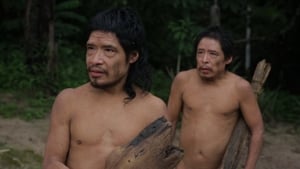
Piripkura
The last two surviving members of the Piripkura people, a nomadic tribe in the Mato Grosso region of Brazil, struggle to maintain their indigenous way of life amidst the region's massive deforestation. Living deep in the rainforest, Pakyî and Tamandua live off the land relying on a machete, an ax, and a torch lit in 1998.
2018
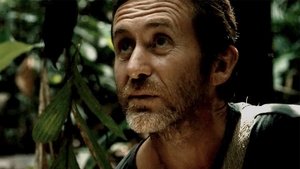
Tawai: A Voice from the Forest
Explorer Bruce Parry visits nomadic tribes in Borneo and the Amazon in hope to better understand humanity's changing relationship with the world around us.
2017
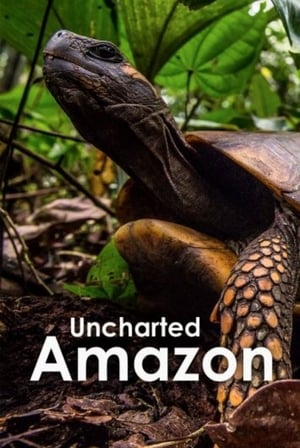
Uncharted Amazon
Deep in the jungles of Peru, a silky anteater is fighting to stay awake and a mother humming bird is struggling to raise her chick. Through millions of years of evolution they have developed bizarre relationships and unexpected strategies to overcome them changing conditions, but for all their ingenuity, they were never prepared for the arrival of a new species on the scene.
2016
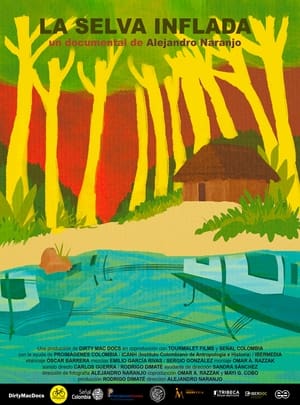
The Inflated Jungle
A series of suicides among youths who had to travel far from home to go to school, shocked their indigenous community in the Colombian Amazon. They are different cultures in the frantic friction of our time, it is a generation of young people born from the meeting of both cultures who are hanging before the mirages of a foreign world.
2015
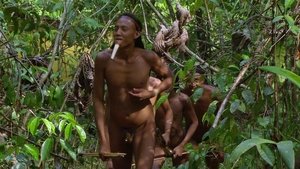
Tears in the Amazon
A documentary about environment destruction in the Amazon and the tribes living there. Produced for the 48th anniversary of MBC, Korea. A brilliant records of the itinerary for 250 days through the Amazon.
2010
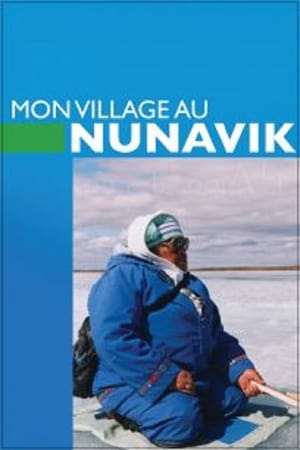
My Village in Nunavik
Shot during three seasons, Kenuajuak's documentary tenderly portrays village life and the elements that forge the character of his people: their history, the great open spaces and their unflagging humour. Though Kenuajuak appreciates the amenities of southern civilization that have made their way north, he remains attached to the traditional way of life and the land: its vast tundra, the sea teeming with Arctic char, the sky full of Canada geese. My Village in Nunavik is an unsentimental film by a young Inuk who is open to the outside world but clearly loves his village. With subtitles.
1999
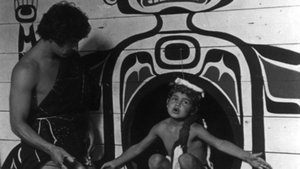
Box of Treasures
In 1921 the Kwakiut'l people of Alert Bay, British Columbia, held their last secret potlatch. In 1980 at Alert Bay, the U'mista Cultural Centre (U'mista means "something of great value that has come back") opened its doors to receive and house the cultural treasures which were seized decades earlier and only then returned to the people. The center also took up activities such as recording stories told by elders so that some part of the past would always be alive and teaching children about their heritage in order to make them feel connected to their ancestors. This film documents the cultural significance of these events for today's Kwakiut'l people. It is an eloquent testimony to the persistence and complexity of Kwakiut'l society and to the struggle for redefining cultural identity for them.
1983
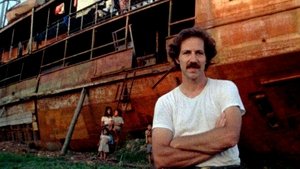
Burden of Dreams
The Amazon rain forest, 1979. The crew of Fitzcarraldo (1982), a film directed by German director Werner Herzog, soon finds itself with problems related to casting, tribal struggles and accidents, among many other setbacks; but nothing compared to dragging a huge steamboat up a mountain, while Herzog embraces the path of a certain madness to make his vision come true.
1982
Don Emilio and His Little Doctors
Don Emilio is a humble, 63-year-old man who lives in the Amazon rainforest, seven miles from the city of Iquitos, Peru. For all of his adult life he has worked as a curandero and vegetalista, a traditional healer. He estimates that in his career he has treated more than 2,500 clients. Through the camera lens of anthropologist Luis Eduardo Luna, Don Emilio tells us about his practice, his beliefs, his community, and his life. He shows us how he prepares ayahuasca and other herbal medicines. Finally, we see Don Emilio treat a man who has come to him for help, and hear from a poor woman who has brought her infant son for medical care.
1982
Itapoa - Un proyecto que camina
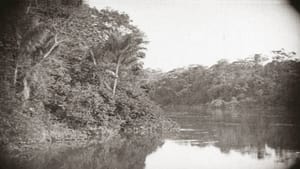
Amazon: Longest River in the World
Documentary by Portuguese Silvino Santos, about the Amazon, its flora, fauna, its inhabitants and among other wonderful images from the beginning of the 20th century with alternating close-up shots of caimans, jaguars and tropical flora with footage of Indigenous rituals--including some of the earliest known moving images of the Indigenous Witoto people--and longer sequences showcasing the region’s extractive industries: rubber, the Brazil nut, timber, fishing, even the egret feathers that were a staple of women’s fashion at the time.
1918