Watch It’s Raining Women (2022) Online Free
The documentary by Mari Soppela focuses on glass ceilings, a metaphor for the invisible borders between men and women in work life. Talk about glass ceilings is usually associated with women’s opportunities to advance to well paid managerial positions, but the documentary connects itself more broadly to the structural problems of work life from women’s perspective. Glass ceilings are long trials about equal pay, having to continually prove one’s skills, and 85-cent euros. The topic cannot be handled without intersectional crossings: what are invisible glass ceilings for some, are solid concrete for others.
Cast
Rebecca Burke, Charlayne Hunter-Gault, Tarja Halonen, Anna Cendalska, Mervi Lampinen, Françoise N'Thépé, Aksel Põder, Miyoko Kojima, Sheila Aly, Sam Walker
More Like This
Homo virilus : la fabrique du mâle-être
In France, as in the United States, an ideological divide is widening between girls and boys: "Young women born between 1995 and 2010 are hyper-progressive, while men of the same age are hyper-conservative," according to Alice Evans, a researcher at Stanford University. "Tens of millions of people who live in the same cities, work in the same places, attend the same classrooms, and even live in the same houses no longer share the same views. This is unprecedented. Generation Z is actually two generations, not one."
2025

Pride & Attitude
The viewpoints of women from a country that no longer exists preserved on low-band U-matic tape. GDR-FRG. Courageous, self-confident and emancipated: female industry workers talk about gaining autonomy.
2025

America's War Against Women
In America women can go to jail for their husbands’ crimes, men are allowed to marry ten-year-olds, and abortions in some states are illegal, even in cases of rape. Documentary filmmaker Brice Lambert journeys through the American South and meets women who are at the receiving end of the attack on women’s rights since Donald Trump’s return to power.
2025
9 ans et 9 mois
Nine years and nine months: that's how long it took Cécile Togni and her partner Benjamin to finally fulfill their dream of having a child. During all those years, she endured intense physical suffering, put up with medical abuse, fought against the ineffectiveness of misdiagnoses about her infertility, collapsed and got back up again and again in the face of repeated failures, without ever losing her determination.
2024
A Doll Like Me
The Amsterdam doll shop Colorful Goodies sells Barbies, boy dolls, and cuddly dolls that every child can recognize; from dolls with different skin colors and professions, to dolls with disabilities. This documentary follows three families of color who take home a doll. What does such a doll mean for your self-image if you struggle with it because you are of color, or because you have to learn to live with albinism? Is our dominant white society as tolerant as we think?
2023
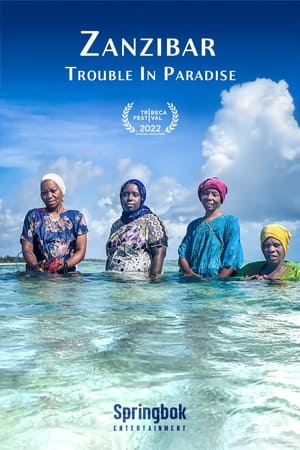
Zanzibar: Trouble in Paradise
Zanzibar: Trouble in Paradise depicts a group of women who gained financial independence and stability in an otherwise male dominated culture through seaweed farming, until climate change killed the seaweed. The film follows the women, whose ingenuity led them to a new crop, more resistant to climate change: sea sponges. However, new challenges occurred; combating bacteria and climate change threatening their new product as well. In bringing the story of these women to light, the film demonstrates their resiliency and individual struggles facing the effects of climate change. While many documentaries focus on the science, Zanzibar shines a light on the disaster's impact upon those least likely to be heard.
2022
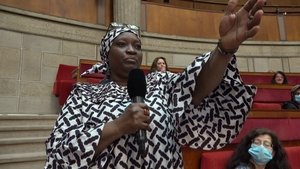
Those Who Care
Since the cult success of Merci Patron!, activist/journalist/filmmaker François Ruffin has become an MP. Here, he attempts to table a law aimed at upholding the rights of what in Quebec are known as caregivers, and shows us in passing how a law whose need seems patently obvious is put together, debated, voted on and . . . dies on the battleground of French politics. A stirring documentary about social injustice that somehow manages to make us bust a gut laughing as we rage with indignation. And also cry at the beauty of it all, thanks to the director’s humanist sensibility and a deft play between reality and fiction.
2021

Genderbende
A compelling feature length documentary about five young people who neither feel male nor female, but rather somewhere in between.
2017

Gender Revolution: A Journey with Katie Couric
Katie Couric travels across the U.S. to talk with scientists, psychologists, activists, authors and families about the complex issue of gender.
2017

My Life Directed by Nicolas Winding Refn
A documentary directed by Winding Refn's wife, Liv Corfixen, and it follows the Danish-born filmmaker during the making of his 2013 film Only God Forgives.
2015
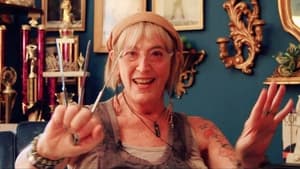
Kate Bornstein Is a Queer & Pleasant Danger
For decades, performance artist and writer Kate Bornstein has been exploding binaries and deconstructing gender. And, her own identity. Trans-dyke. Reluctant polyamorist. Sadomasochist. Recovering Scientologist. Pioneering Gender Outlaw. Kate Bornstein Is a Queer and Pleasant Danger, joins her on her latest tour capturing rollicking public performances and painful personal revelations as it bears witness to Kate as a trailblazing artist theorist activist who inhabits a space between male and female with wit, style, and astonishing candor. By turns meditative and playful, the film invites us on a thought provoking journey through Kate's world to seek answers to some of life's biggest questions.
2014
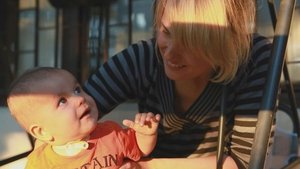
Our Curse
The film is a personal statement of the director and his wife, who have to deal with a very rare and incurable disease of their newborn child – the Ondine’s Curse (also known as CCHS, congenital central hypoventilation syndrome). People affected with this disease stop breathing during sleep and require a lifetime mechanical ventilation on a ventilator. The film shows the process of taming fear associated with the disease.
2013
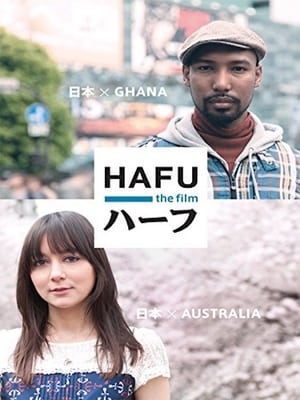
Hafu
A journey into the intricacies of mixed-race Japanese and their multicultural experiences in modern day Japan. For some hafus, Japan is the only home they know, for some living in Japan is an entirely new experience, and the others are caught somewhere between two different worlds.
2013

Man for a Day
Gender activist Diane Torr’s worldwide appearances and workshops are now legendary. For the past thirty years, the main focus of this performance artist’s work has been an exploration of the theoretical, artistic as well as the practical aspects of gender identity. Katarina Peters’ documentary observes a Diane Torr workshop in Berlin in which a group of open-minded women come together to discover the secrets of masculinity. What makes a man a man and a woman a woman? Precisely when and where is gender identity formatted? How much is nature and how much nurture? Each of Torr’s workshops represents an open-ended laboratory experiment in social behaviour in which the question is posed: is it possible to deliberately play out different roles and create a space in which to transgress both masculine and feminine characteristics?
2012
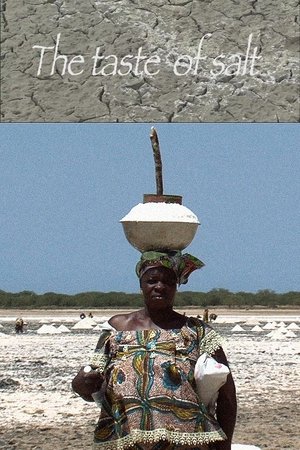
The Taste of Salt
At Ngay Ngay, a village in northern Senegal, there are real natural evaporative basins in which depending on the year large or small quantities of sea salt dry out. Located 15 kilometres from Saint-Louis, the village is living around a complex community organisation: men divide the salt fields into plots, and women are those who harvest. In the end, the men receive a share of the crop, while women are those who took great pains over the harvesting.
2011
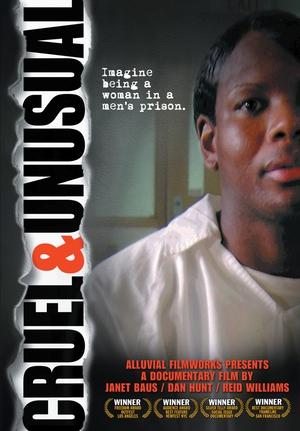
Cruel and Unusual
Five transgender women share their prison experiences. Interviews with attorneys, doctors, and other experts are also included.
2006

Transmitting Baba
An ocean stood between Baba and her grandson, so she did the only thing she could: she became a whale and swam to him.
2001
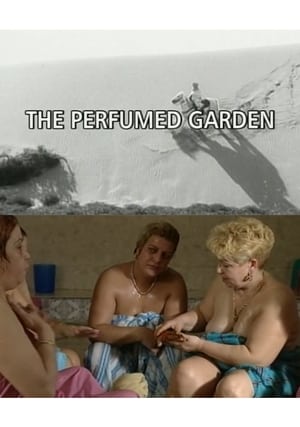
The Perfumed Garden
THE PERFUMED GARDEN is an exploration of the myths and realities of sensuality and sexuality in Arab society, a world of taboos and of erotic literature. Through interviews with men and women of all ages, classes, and sexual orientation, the film lifts a corner of the veil that usually shrouds discussion of this subject in the Arab world. Made by an Algerian-French woman director, the film begins by looking at the record of a more permissive history, and ends with the experiences of contemporary lovers from mixed backgrounds. It examines the personal issues raised by the desire for pleasure, amidst societal pressures for chastity and virginity. The film discusses pre-marital sex, courtship and marriage, familial pressures, private vs. public spaces, social taboos (and the desire to break them), and issues of language.
2000

Home Feeling: Struggle for a Community
This feature documentary takes us to the heart of the Jane-Finch "Corridor" in the early 1980s. Covering six square blocks in Toronto's North York, the area readily evokes images of vandalism, high-density subsidized housing, racial tension, despair and crime. By focusing on the lives of several of the residents, many of them black or members of other visible minorities, the film provides a powerful view of a community that, contrary to its popular image, is working towards a more positive future.
1983
Po boku mužů
1952