Watch In Ictu Oculi (2020) Online Free
The six-decade transformation of a block of houses, shown by means of artfully featured archival shots, highlights the beauty and sadness of human-made decay. In the blink of an eye 66 years pass by and a savings bank replaces a church.
More Like This
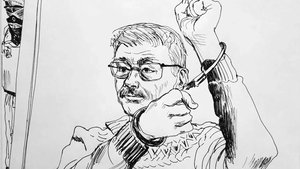
Politzek, the voices that challenge the Kremlin
In Russia, criticizing the war in Ukraine or Vladimir Putin’s regime has become a crime. Thousands of ordinary citizens are being arrested, tried, and imprisoned. They are called “Politzek”: political prisoners. Filmed clandestinely over the course of more than a year, Politzek gives a platform to those who, despite the fear, continue to speak out against Putin’s repressive Russia. Through the intersecting stories of a teenager sentenced to five years in prison for criticizing the government on social media, a young artist jailed for placing anti-war stickers, a human rights activist, and two theater directors facing Kafkaesque trials, the film unveils the machinery of state repression in Russia. With rare footage, broken yet unyielding voices, this is a story of silenced resistance.
2026

Jean-Pierre Elkabbach, autoportrait de mon père
A witness to the history of the Fifth Republic for more than half a century, Jean-Pierre Elkabbach left his mark on the profession of radio and television journalism. This film tells the story of the man and his career through the voice of his daughter, Emmanuelle Bach, and previously unpublished private interviews recorded shortly before his death in 2023. It offers a portrait of this hyperactive, versatile, demanding, and inventive journalist, and reveals the private man: funny, sensitive, warm, and secretive. Emmanuelle Bach recounts with tenderness and humor her father, absorbed by his consuming passion for journalism, and with whom she struggled to find her place.
2025

Beatles '64
Featuring never-before-seen footage of the band and the legions of young fans who helped fuel their ascendance, follow McCartney, John Lennon, George Harrison and Starr as they land in New York City in February 1964 and solidify their status as the biggest band in the world.
2024

Trump's Big FUSS: Fight for US Sovereignty
Trump's Big FUSS is a powerful acronym capturing Trump's vision for America and his fight for US sovereignty, standing firm against globalist elitists.
2024

God & Country: The Rise of Christian Nationalism
Examines the implications of Christian Nationalism, how it distorts not only our constitutional republic, but Christianity itself, and asks the question: What happens when a faith built on love, sacrifice, and forgiveness grows political tentacles, conflating power, money, and belief into hyper-nationalism?
2024
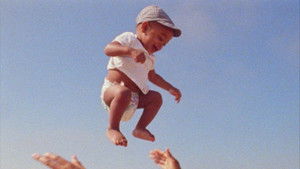
Mirrors
What began as a document of trades, traditions, cultures and home environments in contemporary England evolved and expanded to become an all-consuming project. Mirrors is a witness to unprecedented events as they unfolded on this singular isle over seven extraordinary years. From volatile public demonstrations to intimate domestic scenes, the film reveals the experience and emotions of living in England, explored through the lives of total strangers as well as family and friends. Shot exclusively on 16mm film, Mirrors is both lucid diary and poetic map - a meditation on human resilience in the most challenging era of our lifetime.
2022
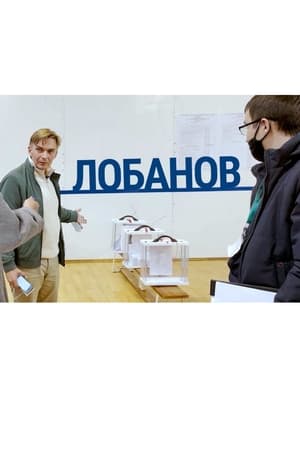
Lobanov
The 2021 Duma elections made Mikhail Lobanov a recognizable Moscow politician. The 37-year-old mathematician, lecturer at the Moscow State University, has long been involved in social activities: ten years ago he opposed political agitation at the university, participated in the creation of an independent association of university employees to protect their rights, and was almost fired for his activism. In 2021 elections, Lobanov ran for the Communist Party (he is not a member of the party, calls himself a democratic socialist) and waged a powerful grassroots campaign against the pro-government candidate, TV presenter Yevgeny Popov.
2021
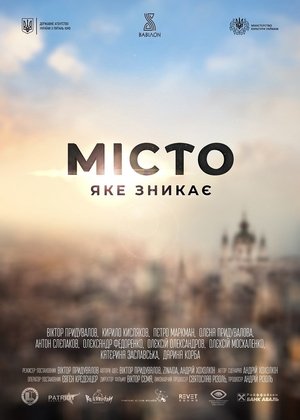
Fading City
A docu-art film about Kyiv and the contemporary problems of the capital. The film raises the issue of the dilapidated state of Kyiv's old buildings and the search for effective mechanisms to preserve the city's architectural heritage.
2020

Wrinkles the Clown
In Florida, parents can hire Wrinkles the Clown to scare their misbehaving children.
2019
Planet of the Humans
Forget all you have heard about how “Renewable Energy” is our salvation. It is all a myth that is very lucrative for some. Feel-good stuff like electric cars, etc. Such vehicles are actually powered by coal, natural gas… or dead salmon in the Northwest.
2019
Apollo: The Forgotten Films
Recently discovered footage reveals the secret history of NASA's first landing on the moon, and using this brand-new evidence, former astronauts and experts challenge everything known about the Apollo missions.
2019
The Hermits
In the midst of the chaos of México City, a group of eight bachelor millennials who call themselves ´The Hermits´, open the doors to their tiny apartments in the historic Ermita Building, in the yet-to-be gentrified neighborhood of Tacubaya, and share their life experiences in a time when precarity changes the way in which we love, feel and relate to each other. As we explore the homes of these eight neighbors, we also witness their personalities intersect in a Whatsapp chat, a virtual space that functions as a supporting system that helps them face the adversities that living alone in this city brings.
2019
The Devil's Tuning
2018

Lessons in Dissent
A vivid portrait of a generation of Hong Kongers committed to creating a new more democratic Hong Kong. Schoolboy Joshua Wong dedicates himself to stopping the introduction of National Education. Whilst former classmate Ma Jai fights against political oppression on the streets and in the courts. Catapulting the viewer on to the streets of Hong Kong and into the heart of the action. The viewer is confronted with Hong Kong's oppressive heat, stifling humidity and air thick with dissent. Filmed over 18 months this is a kaleidoscopic, visceral experience of their epic struggle.
2014
The Red Bank. James Joyce: His Greek Notebooks
This documentary aims to register this unknown side of James Joyce: His Greek Notebooks. Trieste. Bloomsday, 2013. Dance in slow motion, accompanied by text. By deconstructing the body, we turn it into a memory: of the body, of life, of texts. The biographical references to Joyce and Mando Aravantinou, combined with the diagonal slicing of the image, cancel the realism of the landscape, including that of the Narrator’s space/study. As a culmination, Joyce’s letter “A request for a loan in Greek” functions as a timely denunciation. Various routes through cities, such as Trieste, London, New York, and Athens; languages such as Greek and English. In addition to the primal myth of Ulysses, there is another issue: Greek is “the language of the subject of Ulysses”
2013
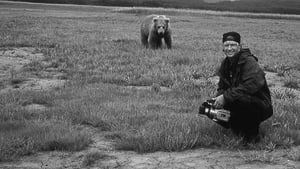
Grizzly Man
Follows the story of "Grizzly Man" Timothy Treadwell and what the thirteen summers in a National Park in Alaska were like in his attempt to protect the grizzly bears. The film is full of unique images and a look into the spirit of a man who sacrificed himself for nature.
2005

Final Fantasy VII: Advent Children
Two years have passed since the final battle with Sephiroth. Though Midgar, city of mako, city of prosperity, has been reduced to ruins, its people slowly but steadily walk the road to reconstruction. However, a mysterious illness called Geostigma torments them. With no cure in sight, it brings death to the afflicted, one after another, robbing the people of their fledgling hope.
2005

Private Chronicles: Monologue
The collective life of the generation born as Jurij Gagarin became the first man in space. Vitaly Mansky has woven together a fictional biography – taken from over 5.000 hours of film material, and 20.000 still pictures made for home use. A moving document of the fictional, but nonetheless true life of the generation who grew up in this time of huge change and upheaval.
1999
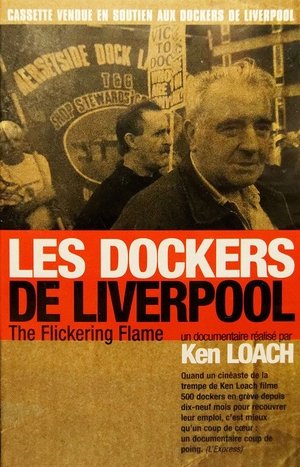
The Flickering Flame
Documentary following dockers of Liverpool sacked in a labour dispute and their supporters’ group, Women of the Waterfront, as they receive support from around the world and seek solidarity at the TUC conference.
1996
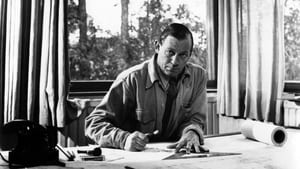
Alvar Aalto: Technology and Nature
The Finnish architect Alvar Aalto (1898–1976) is one of the great figures of modern architecture, ranked alongside Gropius, Le Corbusier and Mies van der Rohe. This film analyses Aalto’s uniquely successful resolution of the demands and possibilities created by new technology and construction materials with the need to make his buildings sympathetic both to their users and to their natural surroundings. His inventive use of timber in particular represents both a reference to the forest landscape of Finland and a building material that is ‘warm’ and extremely adaptable. Filmed in Finland, Italy, Germany and the USA, this documentary shows how the Finnish natural environment and art traditions were essential elements in Aalto’s pioneering harmonization of technology and nature.
1987