Watch IEC Long (2015) Online Free
The word panchão was first heard in Macao. From the Chinese pan-tcheong or pau-tcheong, dictionaries define it as a Macanese regionalism also known as China cracker. Who inhabits the ancient IEC Long firecracker factory?
More Like This
Groenland, annexe-moi si tu peux
Greenland, a semi-autonomous territory of Denmark, is currently at the center of international covetousness and tensions. In his rivalry with China for technological supremacy, Donald Trump has made the acquisition of this Arctic territory a priority in order to secure American control over rare earth elements, of which Greenland is believed to hold one of the world's largest reserves.
2025
Dreams in Dust
A short documentary exploring the grueling cycle of child labor in Pakistan through the story of two children, one working at a brick kiln and the other at a car mechanic shop.
2025

Hotel Chocolat at Christmas
In the lead-up to the festive bonanza, an exclusive look inside the chocolate-maker's inventing room, and its 'chocolate imaginarium' too. Prepare for special choc drinks and cranberry treats.
2024

House of Grucci
An illuminating look inside the lives of the Grucci family, whose Long Island-based fireworks business has been lighting up night skies around the world with spectacular displays since the 1800s.
2023
The Snack Giants – Behind the Scenes of Confectionery Manufacturers
The high consumption of snacks and sweets in Germany keeps producers on their toes. In Viersen, consumer giant Mars produces 10 million cookie chocolate bars every day-and each of them must look and taste absolutely identical. In Erdmannhausen, snack pretzels are produced in the first Württemberg pretzel factory, Huober. And the Lübeck-based marzipan manufacturer Niederegger wants to use traditional production processes to produce what it claims is the best marzipan in the world.
2022

Hotel Chocolat: Inside the Chocolate Factory
Following Inside Hotel Chocolat series on Channel 5, this Channel 4 special takes you behind the scenes at one of Britain’s largest independent chocolate makers. Covering product development both in the inventing kitchen and in the cocoa fields in Ghana.
2022
Hotel Chocolat at Easter
Following Inside Hotel Chocolat series on Channel 5, this Channel 4 special takes you behind the scenes at Britain's largest independent chocolate maker at one of their busiest times of the year, as they dream up a new luxury Easter egg, retro flavours and enticing sweet treats.
2022
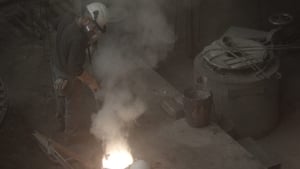
The Monsters Factory
In Portugal, the daily life of a bronze foundry, specialized in the semi-industrial production of spare parts for the naval field, is compared with the freedom of spirit characterizing the "pottery of monsters" on a village square where everyone gathers.
2020

Megastructures: Airbus Beluga XL
2019

Making of: Pierce Fire Trucks
2019
Midwinter Hue
A man steadily bashes through the snow. He disappears and the trees, covered in white, shift and show a beautiful array of hidden colors. A poetic, meditative short film about letting go of the past and embracing the unknown future.
2017
Ho Chi Minh Kim Chi
The sights and sounds of a kimchi factory in Vietnam.
2016
Into the Void
Journalist Emily Siu searches for the ghosts thought to dwell hidden in the clouds of incense fume and firecracker smoke amongst the modern Macao metropolis. She encounters people who have learnt the healing arts of the occult but begins to feel the grasp of the supernatural on her own psyche.
2013
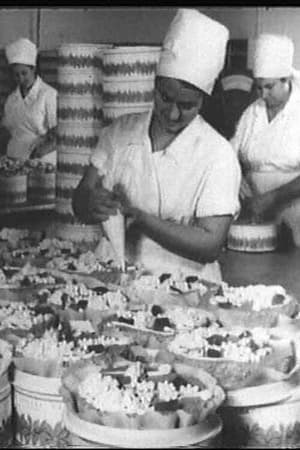
Charlie Marx and the Chocolate Factory
Charlie Marx and the Chocolate Factory started as an investigation of the link between politics and chocolate, at the Karl Marx Confectionary Factory in Kiev, Ukraine. Since access to the factory was denied, the project had to be re-considered, re-invented or re-enacted. Mostly made of archival footage and re-enacted performances based on the company's website, the film merges what was left of the initial idea with what has been collected and realized instead. It borrows from the genres of video art, 'Man on the street' interview, direct address, corporate film, essay, and music video, without legitimately belonging to any of them. The film unravels as a reflection on its own failure, and yet keeps on investigating what has always been at stake: the shift from public to private property (and from analog to digital technology), dialectics of permanence and change, language as a mirror of ideology, and post-Soviet oligarchy culture.
2009
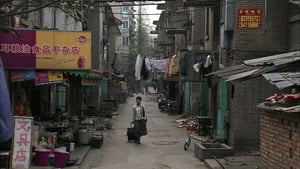
24 City
As a decades-old state-run aeronautics munitions factory in downtown Chengdu, China is being torn down for the construction of the titular luxury apartment complex, director Jia Zhangke interviews various people affiliated with it about their experiences.
2008
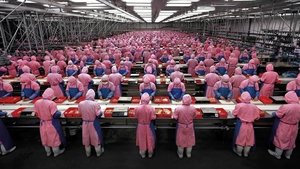
Manufactured Landscapes
MANUFACTURED LANDSCAPES is the striking new documentary on the world and work of renowned artist Edward Burtynsky. Internationally acclaimed for his large-scale photographs of “manufactured landscapes”—quarries, recycling yards, factories, mines and dams—Burtynsky creates stunningly beautiful art from civilization’s materials and debris.
2006
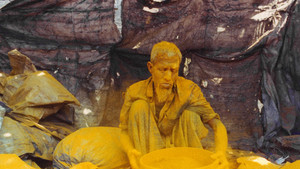
Megacities
Megacities is a documentary about the slums of five different metropolitan cities.
1998

I Am a Truck
Worldy renowned for his masterpiece The Housemaid (1960), Kim Ki-young debuts with his first short film I Am a Truck (1953), which was sponsored by UN and made a year after the armistice of the Korean War. This film is a fascinating glimpse into the mind of a soon-to-be powerful auteur and influential filmmaker in the post-war Korean cinema, if not the whole history of Korean cinema.
1953
Atlas
The concept of machine-made knit was known as early as the 1850s, but it was only during the 1920s that the quality of the material had improved. When the plant known as "Atlas" was introduced in 1931, the shop windows drew a lot of attention, and Aho & Soldan was ordered to make a promotional film. In this well-paced film, we see the jersey production step by step.
1931
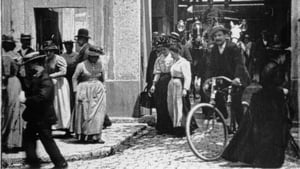
Workers Leaving the Lumière Factory
Working men and women leave through the main gate of the Lumière factory in Lyon, France. Filmed on 22 March 1895, it is often referred to as the first real motion picture ever made, although Louis Le Prince's 1888 Roundhay Garden Scene pre-dated it by seven years. Three separate versions of this film exist, which differ from one another in numerous ways. The first version features a carriage drawn by one horse, while in the second version the carriage is drawn by two horses, and there is no carriage at all in the third version. The clothing style is also different between the three versions, demonstrating the different seasons in which each was filmed. This film was made in the 35 mm format with an aspect ratio of 1.33:1, and at a speed of 16 frames per second. At that rate, the 17 meters of film length provided a duration of 46 seconds, holding a total of 800 frames.
1895