Watch Hotel Chocolat: Inside the Chocolate Factory (2022) Online Free
Following Inside Hotel Chocolat series on Channel 5, this Channel 4 special takes you behind the scenes at one of Britain’s largest independent chocolate makers. Covering product development both in the inventing kitchen and in the cocoa fields in Ghana.
Cast
Matt Baker, Angus Thirlwell
More Like This

Hotel Chocolat at Christmas
In the lead-up to the festive bonanza, an exclusive look inside the chocolate-maker's inventing room, and its 'chocolate imaginarium' too. Prepare for special choc drinks and cranberry treats.
2024
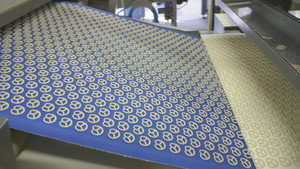
The Snack Giants – Behind the Scenes of Confectionery Manufacturers
The high consumption of snacks and sweets in Germany keeps producers on their toes. In Viersen, consumer giant Mars produces 10 million cookie chocolate bars every day-and each of them must look and taste absolutely identical. In Erdmannhausen, snack pretzels are produced in the first Württemberg pretzel factory, Huober. And the Lübeck-based marzipan manufacturer Niederegger wants to use traditional production processes to produce what it claims is the best marzipan in the world.
2022

Cadbury at Christmas
Behind the scenes at the confectionery company's base in Bournville near Birmingham as staff gear up for the festive season, hitting the factory floor to discover how popular treats Roses are made, with the focus on the creation of the hazelnut in caramel. Historians and Cadbury insiders tell the story of how Cadbury first turned Britain on to festive chocolate, while Santa and his team prepare for the rush at Cadbury World.
2022
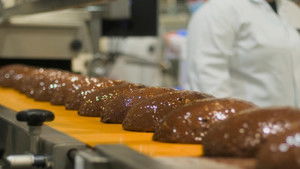
Hotel Chocolat at Easter
Following Inside Hotel Chocolat series on Channel 5, this Channel 4 special takes you behind the scenes at Britain's largest independent chocolate maker at one of their busiest times of the year, as they dream up a new luxury Easter egg, retro flavours and enticing sweet treats.
2022
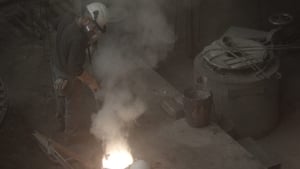
The Monsters Factory
In Portugal, the daily life of a bronze foundry, specialized in the semi-industrial production of spare parts for the naval field, is compared with the freedom of spirit characterizing the "pottery of monsters" on a village square where everyone gathers.
2020

Making of: Pierce Fire Trucks
2019
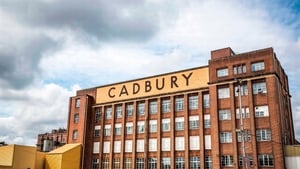
Inside Cadbury: Chocolate Secrets Unwrapped
This one-off documentary goes deep inside the Willie Wonka world of Cadbury, Britain's biggest and best-loved chocolate maker. Behind closed doors at the famous Bournville plant, a team of dedicated scientists struggle to meet the biggest challenge the company's faced for a century - to dramatically cut sugar from their Dairy Milk recipe. Meanwhile, the firm's Easter Creme Egg campaign finds Cadbury agents 'reverse shoplifting' as they hide prize-winning white eggs around the country. Elsewhere in the factory new flavours of chocolate are put into production, with wacky recipes invented by lucky members of the public.
2019
Ho Chi Minh Kim Chi
The sights and sounds of a kimchi factory in Vietnam.
2016

Chocolate Perfection
Michel Roux Jr sets out to discover the secret of chocolate, not just why we're addicted to the sublime and complex foodstuff but it’s rich and varied history. From a sacred drink of Aztec Emperors to the aphrodisiac of choice at the court of Louis XIV in Versailles.
2015
All for the good of the World and Nosovice
An original portrayal of a small Czech village where – as the locals put it – an UFO has landed in the form of a kilometre-long silverish factory: a Korean Hyundai automobile plant. The village, hitherto famous mostly for its sauerkraut and the “Radegast” beer was thus turned into an industrial zone – the largest greenfield investment project in the Czech Republic’s history. Nonetheless, for a long time many farmers resisted selling the land upon which the factory was now standing. Eventually, they all succumbed under the pressure from the neighbours, and even the anonymous death threats. The filmmakers returned to Nošovice two years after the dramatic property buyouts, at the time when the factory has just started churning out cheap cars. Combining the perspectives of seven characters, they have composed a portrayal of a place suddenly changed beyond recognition that is playful and chilling at the same time: a politically engaged absurd flick about a field that yields cars.
2011
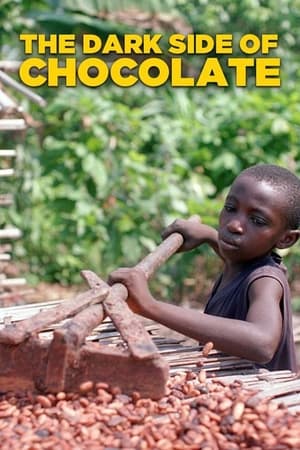
The Dark Side of Chocolate
A team of journalists investigate how human trafficking and child labor in the Ivory Coast fuels the worldwide chocolate industry. The crew interview both proponents and opponents of these alleged practices, and use hidden camera techniques to delve into the gritty world of cocoa plantations.
2010
Charlie Marx and the Chocolate Factory
Charlie Marx and the Chocolate Factory started as an investigation of the link between politics and chocolate, at the Karl Marx Confectionary Factory in Kiev, Ukraine. Since access to the factory was denied, the project had to be re-considered, re-invented or re-enacted. Mostly made of archival footage and re-enacted performances based on the company's website, the film merges what was left of the initial idea with what has been collected and realized instead. It borrows from the genres of video art, 'Man on the street' interview, direct address, corporate film, essay, and music video, without legitimately belonging to any of them. The film unravels as a reflection on its own failure, and yet keeps on investigating what has always been at stake: the shift from public to private property (and from analog to digital technology), dialectics of permanence and change, language as a mirror of ideology, and post-Soviet oligarchy culture.
2009
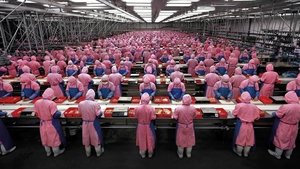
Manufactured Landscapes
MANUFACTURED LANDSCAPES is the striking new documentary on the world and work of renowned artist Edward Burtynsky. Internationally acclaimed for his large-scale photographs of “manufactured landscapes”—quarries, recycling yards, factories, mines and dams—Burtynsky creates stunningly beautiful art from civilization’s materials and debris.
2006
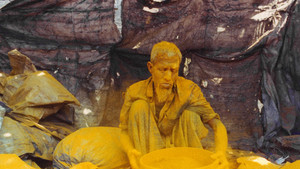
Megacities
Megacities is a documentary about the slums of five different metropolitan cities.
1998
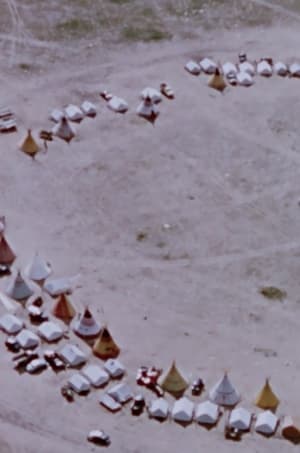
Kainai
On the Kainai (Blood) First Nations Reserve, near Cardston, Alberta, a hopeful new development in Indigenous enterprise. Once rulers of the western plains, the Bloods live on a 1 300-square-kilometer reserve. Many have lacked gainful employment and now pin their hopes on a pre-fab factory they have built. Will the production line and work and wages fit into their cultural pattern of life? The film shows how it is working and what the owners themselves say about their venture.
1973
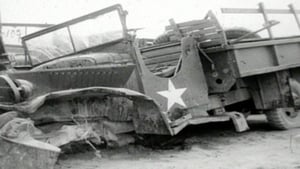
I Am a Truck
Worldy renowned for his masterpiece The Housemaid (1960), Kim Ki-young debuts with his first short film I Am a Truck (1953), which was sponsored by UN and made a year after the armistice of the Korean War. This film is a fascinating glimpse into the mind of a soon-to-be powerful auteur and influential filmmaker in the post-war Korean cinema, if not the whole history of Korean cinema.
1953
National Milk Cocoa
Drinking chocolate flashes before your eyes and makes an offer you can't refuse.
1944
Tins for India
Documenting the production of kerosene tins and their reuse in rural India, this early short by Bimal Roy observes industrial labor and everyday life with a restrained, humanist perspective.
1941
Atlas
The concept of machine-made knit was known as early as the 1850s, but it was only during the 1920s that the quality of the material had improved. When the plant known as "Atlas" was introduced in 1931, the shop windows drew a lot of attention, and Aho & Soldan was ordered to make a promotional film. In this well-paced film, we see the jersey production step by step.
1931
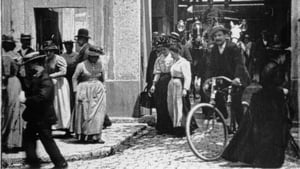
Workers Leaving the Lumière Factory
Working men and women leave through the main gate of the Lumière factory in Lyon, France. Filmed on 22 March 1895, it is often referred to as the first real motion picture ever made, although Louis Le Prince's 1888 Roundhay Garden Scene pre-dated it by seven years. Three separate versions of this film exist, which differ from one another in numerous ways. The first version features a carriage drawn by one horse, while in the second version the carriage is drawn by two horses, and there is no carriage at all in the third version. The clothing style is also different between the three versions, demonstrating the different seasons in which each was filmed. This film was made in the 35 mm format with an aspect ratio of 1.33:1, and at a speed of 16 frames per second. At that rate, the 17 meters of film length provided a duration of 46 seconds, holding a total of 800 frames.
1895