Watch Megastructures: Airbus Beluga XL (2019) Online Free
More Like This
Airbus : la techno des géants du ciel
2025

Hotel Chocolat at Christmas
In the lead-up to the festive bonanza, an exclusive look inside the chocolate-maker's inventing room, and its 'chocolate imaginarium' too. Prepare for special choc drinks and cranberry treats.
2024
Der Kampf um die Riesenflieger
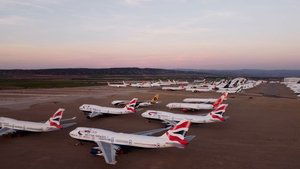
Hardly noticed by the public, the largest aircraft parking lot in Europe has been built in a semi-desert in Spain. Close to the city of Teruel in the east of the country, aircraft from a wide variety of airlines have been mothballed. Their future is uncertain. Since the coronavirus crisis, these include the largest and most expensive aircraft in the world. For example, the Airbus A380 and the jumbo jet, the Boeing 747: two symbols of a decades-long "air war" between Airbus and Boeing. Four-jet airplanes are considered fuel guzzlers and CO2 sinners. Even the modern A380, which is approved for up to 853 passengers, was withdrawn from service by many airlines after just a few years of operation. Never before in the history of aviation has such an expensive series aircraft been taken out of service after such a short time. But its end is far from certain.
2022
The Great Electric Airplane Race
2022

Aboard Air Force One
Air Force One is a marvel of military engineering. For more than half a century, the presidential fleet of armed jumbo jets has served as a flying fortress for America's commanders-in-chief, carrying them in victory, in shame, and even death. Join us as we take an unprecedented look at the world's most famous aircraft: how it was born, how it has developed over the decades, and the role it has played in historic events, from the death of Kennedy to the 9/11 attacks to a morale-building, surprise Thanksgiving visit to Iraq, and more.
2020
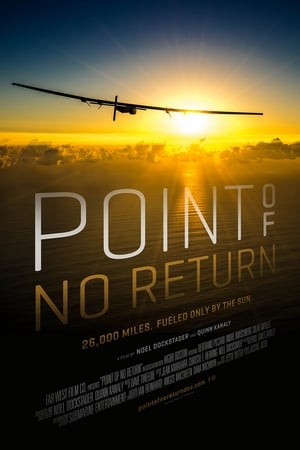
Point of No Return
Point of No Return takes you behind the headlines of the first solar-powered flight around the world—where two courageous pilots take turns battling nature, their own crew, and sometimes logic itself, to achieve the impossible. Not just to make history, but to inspire a revolution.
2017

Ho Chi Minh Kim Chi
The sights and sounds of a kimchi factory in Vietnam.
2016
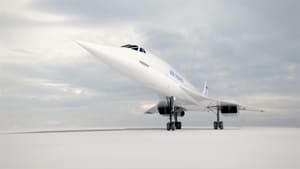
Mach 2
The Concorde remains a legend of the sky. In both looks and performance, it was incomparable, and the technology behind it was nothing less than revolutionary. Learn all about this magnificent craft that was able to fly at over 1300 mph, linking Paris and London to New York in under 4 hours. A unique flying machine, it remains the only supersonic commercial aircraft in the history of aviation.
2016
Falklands' Most Daring Raid
Documentary film about the then longest range bombing mission in history, which changed the outcome of the Falklands War.
2012

Charlie Marx and the Chocolate Factory
Charlie Marx and the Chocolate Factory started as an investigation of the link between politics and chocolate, at the Karl Marx Confectionary Factory in Kiev, Ukraine. Since access to the factory was denied, the project had to be re-considered, re-invented or re-enacted. Mostly made of archival footage and re-enacted performances based on the company's website, the film merges what was left of the initial idea with what has been collected and realized instead. It borrows from the genres of video art, 'Man on the street' interview, direct address, corporate film, essay, and music video, without legitimately belonging to any of them. The film unravels as a reflection on its own failure, and yet keeps on investigating what has always been at stake: the shift from public to private property (and from analog to digital technology), dialectics of permanence and change, language as a mirror of ideology, and post-Soviet oligarchy culture.
2009
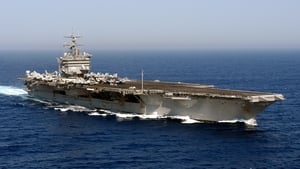
Carrier at War: The USS Enterprise
Going from 0 to 150 mph in three seconds, withstanding three Gs of force, and taking off from what's often called "the most dangerous place on the planet" are just parts of everyday life for an aircraft carrier pilot-and it's no different for the crew aboard the USS Enterprise. After being stationed in the Middle East for a year, these pilots have seen heavy action in Afghanistan and Iraq. Now, finally, they're returning home. With amazing personal stories and real-time footage from missions, this is an exciting insider's peek at life onboard a wartime aircraft carrier.
2007
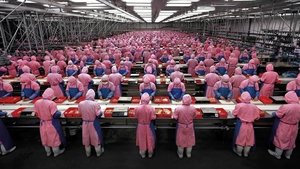
Manufactured Landscapes
MANUFACTURED LANDSCAPES is the striking new documentary on the world and work of renowned artist Edward Burtynsky. Internationally acclaimed for his large-scale photographs of “manufactured landscapes”—quarries, recycling yards, factories, mines and dams—Burtynsky creates stunningly beautiful art from civilization’s materials and debris.
2006
Megacities
Megacities is a documentary about the slums of five different metropolitan cities.
1998
The Fighting Liberator
Here is the hair raising, seat-of-the-pants tale of men who dared to fly their planes, unescorted, to the heart of enemy held Romania to blast the source of German oil. It's also the story of long, low level flights over water, searching for the tell tale sliver of a U-boat periscope. It's a tribute to an underdog that became the most versatile, widely used bomber of World War II. This is THE B-24 LIBERATOR! Aviation A.V. Library brings you this battling classic in a hell-raising video adventure that we call "THE FIGHTING LIBERATOR." From the Bismark Sea to dirt airstrips in China to the exhilaration of the great push on D-Day the Liberator was there, fighting her way over, around and through the Axis ranks.
1994

Os Brasileiros e a Conquista do Ar
The first Brazilians who engaged in aviation, from Bartolomeu Lourenço de Gusmão with his hot air balloon to Alberto Santos Dumont, giving Brazil a prominent place in aviation. The creation of the Military Air Mail (CAM) and the Brazilian aviation industry. Commemoration of the centenary of the birth of Santos Dumont. The house where Santos Dumont was born; Bartolomeu Gusmão (Santos - SP); small hot air balloon Júlio César Ribeiro de Souza; 1881: his Victory balloon flies in Paris; Augusto Ribeiro; Santos Dumont: the balloon in the Torre Eifel, the 14 bis, the 'Demoiselle': real scenes of the time. Edu Chaves flies the Rio-Buenos Aires route in the 1920s. Current era: manufacture of the Bandeirante (assembly line). President Médici flies in the first Bandeirante; Xavante and Ipanema, Universal, rego elo and other models manufactured by Embraer in São José dos Campos.
1973

Tins for India
Documenting the production of kerosene tins and their reuse in rural India, this early short by Bimal Roy observes industrial labor and everyday life with a restrained, humanist perspective.
1941
Atlas
The concept of machine-made knit was known as early as the 1850s, but it was only during the 1920s that the quality of the material had improved. When the plant known as "Atlas" was introduced in 1931, the shop windows drew a lot of attention, and Aho & Soldan was ordered to make a promotional film. In this well-paced film, we see the jersey production step by step.
1931
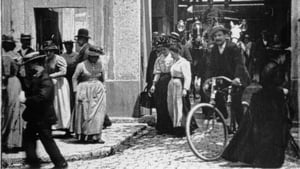
Workers Leaving the Lumière Factory
Working men and women leave through the main gate of the Lumière factory in Lyon, France. Filmed on 22 March 1895, it is often referred to as the first real motion picture ever made, although Louis Le Prince's 1888 Roundhay Garden Scene pre-dated it by seven years. Three separate versions of this film exist, which differ from one another in numerous ways. The first version features a carriage drawn by one horse, while in the second version the carriage is drawn by two horses, and there is no carriage at all in the third version. The clothing style is also different between the three versions, demonstrating the different seasons in which each was filmed. This film was made in the 35 mm format with an aspect ratio of 1.33:1, and at a speed of 16 frames per second. At that rate, the 17 meters of film length provided a duration of 46 seconds, holding a total of 800 frames.
1895
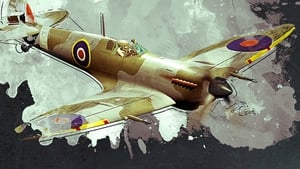
Classic Fighter
Classic Fighter – the story of the great piston-engined fighters of World War Two. A tribute to the men who flew them, and to the men and women who guided them and kept them in the air. Made in conjunction with the Imperial War Museum, Duxford, this programme tells the story of these great war planes. Stunning air-to-air flying sequences are intercut with interviews with pilots and aircrew of the British and American air forces. Some of the fighter aircraft featured are the Supermarine Spitfire, the Hawker Hurricane, the Messerschmitt Bf109, the P-47 Thunderbolt and the P-51 Mustang.