Watch Becoming Human (2009) Online Free
NOVA's groundbreaking investigation explores how new discoveries are transforming views of our earliest ancestors. Becoming Human explores the origins of us -where modern humans and our capacities for art, invention, and survival came from, and how our social history led to 3-5% of our genetic heritage being Neanderthal. Featuring interviews with world-renowned scientists, footage shot in the trenches as fossils were unearthed, and stunning computer-generated animation, Becoming Human brings early hominids to life, examining how they lived and how we became the creative and adaptable modern humans of today. In gripping forensic detail, we meet: Selam, the amazingly complete remains of a 3 million year-old child, packed with clues to why we split from the apes, came down from the trees, and started walking upright; Turkana Boy -a tantalizing fossil of Homo erectus, the first ancestor to leave Africa and colonize the globe. What led to this first great African exodus?
Cast
Juan Luis Arsuaga, Dominique Bonjean
More Like This
Momies d'Égypte, en quête d'immortalité
2025

Grotte Chauvet - Dans les pas des artistes de la Préhistoire
2024
Tautavel : vivre en Europe avant Néandertal
2024
Palmyre, à la croisée des mondes
2024
Artemis - The Lost Temple
The location of the sanctuary of Artemis at Amarynthos has long remained one of the last great archaeological enigmas of Ancient Greece. This vast Artemision is mentioned in several ancient texts, which even go so far as to specify the distance that separates the sanctuary from the ancient city of Eretria. But despite the efforts of numerous scientific expeditions since the end of the 19th century, no trace of the sanctuary or its temple has ever been found. In the 1960s, a young archaeologist - Denis Knoepfler - set out in search of the lost temple of Artemis. His investigations soon led him into the hinterland of the island of Euboea, well beyond the limits of previous expeditions. It would take five decades of searching, unshakeable faith and moving tons of earth to finally unravel the mystery. In 2017, a tenacious Swiss-Greek team of archaeologists formally identified the sanctuary of Artemis, where Denis Knoepfler had predicted it lay buried.
2023
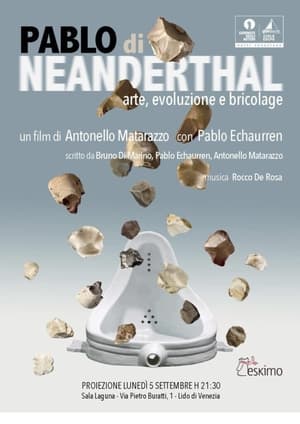
Pablo From Neanderthal
What would have happened if the Neanderthals had prevailed over Homo Sapiens? How would our species have evolved? How does art relate to evolution, and why in the world does evolution behave like a bricoleur? Last of all, just what does Marcel Duchamp have to do with all of this? This film is neither a documentary nor a portrait of the artist Pable Echaurren; it’s a kaleidoscopic meditation on our past, present and future.
2022

Druids: The Mystery of Celtic Priests
Druids have existed far longer than hitherto assumed, since the 4th century BC. Their traces are found all over middle Europe: from the northern Balkans to Ireland. Their cultural achievements were equal in almost every way to those of the Romans and Greeks: They could read and write and spoke Greek and Latin - for centuries, they were the powerful elite of their culture. Only one single Druid is known by name to history: Diviciacos - an aristocrat of the Aedui and personal friend of Julius Caesar. Diviciacos was a politician, a judge and a diplomat, but he lived at a time when the Celtic lands of Gaul were conquered by the Romans. Greek and Roman contemporaries distrusted the actions of this forbear of the famous comic book druid Getafix: They imagined him in bloody rituals in somber woods.
2021
The Mystery of the Trojan Horse
The story of the Trojan Horse is probably one of the most famous stories ever told: after ten years of bloody war, the Greek coalition decides to lift the siege and depart, but not before leaving at the gates a huge wooden horse, which the Trojans confidently lead into the city. A few hours later, the once invincible Troy goes up in flames. What exactly happened? Is this myth true or false?
2021
Pompeii: Sin City
A story about one of the most famous and mysterious archaeological sites in the world.
2020
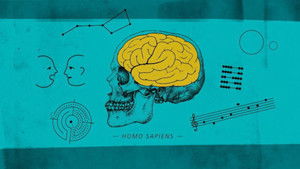
Human By Chance?
If we compare ourselves with our genetically closest living relatives, the chimpanzees, we have few physical advantages. We are far weaker, cannot move nearly as fast, and do not have the same climbing capabilities. Instead, humans excel in areas such as architecture, religion, science, language, writing, art, culture, and ideas. These achievements are due to our larger brain that contain billions of neurons. It was the rapid growth of our brain, originating about 2 million years ago, that allowed us to be the predominant species of the world. What caused this rapid growth of our cerebral cortex? Researchers worldwide have asked this question for many years, but now there finally seems to be an answer.
2020
The Mystery of the Rascar Capac Mummy
Rascar Capac, the sinister creature featured on Hergé's album The Seven Crystal Balls (1948), has left its mark on many generations of readers. To draw it, the Belgian cartoonist was probably inspired by a mummy exhibited in the first pre-Columbian exhibition organized by the Brussels Cinquantenaire Museum in 1923. Two intrepid archaeologists embark on a fascinating journey to reconstruct the story of the mysterious mummy.
2019
Viking Warrior Women
Drama-led documentary following the life of Signe, an orphaned Chief's daughter, who, driven by revenge, becomes an explorer and trader in the lands of the Rus Vikings.
2019
The Sea Stares at Us from Afar
Huelva, Spain, an isolated region lost in time. The grass, the sand and the sky are the same that those foreigners saw in the spring of 1895, when they crossed the sea from a distant country to mark the unspoiled terrain and extract its wealth, when the tower was new, when people could climb to the top of the highest dune and imagine that the city of Tartessos was still there, in the distance, almost invisible in the morning brume.
2018
Another World
A feature documentary about the journey of mankind to discover our true force and who we truly are. It is a quest through science and consciousness, individual and planetary, exploring our relationships with ourselves, the world around us and the universe as a whole.
2014
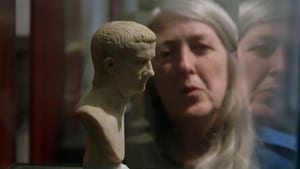
Caligula with Mary Beard
What is true and what is false in the hideous stories spread about the controversial figure of the Roman emperor Gaius Julius Caesar Augustus Germanicus (12-41), nicknamed Caligula? Professor Mary Beard explains what is accurate and what is mythical in the historical accounts that portray him as an unbalanced despot. Was he a sadistic tyrant, as Roman historians have told, or perhaps the truth about him was manipulated because of political interests?
2013
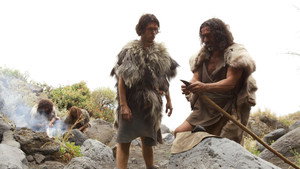
Decoding Neanderthals
Over 60,000 years ago, the first modern humans left their African homeland and entered Europe, then a bleak and inhospitable continent in the grip of the Ice Age. But when they arrived, they were not alone: the stocky, powerfully built Neanderthals had already been living there for hundreds of thousands of years. So what happened when the first modern humans encountered the Neanderthals? Did they make love or war?
2013
The Neanderthals’ Dark Secret
49,000 year old Neanderthal bones have been discovered by chance in a remote, mountainous region of Northern Spain. The bones may help solve the biggest Neanderthal puzzle of all – why we are here today and Neanderthals are not. ‘The Neanderthals’ dark Secret’ revolves around ongoing investigations deep inside the forbidding subterranean cave system called El Sidrón. Here, Palaeontologist Antonio Rosas and Archaeologist Marco de la Rasilla are in their 11th year of excavation. Bones from at least 12 people and 400 stone tool fragments have been recovered. We’ll bring these people back from the past. Our haunting, hologram-like Neanderthal characters, will communicate to the scientists of today, as they unlock the secrets of El Sidrón. Many mysteries surround the site, foremost, how the bones and tools came to be here in the first place. The remains aren’t weathered nor do they show signs of scavenging from large animals.
2012
Secrets of Egypt's Lost Queen
Move over, King Tut: There's a new pharaoh on the scene. A team of top archaeologists and forensics experts revisits the story of Hatshepsut, the woman who snatched the throne dressed as a man and declared herself ruler. Despite her long and prosperous reign, her record was all but eradicated from Egyptian history in a mystery that has long puzzled scholars. But with the latest research effort captured in this program, history is about to change.
2007
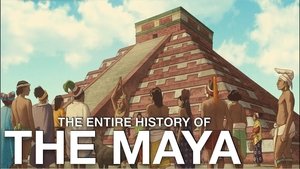
The Entire History of the Maya
A documentary made by History Time on YouTube. Written, researched and produced by Pete Kelly.
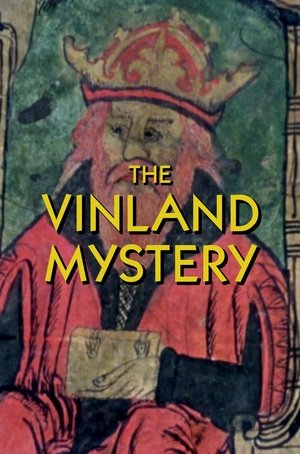
The Vinland Mystery
This short documentary depicts the search, discovery and authentication of the only known Norse settlement in North America - Vinland the Good. Mentioned in Icelandic manuscripts and speculated about for over two centuries, Vinland is known as "the place where the wild grapes grow" and was thought to be on the eastern coast between Virginia and Newfoundland. In 1960 a curious group of house mounds was uncovered at l'Anse aux Meadows in northern Newfoundland by Drs. Helge Ingstad and Anne Stine Ingstad of Norway. Added to the United Nations World Heritage List, l'Anse aux Meadows is considered one of the most important archaeological sites in the world.
1984