Watch Fratricide in Allah's Name (1997) Online Free
This film looks back at Algeria's past, covering its fight for independence and its subsequent fight against itself, being one of the few films to capture civil war Algeria and its inhabitants on camera. The filmmakers talk to politicians from both sides, past revolutionaries, and most importantly civilians, whose lives were torn apart by the conflict.
More Like This

Two Lives for Algeria and All the Wretched of the Earth
In 1994, at over seventy years old, Gilberte and William Sportisse, threatened by the FIS, arrived from Algeria. Of Jewish faith, he of Arabic mother tongue, they formed a fighting couple, started for the independence of Algeria, always with an unshakeable faith in humanity. They enjoy recounting the participation of Algerian Jews in the Second World War and the struggle for Algerian independence. They provide us with previously unpublished information on the public and clandestine struggles of the Algerian Communist Party before and after independence, and on the repression of activists who, like William and Gilberte Sportisse, were tortured and imprisoned after Colonel Boumédiène came to power. The film is an ode to understanding between people of different origins or cultures and a tribute to a couple whose youthful character and enthusiasm still astonish.
2025

The Words Women Spoke One Day
1962, at the end of the Algerian War, Algerian independence activists are released from Rennes prison. For one night, filmmaker Yann Le Masson films them. They tell him their vision for the future of Algeria and the place women must occupy in the new society to be built. Fifty years later, with the soundtrack missing, Raphaël Pillosio sets out to find these women. Two deaf people set about lip-reading the women filmed by Yann Le Masson, revealing snatches of sentences, words cut short by the camera's shifts. An investigative film in which the few activists still alive discover their old testimonies and tell us their silent story. The reconstruction of the lost soundtrack will remain in suspense; no happy ending will come to absorb the absence, to cancel the ferocious operation of time. An essay film about cinema that depicts their disappearance, and forever keeps them alive.
2024
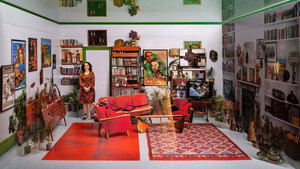
Dreams have no titles
Part of Zineb Sedira's art installation for the French Pavilion at the 59th Venice Biennale. A piece where Sedira explores her passion for the militant cinema of the 60s and 70s.
2022
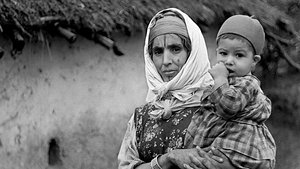
Lost Mountain
On November 1, 1954, the National Liberation Front of Algeria announced the war for the country's independence. France, colonizer since 1830, hastened to reinforce its military contingent in the four corners of the country and to prevent the advance of the rebels. A little Chaoui, born in a mountainous region of the country, sees his placid childhood collapse in the middle of a crossfire that he does not understand. The story, inspired by real testimonies, is constructed with images from the archives of the French army. From this apparently dissociated dialogue between image and word arises a sensitive homage to the memory that rests in the archives and to the ignored voice of its protagonists.
2020
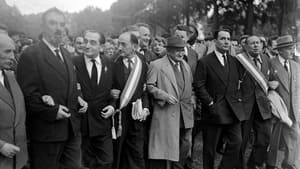
1958: Those Who Said No
On October 4, 2018, France celebrated the 60th anniversary of the Fifth Republic. It is a republic born in the throes of the Algerian War and one which—from the day it was founded by General de Gaulle until the presidency of a very Jupiterian Emmanuel Macron—has been assailed as a “Republican monarchy” by partisans of a more assertive parliamentarian state. By revisiting the struggle of those who dared oppose the new regime — only to suffer a crushing defeat on September 28, 1958, when they were barely able to garner 20% of the vote against the constitutional text — this film shines a powerful new light on the origins of the Fifth Republic and its consequences for the next 60 years. It is a constitutional debate that planted the seeds for a complete upheaval of the French political landscape, on the left in particular, and set the country in motion toward what would be called the Union of the Left.
2018
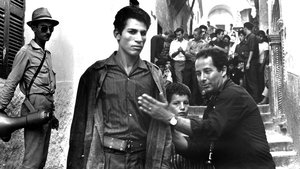
L'Histoire Du Film "La Bataille D'Alger"
More than fifty years after the release of the film “The Battle of Algiers” in theaters in June 1966, director Salim Aggar found, after a search which lasted more than a year and a half, the actors, extras and technicians who worked on the film directed by Gillo Pentecorvo and produced by Yacef Saadi. In this documentary full of anecdotes and stories about the filming of the film, the director found the actress who played the role of Hassiba Ben Bouali, the young 17-year-old actress who played Bouhamidi's bride but especially certain figures important parts of the film who were barely 10 years old at the time of filming and who no one will recognize today. Beyond the important historical aspect of the film, the documentary focused mainly on the social, cinematographic and cultural aspect of the film and its impact on a generation which had just regained independence.
2018
La Bataille d'Alger, l'empreinte
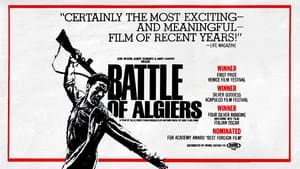
Cheikh Djemaï looks back on the genesis of Gillo Pontecorvo’s feature film, The Battle of Algiers (1965). Through archive images, extracts from the film and interviews with personalities, the filmmaker retraces the journey of a major work - from the events of the Algiers Casbah (1956-1957) to the presentation of the Lion of 'Or causing the anger of the French delegation in Venice - which left its mark as much in the history of cinema as in that of Algeria.
2018
CHoosing at Twenty
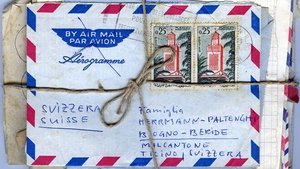
Between 1954-1962, one hundred to three hundred young French people refused to participate in the Algerian war. These rebels, soldiers or conscripts were non-violent or anti-colonialists. Some took refuge in Switzerland where Swiss citizens came to their aid, while in France they were condemned as traitors to the country. In 1962, a few months after Independence, Villi Hermann went to a region devastated by war near the Algerian-Moroccan border, to help rebuild a school. In 2016 he returned to Algeria and reunited with his former students. He also met French refractories, now living in France or Switzerland.
2017
Surgeon during the Algerian War
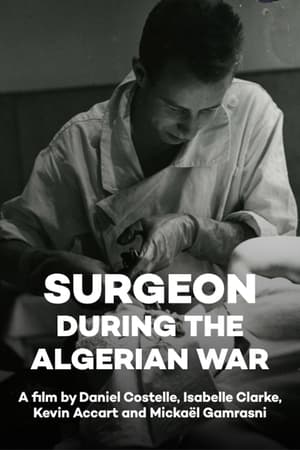
Has everything really been said about the Algerian war? Although the archives are opening up, almost fifty years after the signing of the Evian Agreements (March 18, 1962), direct witnesses are beginning to disappear. They are, however, unique bearers of history, often the only ones able to illustrate the harsh reality of a long-hidden period. Gérard Zwang, surgeon of the contingent between May 1956 and June 1958, is one of these essential witnesses who help us discover an original history of the Algerian War. During his service, in charge of treating the most atrocious wounds of his fellow soldiers, he sees the war from the side of its victims. He did not fight with a machine pistol in his hand, but behind the closed doors of an operating room where life gives way to death in a matter of seconds.
2012
The Forgotten Night - October 17, 1961
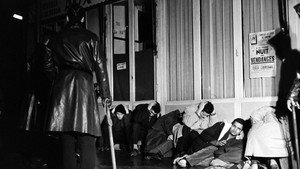
On October 17, 1961, in response to the curfew imposed on Muslim Algerians by Paris police prefect Maurice Papon, the FLN Federation of France organized a peaceful demonstration in the streets of the capital. The demonstration turned into a bloody crackdown: unprecedented violence, thousands of arrests, hundreds missing, and dozens dead. Today, much is known about the violence of that night: at least 200 Algerians were killed, beheaded, beaten, or thrown into the Seine; 11,500 others were arrested and often tortured. Hundreds were deported back to Algeria. Long silenced, the repression has been acknowledged thanks to the work of remembrance and eyewitness accounts.
2011
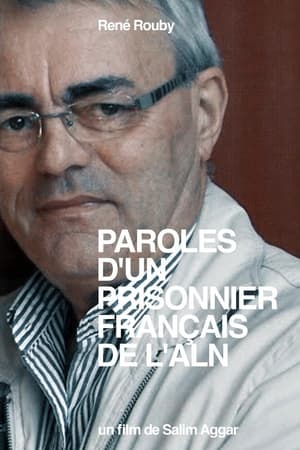
Paroles d'un Prisonnier Français de l'ALN
The image of French prisoners was very often evoked in Algerian cinema and literature, but until today, no Algerian or even European report or documentary had given voice to one of these French prisoners of the war of Algeria. In the interest of truth and writing history, we set out in search of one of these French witnesses. This witness is René Rouby, prisoner of Amirouche's group for more than 114 days in 1958 in the Akfadou region in Kabylia. This is the first testimony from a French prisoner of the ALN (the National Liberation Army).
2010
An Unhealed Wound - The Harkis in the Algerian War
It's the unforgivable story of the two hundred thousands harkis, the Arabs who fought alongside the French in the bitter Algerian war, from 1954 to 1962. Why did they make that choice? Why were they slaughtered after Algeria's independence? Why were they abandonned by the French government? Some fifty to sixty thousands were saved and transferred in France, often at pitiful conditions. This is for the first time, the story of this tragedy, told in the brilliant style of the authors of "Apocalypse".
2010
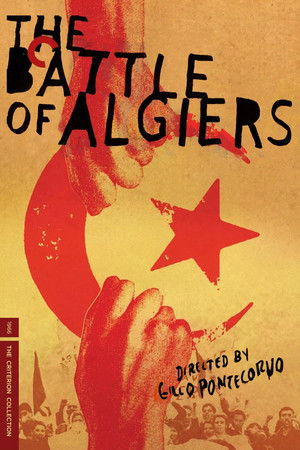
Remembering History
Made just three years after the end of the French-Algerian War (1954-1962), Gillo Pontecorvo's The Battle Of Algiers instantly ignited discussions of this complex historical period. Using the film as a point of reference, this 2004 documentary attempts to reconstruct the Algerian experience of the battle for independence.
2004
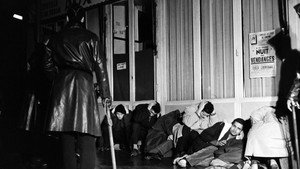
October 17, 1961: A day that went missing
This documentary bears witness to the events that took place more than thirty years before the filming of this movie, on October 17, 1961, in Paris, during the Algerian War. It is a work not only about historical truth but also about memory. Constructed primarily from interviews conducted with those involved in the events, along with archival footage, photographs, and radio broadcasts from the time, our investigation proves that nearly 200 Algerians were killed (drowned, tortured) that night and in the days that followed by the French police. "A Missing Day" seeks to ask two key questions: how could such events have unfolded in the capital of a Western democracy barely thirty years ago? And why have they been silenced ever since?
1992
Guerre aux images en Algérie
1985

Algeria 1954, The Revolt Of A Colonized
This film presents the point of view of an Arab from Algeria who rebels against colonization. He analyzes the process of awareness, the transition to revolt, to armed insurrection. Algeria and the settlers are seen through this lens and not the way a Frenchman saw the country. He gives voice to the Arabs at a time when this word was not heard: sometimes it was not even produced, at least publicly. The testimonies are based on real propositions, most of them were made to the author during his stay in Algeria from 1948 to 1956, then in 1958 and 1959. The comments are borrowed from the texts of Arab theorists of the revolution Algerian. This film thus completely evacuates the point of view of those who are not insurgents; he does not give the opinion of the colonists. It is the direct expression of what was the revolt of a colonized person: it thus constitutes the very type of the historical document.
1974

Algeria, Year Zero
Documentary on the beginnings of Algerian independence filmed during the summer of 1962 in Algiers. The film was banned in France and Algeria but won the Grand Prize at the Leipzig International Film Festival in 1965. Out of friendship, the production company Images de France sent an operator, Bruno Muel, who later declared: "For those who were called to Algeria (for me, 1956-58), participating in a film on independence was a victory over horror, lies and absurdity. It was also the beginning of my commitment to the cinema."
1965
A People on the March
In 1962, René Vautier, together with some Algerian friends, organised the audio-visual formation centre Ben Aknoun to encourage a "dialogue in images" between the two factions. Together with his students he made a film that shows the history of the Algerian War and of the ALN (National Liberation Army), and life during the reconstruction.
1963
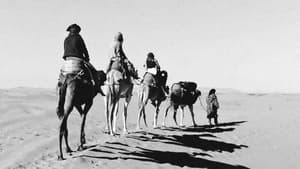
Guns of Freedom
This docu-fiction recounts the difficulties overcome by an ALN detachment whose perilous mission is to transport weapons and ammunition from Tunisia across the Algerian Sahara during the Algerian liberation war (1954-1962) against the French army of occupation.
1961
Algeria in Flames
These are the first images shot in the ALN maquis, camera in hand, at the end of 1956 and in 1957. These war images taken in the Aurès-Nementchas are intended to be the basis of a dialogue between French and Algerians for peace in Algeria, by demonstrating the existence of an armed organization close to the people. Three versions of Algeria in Flames are produced: French, German and Arabic. From the end of the editing, the film circulates without any cuts throughout the world, except in France where the first screening takes place in the occupied Sorbonne in 1968. Certain images of the film have circulated and are found in films, in particular Algerian films. Because of the excitement caused by this film, he was forced to go into hiding for 25 months. After the declaration of independence, he founded the first Algerian Audiovisual Center.
1958