Watch Remembering History (2004) Online Free
Made just three years after the end of the French-Algerian War (1954-1962), Gillo Pontecorvo's The Battle Of Algiers instantly ignited discussions of this complex historical period. Using the film as a point of reference, this 2004 documentary attempts to reconstruct the Algerian experience of the battle for independence.
Cast
Mohammed Harbi, Yacef Saâdi, Benjamin Stora, Zohra Drif-Bitat, Henri Alleg, Alistair Horne, Jacques Massu, Hugh Roberts, Roger Trinquier
More Like This

One, Two, Three – Viva l’Algérie !
“One, Two, Three, Viva l’Algérie!” is the main theme of our film. But it is first a slogan, a link that acts in space and time: a few words scanded, inseparable from the history of Algerian football and therefore the relationship between France and Algeria. These encouragements born with the FLN team during the Revolutionary War and later repeated in the Algerian epic at the 2010 World Cup were taken out of the stadiums in 2019 to call for change.
2022
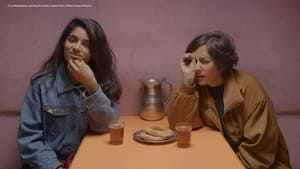
Aleph
Structured as a labyrinth-like game and inspired by Jorge Luis Borges, Aleph is a travelogue of experience, a dreamer's journey through the lives, experiences, stories and musings of protagonists spanning ten countries and five continents.
2021
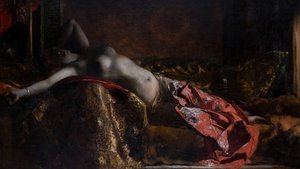
L'Orientalisme
Orientalism is a literary and artistic movement born in Western Europe in the 18th century. Through its scale and popularity, throughout the 19th century, it marked the interest and curiosity of artists and writers for the countries of the West (the Maghreb) or the Levant (the Middle East). Orientalism was born from the fascination of the Ottoman Empire and followed its slow disintegration and the progression of European colonizations. This exotic trend is associated with all the artistic movements of the 19th century, academic, romantic, realistic or even impressionist. It is present in architecture, music, painting, literature, poetry... Picturesque aesthetics, confusing styles, civilizations and eras, orientalism has created numerous clichés and clichés that we still find today in literature or cinema.
2019
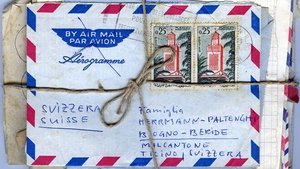
CHoosing at Twenty
Between 1954-1962, one hundred to three hundred young French people refused to participate in the Algerian war. These rebels, soldiers or conscripts were non-violent or anti-colonialists. Some took refuge in Switzerland where Swiss citizens came to their aid, while in France they were condemned as traitors to the country. In 1962, a few months after Independence, Villi Hermann went to a region devastated by war near the Algerian-Moroccan border, to help rebuild a school. In 2016 he returned to Algeria and reunited with his former students. He also met French refractories, now living in France or Switzerland.
2017
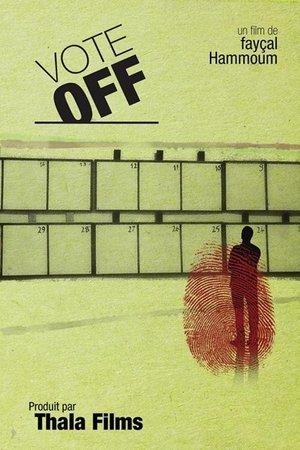
Vote off
Fayçal Hammoum recounts the 2014 presidential election through non-voting inhabitants of Algiers who, like him, are in their thirties. Be it Bilel, a grocer by default exposed to his customers’ political babbling, or the more politically-charged comments of Younes, a militant FM radio journalist opposed to President Bouteflika’s fourth term, the variety of conversational scenes in no way changes the determination not to vote for an old man who has been invisible for almost two years. The rappers Omar and Brahim are as bereft of hope and voter’s cards as the Tellek webradio DJ, since “the match is fixed”. Moving away from his focus on this subject to film their daily life, the filmmaker draws the portrait of a generation who, as Bilal says with poignant simplicity, “just wants to live
2017
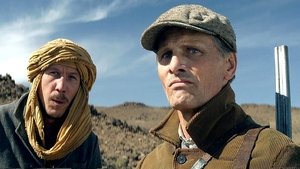
Far from Men
A French teacher in a small Algerian village during the Algerian War forms an unexpected bond with a dissident who is ordered to be turned in to the authorities.
2015

The Revolution Of El Harrachi
The artistic journey of Dahmane El Harrachi, born in 1925 in Algiers, bears the mark of his experience. An attentive and vigilant observer of the environment of immigrant workers, Dahmane has always avoided falling into the ambient miserabilism. From the Algerian Chaâbi, he has kept certain melodic lines and a clear propensity for sayings drawn from the oral poetic tradition. El Harrachi uses simple language, understandable by all popular sectors of the Maghreb, which partly explains its wide success. In 1949, he went to France and it was in cafes, springboard places where people come to breathe the air of the country, that he performed regularly. Elegant, with his beautiful atmosphere, the “bluesman” of the suburbs seduces, upsets and stirs consciences. Discovered late by the new generation, the creator of Ya Rayah met a tragic end, on August 31, 1980, in a car accident, on the Algiers coast which he sublimated above all else.
2014
La Langue de Zahra
2011
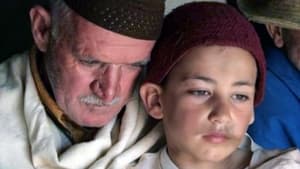
Mouloud Feraoun
Docufiction about Mouloud Feraoun, an author who upholds the great values of the Universal Man. It is in the name of man that Feraoun stands up against injustice. It is in the name of man that he is tormented by war. Feraoun is a solitary creator who suffers to the point of wishing for liberating madness. It is through his work that the portrait of a humble and discreet author, a talented writer and convictions emerges. Most of the time, I let him talk about himself in simple and fair words. I compile his moments of hope, worry, dreams and fears. During all my research, a generous and good Mouloud Feraoun stood out to me who did not hesitate to expose an inhuman and shameful colonial system. His clear and straightforward voice echoes the cry of a people from whom he has never separated.
2009
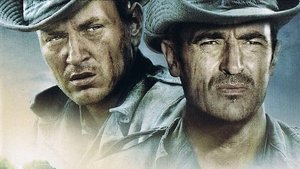
Intimate Enemies
A drama following a French platoon during Algeria's war of independence.
2007

Sociology Is a Martial Art
"I often say sociology is a martial art, a means of self-defence. Basically, you use it to defend yourself, without having the right to use it for unfair attacks." (Pierre Bourdieu) The world has witnesses who speak out loud what others keep to themselves. They are neither gurus, nor masters, but those who consider that the city and the world can be thought out. The sociologist, Pierre Bourdieu is one such witness." Over a three- year period, Pierre Carles' camera followed him through different situations: a short conversation with Günter Grass, a lively conference with the inhabitants of a working-class suburb, his relations with his students and colleagues and his plea that sociology be part of the life of the city. His thinking has a sort of familiarity, which means it is always within our reach. It is the thinking of a French intellectual who has chosen to think his times.
2001
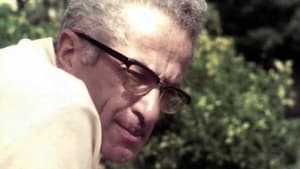
Da L'Mulud
An emblematic figure in the defense of Berber culture, Mouloud Mammeri (1917-1989) experienced numerous confrontations with the authorities in Algeria, including the suspension in 1973 of the teaching of Berber at university and the ban of the conference he was to deliver on March 10, 1980 at the University of Tizi Ouzou on ancient Kabyle poetry... which will be the detonator of the powerful and harshly repressed cultural demands movement of April 1980, also called the Berber Spring. Mouloud Mammeri is one of the "historians" of French-speaking Algerian literature from the middle of the last century who, through his pen, gave back the soul to a country by giving it back its voice.
1987
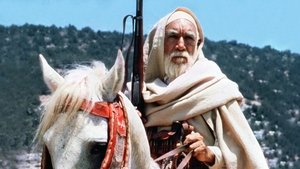
Lion of the Desert
Resistance leader Omar Mukhtar opposes Italian colonization before World War II. The brutal guerrilla war against Italian General Rodolfo Graziani and the Fascist forces of Benito Mussolini highlights the struggle for Libyan independence and the harsh tactics utilised by the colonisers.
1981
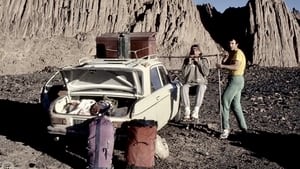
Oversand
Oversand is one of the first films about free climbing, the third film in a series of three with "Overdon" and "Over-Ice". Directed by Jean-Paul Janssen, the film was shot in 35mm in Algeria, in the Sahara Desert, in the Tamanrasset region, on the walls of the majestic peaks of the Atakor massif, central sub-region of Hoggar, mountainous heart of Hoggar, a volcanic plateau of almost circular shape, whose average altitude is 2000 meters, and which culminates at Mount Tahat (2918m), the highest point in Algeria. The Atakor is distinguished by its spectacular volcanic peaks, its needles, and its rugged landscapes, resulting from the erosion of ancient volcanic chimneys, which make it the most emblematic summits of the Hoggar, such as the Assekrem, the Ilamane, or the Tizouyag, where climbers Patrick Edlinger, Patrick Bérhault, Bernard Gorgeon, Hugues Jaillet, Jacques Perrier, Stéphane Troussier and Odette Schoënleb evolve under the watchful eye of the Tuareg caravans.
1981
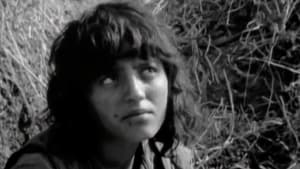
Noua
In Algeria in 1954, in a village in the Aurès region, poverty reigns over peasants enslaved by colonial administrators and Algerian landowners. Noua, in love with the son of a peasant dispossessed of his land, must be sold to a wealthy landowner.
1972
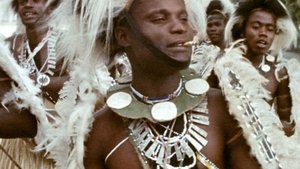
The Pan-african Festival in Algiers
Festival panafricain d'Alger is a documentary by William Klein of the music and dance festival held 40 years ago in the streets and in venues all across Algiers. Klein follows the preparations, the rehearsals, the concerts… He blends images of interviews made to writers and advocates of the freedom movements with stock images, thus allowing him to touch on such matters as colonialism, neocolonialism, colonial exploitation, the struggles and battles of the revolutionary movements for Independence.
1969
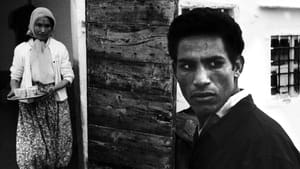
The Battle of Algiers
Paratrooper commander Colonel Mathieu, a former French Resistance fighter during World War II, is sent to Algeria to reinforce efforts to squelch the uprisings of the Algerian War. There he faces Ali la Pointe, a former petty criminal who, as the leader of the Algerian Front de Liberation Nationale, directs terror strategies against the colonial French government occupation. As each side resorts to ever-increasing brutality, no violent act is too unthinkable.
1966
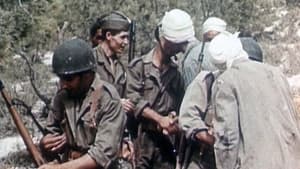
Algeria in Flames
These are the first images shot in the ALN maquis, camera in hand, at the end of 1956 and in 1957. These war images taken in the Aurès-Nementchas are intended to be the basis of a dialogue between French and Algerians for peace in Algeria, by demonstrating the existence of an armed organization close to the people. Three versions of Algeria in Flames are produced: French, German and Arabic. From the end of the editing, the film circulates without any cuts throughout the world, except in France where the first screening takes place in the occupied Sorbonne in 1968. Certain images of the film have circulated and are found in films, in particular Algerian films. Because of the excitement caused by this film, he was forced to go into hiding for 25 months. After the declaration of independence, he founded the first Algerian Audiovisual Center.
1958
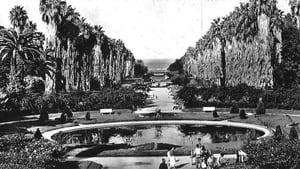
Alger Et Ses Environs
The film, shot in 1938, is part of a series entitled “The true face of Algeria”. The film highlights the proximity of Algiers to Paris and promotes air travel. The commentary supporting the images highlights the urban dynamism (“Every day, a new skyscraper replaces a wasteland”) and the comparison with Paris (“Algiers is often nicknamed the Paris of North Africa because of its elegance become proverbial). Contemporary architectural achievements are described as the sign of “grandiose modernism”: “we love the new, the bold”. But the point does not forget the buildings illustrating “the Moorish, classic and attractive style”. The description of the Casbah also attempts to understand the architectural organization but also the diversity and even the atmosphere.
1945