Watch L'Histoire Du Film "La Bataille D'Alger" (2018) Online Free
More than fifty years after the release of the film “The Battle of Algiers” in theaters in June 1966, director Salim Aggar found, after a search which lasted more than a year and a half, the actors, extras and technicians who worked on the film directed by Gillo Pentecorvo and produced by Yacef Saadi. In this documentary full of anecdotes and stories about the filming of the film, the director found the actress who played the role of Hassiba Ben Bouali, the young 17-year-old actress who played Bouhamidi's bride but especially certain figures important parts of the film who were barely 10 years old at the time of filming and who no one will recognize today. Beyond the important historical aspect of the film, the documentary focused mainly on the social, cinematographic and cultural aspect of the film and its impact on a generation which had just regained independence.
Cast
Noureddine Brahimi, Fouzia El Kader, Brahim Hadjadj, Yacef Saâdi, Rouiched, Abderrahmane Brahimi, Mohamed Ben Kassen, Kamel Djebara, Fatiha Djoudi
More Like This
France, le plus beau décor de cinéma
2024
Zinet, Algiers, Happiness
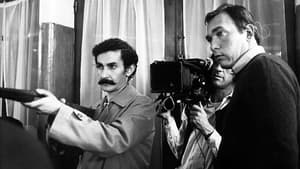
Who remembers Mohamed Zinet? In the eyes of French spectators who reserve his face and his frail silhouette, he is simply the “Arab actor” of French films of the 1970s, from Yves Boisset to Claude Lelouch. In Algeria, he's a completely different character... A child of the Casbah, he is the brilliant author of a film shot in the streets of Algiers in 1970, Tahya Ya Didou. Through this unique work, Zinet invents a new cinema, tells another story, shows the Algerians like never before. In the footsteps of his elder, in the alleys of the Casbah or on the port of Algiers, Mohammed Latrèche will retrace the story of Tahya Ya Didou and its director.
2023
One, Two, Three – Viva l’Algérie !
“One, Two, Three, Viva l’Algérie!” is the main theme of our film. But it is first a slogan, a link that acts in space and time: a few words scanded, inseparable from the history of Algerian football and therefore the relationship between France and Algeria. These encouragements born with the FLN team during the Revolutionary War and later repeated in the Algerian epic at the 2010 World Cup were taken out of the stadiums in 2019 to call for change.
2022
Aleph
Structured as a labyrinth-like game and inspired by Jorge Luis Borges, Aleph is a travelogue of experience, a dreamer's journey through the lives, experiences, stories and musings of protagonists spanning ten countries and five continents.
2021

Des femmes
As the peaceful and determined Hirak movement gathers momentum and hopes for profound political change sweep across Algeria, women are combining femininity and feminism in the past, present, and future.
2020
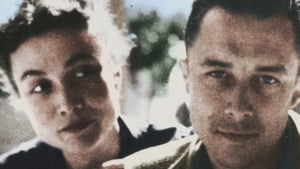
The Lives of Albert Camus
Albert Camus died at 46 years old on January 4, 1960, two years after his Nobel Prize in literature. Author of “L'Etranger”, one of the most widely read novels in the world, philosopher of the absurd and of revolt, resistant, journalist, playwright, Albert Camus had an extraordinary destiny. Child of the poor districts of Algiers, tuberculosis patient, orphan of father, son of an illiterate and deaf mother, he tore himself away from his condition thanks to his teacher. French from Algeria, he never ceased to fight for equality with the Arabs and the Kabyle, while fearing the Independence of the FLN. Founded on restored and colorized archives, and first-hand accounts, this documentary attempts to paint the portrait of Camus as he was.
2020
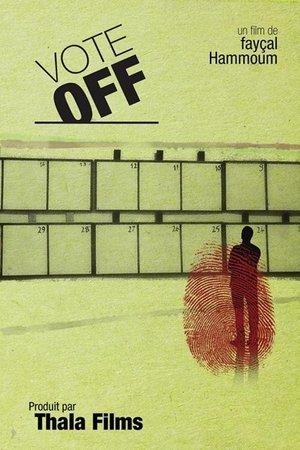
Vote off
Fayçal Hammoum recounts the 2014 presidential election through non-voting inhabitants of Algiers who, like him, are in their thirties. Be it Bilel, a grocer by default exposed to his customers’ political babbling, or the more politically-charged comments of Younes, a militant FM radio journalist opposed to President Bouteflika’s fourth term, the variety of conversational scenes in no way changes the determination not to vote for an old man who has been invisible for almost two years. The rappers Omar and Brahim are as bereft of hope and voter’s cards as the Tellek webradio DJ, since “the match is fixed”. Moving away from his focus on this subject to film their daily life, the filmmaker draws the portrait of a generation who, as Bilal says with poignant simplicity, “just wants to live
2017

The Revolution Of El Harrachi
The artistic journey of Dahmane El Harrachi, born in 1925 in Algiers, bears the mark of his experience. An attentive and vigilant observer of the environment of immigrant workers, Dahmane has always avoided falling into the ambient miserabilism. From the Algerian Chaâbi, he has kept certain melodic lines and a clear propensity for sayings drawn from the oral poetic tradition. El Harrachi uses simple language, understandable by all popular sectors of the Maghreb, which partly explains its wide success. In 1949, he went to France and it was in cafes, springboard places where people come to breathe the air of the country, that he performed regularly. Elegant, with his beautiful atmosphere, the “bluesman” of the suburbs seduces, upsets and stirs consciences. Discovered late by the new generation, the creator of Ya Rayah met a tragic end, on August 31, 1980, in a car accident, on the Algiers coast which he sublimated above all else.
2014
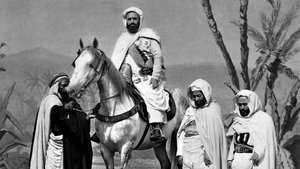
Abd El-Kader
Illustrated with archival photographs, animations and live action, this film explores the history and historical and spiritual heritage of Emir Abd El-Kader. Algerian leader of the 19th century, was admired by Abraham Lincoln and celebrated to this day by the Red Cross as a great humanitarian. Emir Abd el-Kader, the man who challenged the French armies from 1832 to 1847 before creating the bases of a real Algerian state, is today considered by independent Algeria as one of the most outstanding figures. of its history. The nobility of his attitude after his capture and the very effective protection he brought to the Christians of Damascus at the end of his life also earned him great prestige among his former adversaries. A documentary told in dialectal Arabic by the voice of Amazigh Kateb.
2014
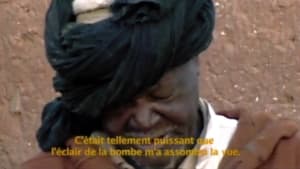
Gerboise Bleue
"Gerboise bleue", the first French atomic test carried out on February 13, 1960 in the Algerian Sahara, is the starting point of France's nuclear power. These are powerful radioactive aerial shots carried out in areas belonging to the French army. Underground tests will follow, even after the independence of Algeria. From 1960 to 1978, 30,000 people were exposed in the Sahara. The French army was recognized recognized nine irradiations. No complaint against the army or the Atomic Energy Commission has resulted. Three requests for a commission of inquiry were rejected by the National Defense Commission. For the first time, the last survivors bear witness to their fight for the recognition of their illnesses, and revealed to themselves in what conditions the shootings took place. The director goes to the zero point of "Gerboise Bleue", forbidden access for 47 years by the Algerian authorities
2009
Mouloud Feraoun
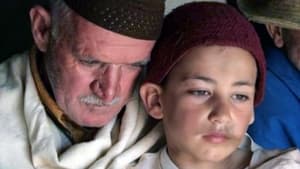
Docufiction about Mouloud Feraoun, an author who upholds the great values of the Universal Man. It is in the name of man that Feraoun stands up against injustice. It is in the name of man that he is tormented by war. Feraoun is a solitary creator who suffers to the point of wishing for liberating madness. It is through his work that the portrait of a humble and discreet author, a talented writer and convictions emerges. Most of the time, I let him talk about himself in simple and fair words. I compile his moments of hope, worry, dreams and fears. During all my research, a generous and good Mouloud Feraoun stood out to me who did not hesitate to expose an inhuman and shameful colonial system. His clear and straightforward voice echoes the cry of a people from whom he has never separated.
2009
Da L'Mulud
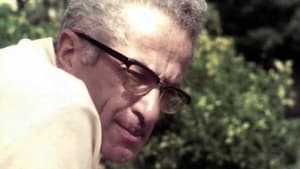
An emblematic figure in the defense of Berber culture, Mouloud Mammeri (1917-1989) experienced numerous confrontations with the authorities in Algeria, including the suspension in 1973 of the teaching of Berber at university and the ban of the conference he was to deliver on March 10, 1980 at the University of Tizi Ouzou on ancient Kabyle poetry... which will be the detonator of the powerful and harshly repressed cultural demands movement of April 1980, also called the Berber Spring. Mouloud Mammeri is one of the "historians" of French-speaking Algerian literature from the middle of the last century who, through his pen, gave back the soul to a country by giving it back its voice.
1987
Opera Vertical
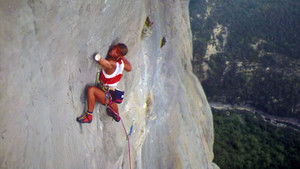
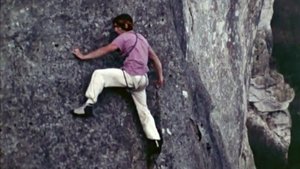
Vertical Opera is a documentary film directed by Jean-Paul Janssen, with climbers Patrick Edlinger and Jean-Paul Lemercier in the Gorges du Verdon. The film opens with a training sequence of Patrick Edlinger then he links the routes with Jean-Paul Lemercier "L'Ange en décongelation" (7a), in which he falls voluntarily to demonstrate the usefulness of the rope, then "Le Septième Saut" (7b+). Finally, the final scene, an anthology, consists of a close-up of Edlinger who climbs free solo and barefoot the route "Débiloff", still in the Verdon, above hundreds of meters of void, all to lyrical music. It is "Wie Furchtsam Wankten Meine Schritte", the aria for alto voice from Johann Sebastian Bach's cantata BWV 33, music not unrelated to the subject of the documentary: "How faltering and fearful my steps were".
1984
The Zerda or the Songs of Forgetting
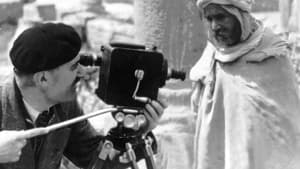
“La Zerda and the songs of oblivion” (1982) is one of only two films made by the Algerian novelist Assia Djebar, with “La Nouba des femmes du mont Chenoua” (1977). Powerful poetic essay based on archives, in which Assia Djebar – in collaboration with the poet Malek Alloula and the composer Ahmed Essyad – deconstructs the French colonial propaganda of the Pathé-Gaumont newsreels from 1912 to 1942, to reveal the signs of revolt among the subjugated North African population. Through the reassembly of these propaganda images, Djebar recovers the history of the Zerda ceremonies, suggesting that the power and mysticism of this tradition were obliterated and erased by the predatory voyeurism of the colonial gaze. This very gaze is thus subverted and a hidden tradition of resistance and struggle is revealed, against any exoticizing and orientalist temptation.
1983
Oversand
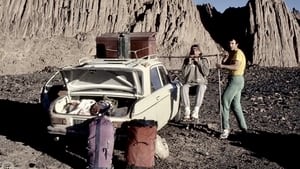
Oversand is one of the first films about free climbing, the third film in a series of three with "Overdon" and "Over-Ice". Directed by Jean-Paul Janssen, the film was shot in 35mm in Algeria, in the Sahara Desert, in the Tamanrasset region, on the walls of the majestic peaks of the Atakor massif, central sub-region of Hoggar, mountainous heart of Hoggar, a volcanic plateau of almost circular shape, whose average altitude is 2000 meters, and which culminates at Mount Tahat (2918m), the highest point in Algeria. The Atakor is distinguished by its spectacular volcanic peaks, its needles, and its rugged landscapes, resulting from the erosion of ancient volcanic chimneys, which make it the most emblematic summits of the Hoggar, such as the Assekrem, the Ilamane, or the Tizouyag, where climbers Patrick Edlinger, Patrick Bérhault, Bernard Gorgeon, Hugues Jaillet, Jacques Perrier, Stéphane Troussier and Odette Schoënleb evolve under the watchful eye of the Tuareg caravans.
1981
Voie Express
1979
The Pan-african Festival in Algiers
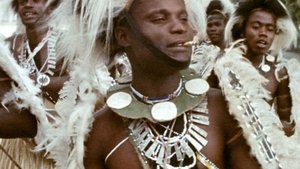
Festival panafricain d'Alger is a documentary by William Klein of the music and dance festival held 40 years ago in the streets and in venues all across Algiers. Klein follows the preparations, the rehearsals, the concerts… He blends images of interviews made to writers and advocates of the freedom movements with stock images, thus allowing him to touch on such matters as colonialism, neocolonialism, colonial exploitation, the struggles and battles of the revolutionary movements for Independence.
1969

Algeria, Year Zero
Documentary on the beginnings of Algerian independence filmed during the summer of 1962 in Algiers. The film was banned in France and Algeria but won the Grand Prize at the Leipzig International Film Festival in 1965. Out of friendship, the production company Images de France sent an operator, Bruno Muel, who later declared: "For those who were called to Algeria (for me, 1956-58), participating in a film on independence was a victory over horror, lies and absurdity. It was also the beginning of my commitment to the cinema."
1965

Le Grand Désert
In 1950, the explorer Roger Frison-Roche made a crossing of more than a thousand kilometers on the back of a camel with the photographer Georges Tairraz II, in the heart of the Sahara, from Hoggar then Djanet in Algeria to Ghat in Libya. From their journey they brought back a large number of color films and documents. Among thousands of photos, they selected 47 images which reflect the various aspects of these immense spaces which occupy a third of Africa in the book "The Great Desert". “The Great Desert, 1000 kilometers on camelback” is the eponymous 85-minute documentary of this epic, released in 1950.
1950
Alger Et Ses Environs
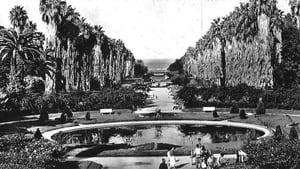
The film, shot in 1938, is part of a series entitled “The true face of Algeria”. The film highlights the proximity of Algiers to Paris and promotes air travel. The commentary supporting the images highlights the urban dynamism (“Every day, a new skyscraper replaces a wasteland”) and the comparison with Paris (“Algiers is often nicknamed the Paris of North Africa because of its elegance become proverbial). Contemporary architectural achievements are described as the sign of “grandiose modernism”: “we love the new, the bold”. But the point does not forget the buildings illustrating “the Moorish, classic and attractive style”. The description of the Casbah also attempts to understand the architectural organization but also the diversity and even the atmosphere.
1945