Watch For Kibera! (2015) Online Free
Boy Dallas lives in the slum of Kibera, the capital of Kenya, Nairobi. He is a radio host, "The Voice of Kibera." Dallas is a self-taught cameraman, and with a spare camera, he sets out to find out why the neighborhood, which has long been the target of aid, is still in such terrible trouble.
More Like This
Ghar Mein Shehar Hona
via print and film, love and music, state propaganda and people's archives, five-year plans and Emergency.
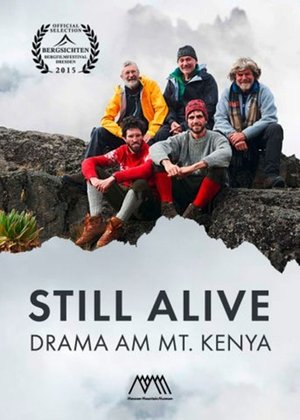
Still Alive – The Drama on Mount Kenya
Still Alive - The Drama on Mount Kenya is a gripping docudrama that recounts a legendary rescue operation on Mount Kenya in Africa in 1970.
2025

Running With The Beest
2022
Lion: The Rise and Fall of the Marsh Pride
Documented in television documentaries for over 40 years by the BBC and other broadcasters around the world, the Marsh Pride is the most filmed pride of lions on Earth. In this film, the Marsh Pride battle for survival in Kenya's famous Maasai Mara Reserve, which has become a magnet for tourists, many of them keen to see the pride for themselves. A tale of shifting loyalties, bloody takeovers and sheer resilience, the lions’ story is told by those who filmed them, tried to protect them and lived alongside them, as well as some who ultimately wanted them dead.
2022
Masai Mara: The Big Hunt
See the great migration as never before! The Mara River, nature’s best laid trap for migratory animals, is the stage for a grandiose spectacle. When food supply in the Serengeti dwindles, the Masai Mara is a paradise for predators. As the black wildebeests, gazelles, zebras and antelopes make their yearly trip from the south of the Serengeti to the north, nature’s best laid trap, the Mara River in Kenya is waiting ahead. Captivating shots filmed under water show how crocodiles prepare for the Big Hunt while other predators lurk on the banks awaiting their bounty.
2018
When Lambs Become Lions
In the Kenyan bush, a crackdown on ivory poaching forces a silver-tongued second-generation poacher to seek out an unlikely ally in this fly-on-the-wall look at both sides of the conservation divide.
2018
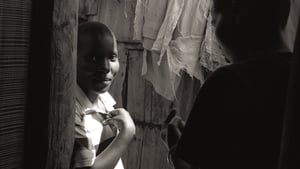
Sidney & Friends
When his family tries to kill him, Sidney, who is intersex, flees to Nairobi where he meets a group of transgender friends. Together, they fight discrimination and discover life, love and self-worth.
2017
The Donkey that Carried the Cloud on its Back
In the Indian Ocean, off the coast of Kenya, there is an island. On this island there is a stone town; its stone buildings stand as skeletons of the splendor of its yesteryears. High tide, low tide, Full moon, new moon. Lamu is an island frozen in time. Now Africa’s largest port is being constructed. In order to evolve, what part of ourselves do we keep and what part do we leave behind?
2015
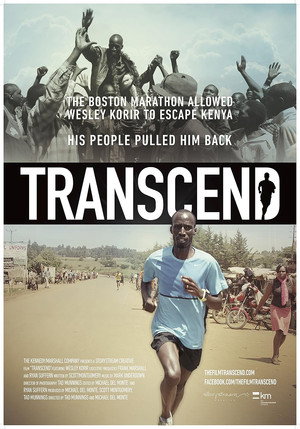
Transcend
Long-distance running allowed Wesley Korir to escape the grinding poverty of Kenya. But after winning multiple American marathons, including taking running's most cherished prize - the Boston Marathon, he risks it all and returns home to help his fellow Kenyans create better lives for themselves. In what promises to be the most challenging race of his career, Wesley takes on a well-financed, big-party candidate to run for a seat in Kenyan parliament. attempting to balance the frenzy of campaigning with the demands of marathon training.
2014
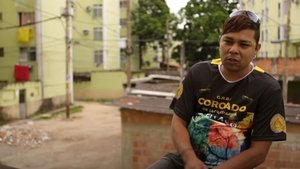
Favela Gay
Favela Gay tells the story of eleven individuals in their own words. Living in eight slums (favelas) in Rio de Janeiro, these members of the LGBTQ community – two transgender women, a crossdressing man, a travesti prostitute, a famous carnival dancer, two community activists, and even a young man who used to be transgender, but transitioned back – have fought prejudice and seen some of the most unsavoury sides of the city.
2014
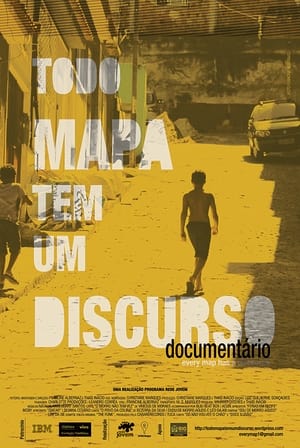
Every map has a discourse
2014
Kenya 3D: Animal Kingdom
A journey in the most spectacular wildlife sanctuary on Earth. Join two young Maasai warriors and discover the breathtaking diversity of the region's natural fauna, including the Big Five - lions, elephants, Cape buffalo, leopards and black rhinos - as well as giraffe, hippos, cheetahs, and many more.
2013
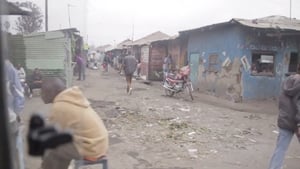
The Tales from Kibera Radio
Kibera is the largest slum area in Nairobi, and the largest urban slum in Africa. This documentary depicts three important problems; violence, drugs (miraa) and albinos killing.The 2009 Kenya Population and Housing Census reports Kibera's population as 170,070, contrary to previous estimates of one or two million people .Most of Kibera slum residents live in extreme poverty, earning less than $1.00 per day. Unemployment rates are high. Persons living with HIV in the slum are many, as are AIDS cases. Cases of assault and rape are common. There are few schools, and most people cannot afford education for their children. Clean water is scarce. Diseases caused by poor hygiene are prevalent.
2012
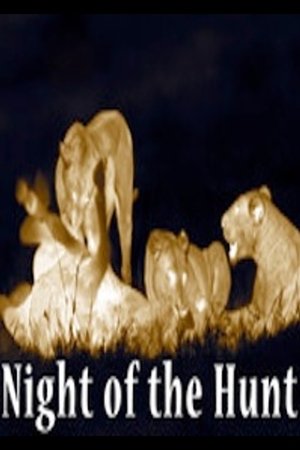
Night of the Hunt
Using the latest advances in camera technology, NGC penetrates the nocturnal hunting behaviors of the lion. Often asleep during the day, at night these iconic cats become active predators. With thermal imaging and infrared technology, see how experienced lions use the night to their advantage while stalking their prey
2011
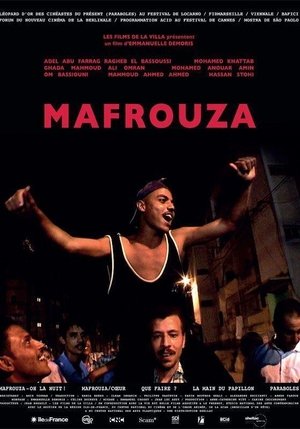
The Hand of the Butterfly
Fourth film in the Mafrouza series. Two events mark the early winter in Mafrouza: the birth of a boy and a young woman's engagement. Within their homes, the intimate and the holy, cries, whispers and rituals: individuals' destinies are taking shape. Amidst the familial agitation, each finds their own way to live. Through their actions, but also through what they say, summoning the imaginary to reflect on reality, make it livable, and speaking of life, death and gender roles.
2010
Stress: Portrait of a Killer
Over the last three decades, science has been advancing our understanding of stress: how it impacts our bodies and how our social standing can make us more or less susceptible. From baboon troops on the plains of Africa, to neuroscience labs at Stanford University, scientists are revealing just how lethal stress can be. Research tells us that the impact of stress can be found deep within us, shrinking our brains, adding fat to our bellies, even unraveling our chromosomes. Understanding how stress works can help us figure out ways to combat it and how to live a life free of the tyranny of this contemporary plague. In Stress: Portrait of a Killer, scientific discoveries in the field and in the lab prove that stress is not just a state of mind, but something measurable and dangerous.
2008
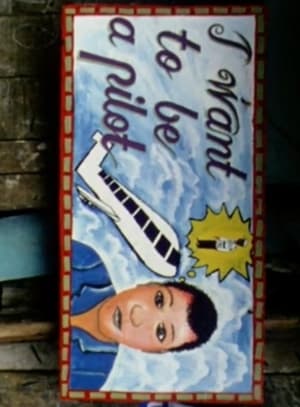
I Want to Be a Pilot
Omondi lives in the biggest slum in East Africa. Everyday he sees airplanes fly over him. He dreams of becoming an airline pilot and flying far away.
2006
Megacities
Megacities is a documentary about the slums of five different metropolitan cities.
1998
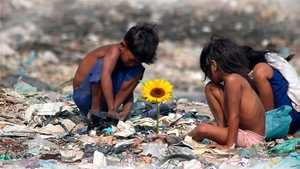
Isle of Flowers
A tomato is planted, harvested and sold at a supermarket, but it rots and ends up in the trash. But it doesn’t end there: Isle of Flowers follows it up until its real end, among animals, trash, women and children. And then the difference between tomatoes, pigs and human beings becomes clear.
1989

Kenyatta
Jomo Kenyatta's death in 1978 brought to an end a political career that encompassed more than 50 years of African history. Kenyatta entered politics in the mid-1920s and then spent 17 years in exile in Europe. He returned to Kenya in 1946, and was elected president of the nationalist movement, the Kenya African Union. Arrested and imprisoned in 1952 for allegedly leading 'Mau Mau', he was released in 1961 and two years later became Kenya's first Prime Minister. In power, the man whom European settlers had once reviled as "the leader to darkness and death" was eulogized by them as a pillar of stability, while former allies challenged him by creating a left-leaning political opposition. Kenyatta weaves archival and contemporary images with interviews with friends and relatives, comrades and opponents, to create a biographical portrait of a key figure in 20th century politics, and a case study of what Frantz Fanon called the pitfalls of nationalism as a political force in Africa.
1973