Watch Kenyatta (1973) Online Free
Jomo Kenyatta's death in 1978 brought to an end a political career that encompassed more than 50 years of African history. Kenyatta entered politics in the mid-1920s and then spent 17 years in exile in Europe. He returned to Kenya in 1946, and was elected president of the nationalist movement, the Kenya African Union. Arrested and imprisoned in 1952 for allegedly leading 'Mau Mau', he was released in 1961 and two years later became Kenya's first Prime Minister. In power, the man whom European settlers had once reviled as "the leader to darkness and death" was eulogized by them as a pillar of stability, while former allies challenged him by creating a left-leaning political opposition. Kenyatta weaves archival and contemporary images with interviews with friends and relatives, comrades and opponents, to create a biographical portrait of a key figure in 20th century politics, and a case study of what Frantz Fanon called the pitfalls of nationalism as a political force in Africa.
Cast
Musindo Mwinyipembe
More Like This
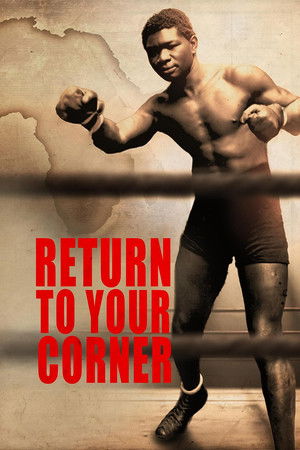
Return to Your Corner
This is the story of Africa's first Boxing World Champion, Battling Siki. Who was this boxer born in Senegal, decorated for Bravery in World War I? Why do so few know that he fought and won the World Light Heavyweight Title aged 25, only to lose it controversially six months later? And why was his life cut short on a New York Street aged 28?
2025
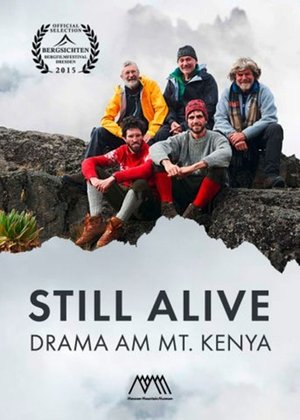
Still Alive – The Drama on Mount Kenya
Still Alive - The Drama on Mount Kenya is a gripping docudrama that recounts a legendary rescue operation on Mount Kenya in Africa in 1970.
2025
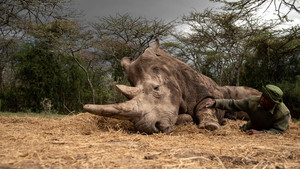
TEN MONTHS
MIEZI KUMI (TEN MONTHS) is a short documentary of the love between Zacharia Mutai, his family and the last two northern white rhinos, which he has to take care of for ten months in a year.
2022

Running With The Beest
2022
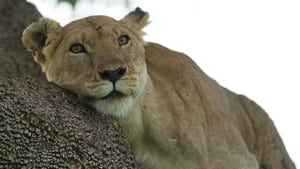
Lion: The Rise and Fall of the Marsh Pride
Documented in television documentaries for over 40 years by the BBC and other broadcasters around the world, the Marsh Pride is the most filmed pride of lions on Earth. In this film, the Marsh Pride battle for survival in Kenya's famous Maasai Mara Reserve, which has become a magnet for tourists, many of them keen to see the pride for themselves. A tale of shifting loyalties, bloody takeovers and sheer resilience, the lions’ story is told by those who filmed them, tried to protect them and lived alongside them, as well as some who ultimately wanted them dead.
2022
The Imperial Lullaby
The armies of Fascist Italy conquered Addis Ababa, capital of Abyssinia, in May 1936, thus culminating the African colonial adventure of the ruthless dictator Benito Mussolini, by then lord of Libya, Eritrea and Somalia; a bloody and tragic story told through the naive drawings of Pietro Dall'Igna, an Italian schoolboy born in 1925.
2020
The White Massai Warrior
For the first time in history, a white man has been invited to become a Massai Warrior. The Massai of East Africa are one of the last tribes on earth to live as they did hundreds of years ago. Benjamin will live among the tribe, sleeping, hunting, and surviving in the bush. He will get to know their culture, their customs of dancing and playing, and learn how to conquer the dangers of the wilderness. Will he be able to become a true Massai warrior? To become a Massai is a great journey into the unknown.
2020
The Writer from a Country Without Bookstores
The ruthless dictator Teodoro Obiang has ruled Equatorial Guinea with an iron hand since 1979. Juan Tomás Ávila Laurel is the most translated Equatoguinean writer, but he had to flee the country in 2011, after starting a hunger strike denouncing the crimes of the dictatorship. Since then, he has lived in Spain, feeling that, despite the risks, he must return and fight the monster with words.
2019
Masai Mara: The Big Hunt
See the great migration as never before! The Mara River, nature’s best laid trap for migratory animals, is the stage for a grandiose spectacle. When food supply in the Serengeti dwindles, the Masai Mara is a paradise for predators. As the black wildebeests, gazelles, zebras and antelopes make their yearly trip from the south of the Serengeti to the north, nature’s best laid trap, the Mara River in Kenya is waiting ahead. Captivating shots filmed under water show how crocodiles prepare for the Big Hunt while other predators lurk on the banks awaiting their bounty.
2018
Sidney & Friends
When his family tries to kill him, Sidney, who is intersex, flees to Nairobi where he meets a group of transgender friends. Together, they fight discrimination and discover life, love and self-worth.
2017
Honey at the Top
Honey at the Top is a film about the Sengwer forest people of the Cherangani Hills, Kenya, being evicted from their ancestral land in the name of conservation. The film centres around father of two Elias as he works with his community to try and hold onto their culture and resist the evictions. It is an intimate portrait of this community at a crossroads, facing international pressure from organisations like the World Bank, a corrupt Kenya Forest Service who are burning their houses and attempts to turn the forest into a commodity through carbon offsetting schemes.
2015
Transcend
Long-distance running allowed Wesley Korir to escape the grinding poverty of Kenya. But after winning multiple American marathons, including taking running's most cherished prize - the Boston Marathon, he risks it all and returns home to help his fellow Kenyans create better lives for themselves. In what promises to be the most challenging race of his career, Wesley takes on a well-financed, big-party candidate to run for a seat in Kenyan parliament. attempting to balance the frenzy of campaigning with the demands of marathon training.
2014

Terror at the Mall
A documentary detailing an indiscriminate terrorist attack that left 71 dead in Kenya.
2014
Kenya 3D: Animal Kingdom
A journey in the most spectacular wildlife sanctuary on Earth. Join two young Maasai warriors and discover the breathtaking diversity of the region's natural fauna, including the Big Five - lions, elephants, Cape buffalo, leopards and black rhinos - as well as giraffe, hippos, cheetahs, and many more.
2013
Hyena: Queen of the Masai Mara
This is the unusual portrait of two hunters - the cheetah and the hyena. It is a dramatic story built around the competition for prey and territory and the fight for survival.
2012
A Blooming Business
A documentary about people in Kenya who are imprisoned by the global flower industry. The dilemmas of the industry become painfully clear and a dark world of oppression, sexual abuse and terrible working conditions unfolds. There is only one conclusion possible: the smell of the imported rose is not sweet, but bitter.
2009
Taking Root: The Vision of Wangari Maathai
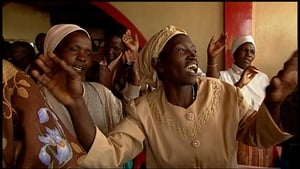
This documentary provides a window into the extraordinary life of activist and Nobel Laureate Wangari Maathai, a Kenyan woman who has worked to regain ownership of her country and its fate after years of colonialism. While gentle and thoughtful, Maathai carries a powerful message: the First World holds much of the responsibility for the environmental, economic and social struggles of the developing world.
2008
Mirror of Tunisia/Tunisia, the Trance and the Stone
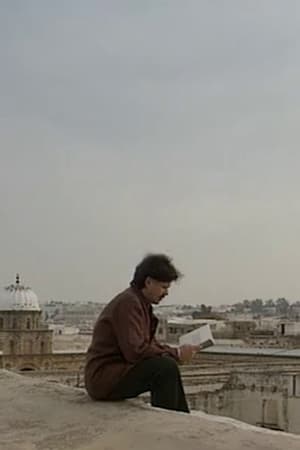
Tunisia itself is the subject; we wanted to render the genius of the site. Tunisia is almost the central character of this little film: we see the relation of the city to the sea, the traces that bear witness to its foundation, the remains of Carthage, the symbolism of the recently discovered Medina coin … The splendours of the house interiors and courtyards are associated with a scene of origin, what psychoanalysis calls a primal scene. Entering these houses opens up a world peopled by women: the child’s ‘homecoming’ in the hands of women is staged as an abduction, playing doubly on fascination and terror. These places were mine, from my childhood, they can be found almost intact – it’s the return of the exile visiting the kingdom. I let Ruiz discover all this, and immediately that led him to echoes and resonances ranging from Spain to Chile.
1993
Serengeti Shall Not Die
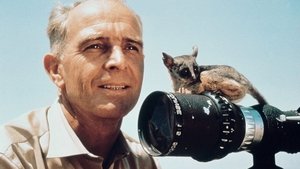
The film tells of the beginnings of the Serengeti National Park in Tanzania. At the end of the 1950s, the Tanzanian National Park Administration wanted to fence in the protected area around the Ngorongoro Crater. Bernhard and Michael Grzimek were invited by the national park administration in 1957 to get a precise picture of the animal migrations and to provide the national park administration with the values they needed for their project. Using a new counting method with two airplanes, the Grzimeks found out that the migration of the herds was different than assumed.
1959
Under the water
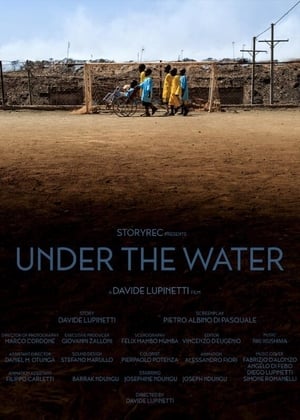
A daily life in Korogocho, Kenya, one of the world’s poorest slums.