Watch The Donkey that Carried the Cloud on its Back (2015) Online Free
In the Indian Ocean, off the coast of Kenya, there is an island. On this island there is a stone town; its stone buildings stand as skeletons of the splendor of its yesteryears. High tide, low tide, Full moon, new moon. Lamu is an island frozen in time. Now Africa’s largest port is being constructed. In order to evolve, what part of ourselves do we keep and what part do we leave behind?
More Like This
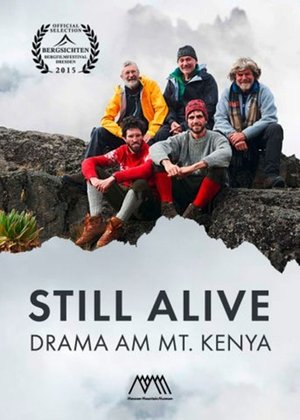
Still Alive – The Drama on Mount Kenya
Still Alive - The Drama on Mount Kenya is a gripping docudrama that recounts a legendary rescue operation on Mount Kenya in Africa in 1970.
2025
Top Rider
An in-depth look into the isolated sport of Motocross in the much more isolated island of Bermuda.
2024

Koh kood
A young lad solo traveling to the end of Thailand hidden Gem Island known as Koh Kood. A fiery of storms and uncontrollable waves appear while departing off this island after a couple of nights of unimaginable paradise, beautiful landscapes, sceneries and breathtaking adventures.
2023
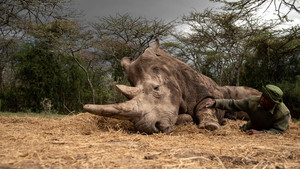
TEN MONTHS
MIEZI KUMI (TEN MONTHS) is a short documentary of the love between Zacharia Mutai, his family and the last two northern white rhinos, which he has to take care of for ten months in a year.
2022
I Wish
Hong Kong started and flourished as a fishing port in the past, and its people have long been committed to worshipping ancient deities for their blessings. With over a hundred Tin Hau temples (Goddess of Sea) in Hong Kong, there are three on Lamma Island alone, located respectively in Sok Kwu Wan, Luk Chau and Yung Shue Wan. The film documents the states of Tin Hau temples on the island and beyond, as an attempt to contextualise the everyday practice of the fishing community, islanders and city dwellers visiting the temples.
2022
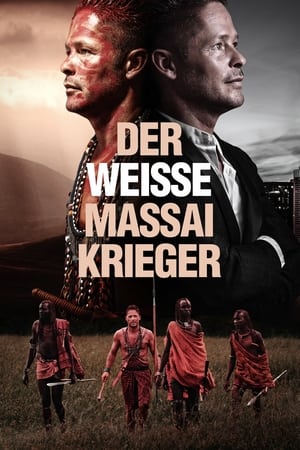
The White Massai Warrior
For the first time in history, a white man has been invited to become a Massai Warrior. The Massai of East Africa are one of the last tribes on earth to live as they did hundreds of years ago. Benjamin will live among the tribe, sleeping, hunting, and surviving in the bush. He will get to know their culture, their customs of dancing and playing, and learn how to conquer the dangers of the wilderness. Will he be able to become a true Massai warrior? To become a Massai is a great journey into the unknown.
2020
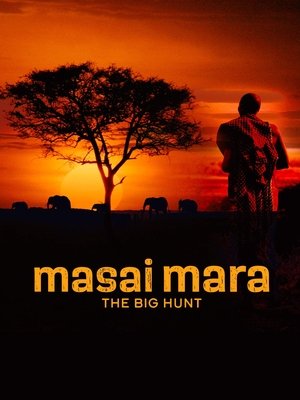
Masai Mara: The Big Hunt
See the great migration as never before! The Mara River, nature’s best laid trap for migratory animals, is the stage for a grandiose spectacle. When food supply in the Serengeti dwindles, the Masai Mara is a paradise for predators. As the black wildebeests, gazelles, zebras and antelopes make their yearly trip from the south of the Serengeti to the north, nature’s best laid trap, the Mara River in Kenya is waiting ahead. Captivating shots filmed under water show how crocodiles prepare for the Big Hunt while other predators lurk on the banks awaiting their bounty.
2018
Sidney & Friends
When his family tries to kill him, Sidney, who is intersex, flees to Nairobi where he meets a group of transgender friends. Together, they fight discrimination and discover life, love and self-worth.
2017
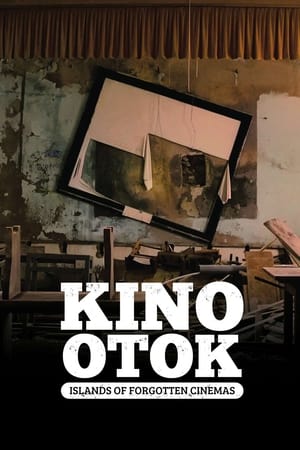
Islands of Forgotten Cinemas
A poetic documentary about the lost film culture in the small villages on the Croatian islands during the SFR of Yugoslavia.
2016
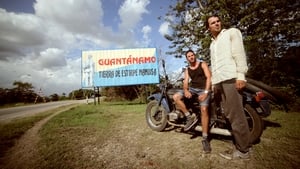
AHORA SI LLEGO!
The first Road Movie feature film made by the Italian artist Sanzi together with the Cuban Balboa is inspired by friendship, the island and the motorbike. The two artists used, for the first time in Cuba, the form of the Road Movie--the cinematic genre the plot of which is developed during a trip.
2015
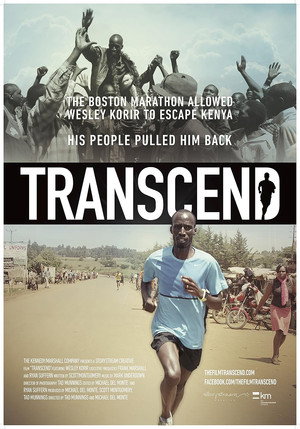
Transcend
Long-distance running allowed Wesley Korir to escape the grinding poverty of Kenya. But after winning multiple American marathons, including taking running's most cherished prize - the Boston Marathon, he risks it all and returns home to help his fellow Kenyans create better lives for themselves. In what promises to be the most challenging race of his career, Wesley takes on a well-financed, big-party candidate to run for a seat in Kenyan parliament. attempting to balance the frenzy of campaigning with the demands of marathon training.
2014

Terror at the Mall
A documentary detailing an indiscriminate terrorist attack that left 71 dead in Kenya.
2014
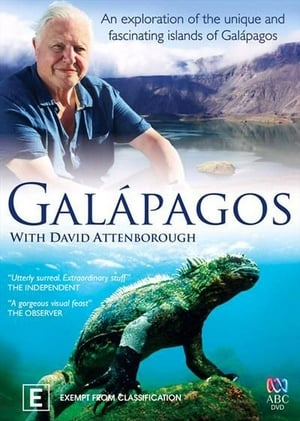
Galapagos with David Attenborough
Two hundred years after Charles Darwin set foot on the shores of the Galápagos Islands, David Attenborough travels to this wild and mysterious archipelago. Amongst the flora and fauna of these enchanted volcanic islands, Darwin formulated his groundbreaking theories on evolution. Journey with Attenborough to explore how life on the islands has continued to evolve in biological isolation, and how the ever-changing volcanic landscape has given birth to species and sub-species that exist nowhere else in the world. Encompassing treacherous journeys, life-forms that forge unlikely companionships, and survival against all odds, Galápagos tells the story of an evolutionary melting pot in which anything and everything is possible.
2013
Kenya 3D: Animal Kingdom
A journey in the most spectacular wildlife sanctuary on Earth. Join two young Maasai warriors and discover the breathtaking diversity of the region's natural fauna, including the Big Five - lions, elephants, Cape buffalo, leopards and black rhinos - as well as giraffe, hippos, cheetahs, and many more.
2013
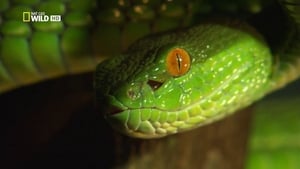
Venom Islands
Venom expert Dr. Bryan Fry embarks on a dangerous island journey to uncover the deadly secrets of vipers, stonefish and the formidable Komodo dragon.
2012
A Blooming Business
A documentary about people in Kenya who are imprisoned by the global flower industry. The dilemmas of the industry become painfully clear and a dark world of oppression, sexual abuse and terrible working conditions unfolds. There is only one conclusion possible: the smell of the imported rose is not sweet, but bitter.
2009
Nauru, an Island Adrift
A quiet island, lost in the pacific ocean. Nothing worth of interest, until the day a stroke of luck, phosphate, provided by the island's coral core, led the country to incredible heights: in 1975, it became the second richest country per inhabitant in the world after Saudi Arabia... Only to plunge into ruins a few years later.
2009
Hiddensee - Unsere schöne Insel
A journey through a nature reserve in the GDR: the island of Hiddensee—with a special focus on the landscape, flora, and fauna.
1972
Safari Ya Gari
This early travelogue film, made in a Kenyan train station, captures an impromptu musical performance. Some passengers eagerly join in while others sleep—blissfully unaware of the performance taking place around them.
1961
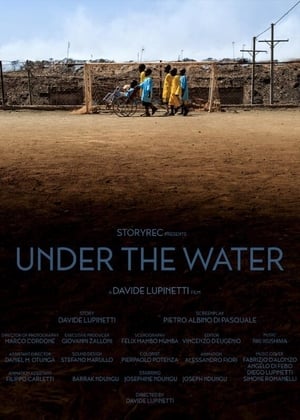
Under the water
A daily life in Korogocho, Kenya, one of the world’s poorest slums.