Watch Experiment Stuka (2018) Online Free
Loading Cinehub...
Spanish Civil War, May, 1938. Four villages in Castellón, Benassal, Albocàsser, Ares del Maestrat and Vilar de Canes, were bombed from the sky and ravaged. 38 people died. Inhabitants never knew for sure who piloted the planes responsible for such atrocity, although the rebel propaganda attributed the act to the republican side. Now, 80 years later, the truth is finally exposed.
Cast
Àngel Fígols
More Like This
L'Inverno
A tale of torn loyalty and love between SS officer Nikolaus Fuhrich and his first love, Jewish violinist Elisabeth Soloviechik. From two befriended Austrian families, one Jewish, one "Germanic," the fates of these two young characters intersect and intertwine prior to the First and after the Second World War.

Tasmanian Tiger in Colour
Original 35mm nitrate negative film shot by naturalist David Fleay at Beaumaris Zoo, Hobart in December 1933. Colorized by Samuel François-Steininger at the Paris-based, Composite Films, from a 4K scan of the negative by the National Film and Sound Archive Australia.
2021
Blood Money: Inside the Nazi Economy
How did Nazi Germany, from limited natural resources, mass unemployment, little money and a damaged industry, manage to unfurl the cataclysm of World War Two and come to occupy a large part of the European continent? Based on recent historical works of and interviews with Adam Tooze, Richard Overy, Frank Bajohr and Marie-Bénédicte Vincent, and drawing on rare archival material.
2021
The Phoney War
September 3rd, 1939. Britain and France declare war on Nazi Germany, only two days after the Wehrmacht invades Poland. This day, the sad date when the fate of the world changed forever, the Phoney War began: eight months of uncertainty, preparations, evacuations and skirmishes.
2019
I'll Push You
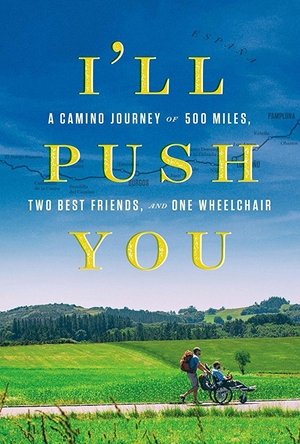
I'll Push You is about two lifelong friends, one quadriplegic, who embark on the pilgrimage of the Santiago de Compostela. It's a documentary about friendship and the grittiness of love and sacrifice.
2017

Elemental: Hydrogen vs. Hindenburg
"Elemental" is the groundbreaking television event from Academy Award-winning executive producer Robert Zemeckis that reveals how the elements of the periodic table have controlled the outcome of human history. This one-hour drama tells the harrowing story of the Hindenburg disaster. Sophisticated cinematography, animation and spectacular visual effects bring this fiery saga to life in a way no audience has seen before.
2017
Full Metal Village
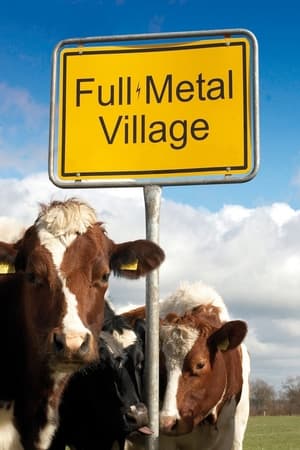
The film describes the microcosmos of the small village Wacken and shows the clash of the cultures, before and during the biggest heavy metal festival in Europe.
2007
Das Dorf der Freundschaft
A German Documentary about the “village of friendship” that was created by American Veteran George Mizo to help the Vietnamese kids suffering from the Vietnam War.
2001
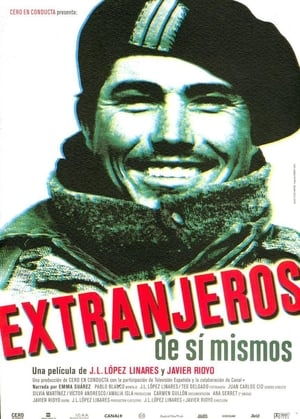
Extranjeros de sí mismos
2000
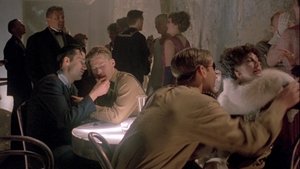
Bent
Max is a handsome young man who, after a fateful tryst with a German soldier, is forced to run for his life. Eventually Max is placed in a concentration camp where he pretends to be Jewish because in the eyes of the Nazis, gays are the lowest form of human being. But it takes a relationship with an openly gay prisoner to teach Max that without the love of another, life is not worth living.
1997
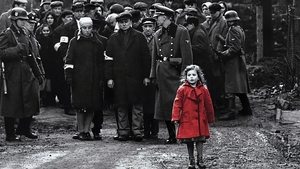
Schindler's List
The true story of how businessman Oskar Schindler saved over a thousand Jewish lives from the Nazis while they worked as slaves in his factory during World War II.
1993

The Untouchables
Elliot Ness, an ambitious prohibition agent, is determined to take down Al Capone. In order to achieve this goal, he forms a group given the nickname “The Untouchables”.
1987
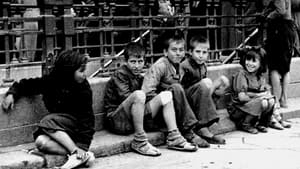
Songs for After a War
A particular reading of the hard years of famine, repression and censorship after the massacre of the Spanish Civil War (1936-39), through popular culture: songs, newspapers and magazines, movies and newsreels.
1976
Mirror
A dying man in his forties recalls his childhood, his mother, the war and personal moments that tell of and juxtapose pivotal moments in Soviet history with daily life.
1975
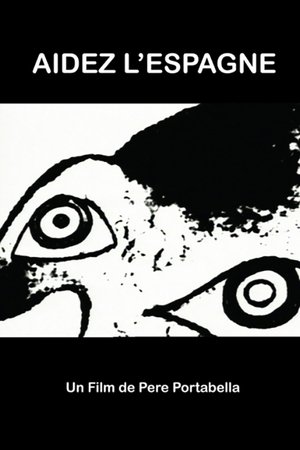
Aidez l'Espagne
The Colegio de Arquitectos de Catalunya commissioned Pere Portabella to make this film for the Joan Miró retrospective exhibit in 1969. There were heated discussions on whether it would be prudent to screen the film during the exhibit. Portabella took the following stance: "either both films are screened or they don't screen any" and, finally, both Miro l'Altre and Aidez l'Espagne were shown. The film was made by combining newsreels and film material from the Spanish Civil War with prints by Miró from the series "Barcelona" (1939-1944). The film ends with the painter's "pochoir" known as Aidez l'Espagne.
1969
The Bridge
A group of German boys are ordered to protect a small bridge in their home village during the waning months of the second world war. Truckloads of defeated, cynical Wehrmacht soldiers flee the approaching American troops, but the boys, full of enthusiasm for the "blood and honor" Nazi ideology, stay to defend the useless bridge. The film is based on a West German anti-war novel of the same name, written by Gregor Dorfmeister.
1959
Night and Fog
Filmmaker Alain Resnais documents the atrocities behind the walls of Hitler's concentration camps.
1956
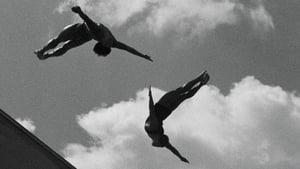
Olympia Part Two: Festival of Beauty
Part two of Leni Riefenstahl's monumental examination of the 1938 Olympic Games, the cameras leave the main stadium and venture into the many halls and fields deployed for such sports as fencing, polo, cycling, and the modern pentathlon, which was won by American Glenn Morris.
1938
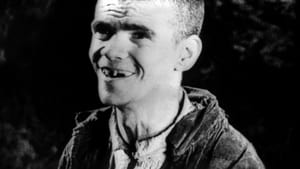
Land Without Bread
An exploration —manipulated and staged— of life in Las Hurdes, in the province of Cáceres, in Extremadura, Spain, as it was in 1932. Insalubrity, misery and lack of opportunities provoke the emigration of young people and the solitude of those who remain in the desolation of one of the poorest and least developed Spanish regions at that time.
1933
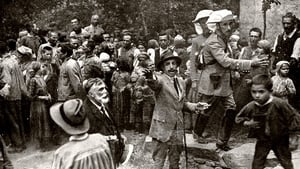
Las Hurdes, país de leyenda
An account of the journey that King Alfonso XIII of Spain made to the impoverished shire of Las Hurdes, in the province of Cáceres, in the region of Extremadura, in 1922.
1922