Watch The Phoney War (2019) Online Free
September 3rd, 1939. Britain and France declare war on Nazi Germany, only two days after the Wehrmacht invades Poland. This day, the sad date when the fate of the world changed forever, the Phoney War began: eight months of uncertainty, preparations, evacuations and skirmishes.
Cast
Éric Caravaca, Bertrand Chamerois, Jean-Marie Fonbonne, Laurent Lederer, Anna Flori-Lamour, Céline Payen, Fernand Bignon, Jacqueline Bignon, Maurice Gamelin, Édouard Daladier, Adolf Hitler, Joseph Goebbels
More Like This
Memory For Burial
Surviving against all odds. In 1940, Benjamin Orenstein, just a teenager, was sent to his first concentration camp in Poland. It was the beginning of a journey that would mark him for life. After years of silence, he now bears witness to one of the darkest chapters in history.
2025

Sélectionné
The incredible story of swimmer Alfred Nakache, played by Amir Haddad. Alfred Nakache is one of those modern-day heroes whose story is little known. Born in Constantine and raised in Toulouse, he was France's best swimmer in the 1940s. Arrested by the Gestapo and then deported, he swam in the unsanitary pools of Auschwitz, from which his wife and daughter never returned. In their memory, this survivor of horror picked himself up and resumed competition until he regained his title as French Champion and once again represented his country at the Olympic Games. Filmed at Studio Marigny at the Théâtre Marigny in Paris's 8th arrondissement.
2023
Pierre Bérégovoy, la tragédie du pouvoir
2023
La Rafle du Vel d'Hiv, la honte et les larmes
In 1942, more than 8,000 Jews were arrested on 16 and 17 July and sent to the Vélodrome d'Hiver sports center in the 15th district, a stone's throw from the Eiffel Tower, before being deported. The expression "Vel d'Hiv round-up" has become part of our collective memory, to the point of becoming the main memorial reference point for France during the dark years. Based on research carried out in unpublished or rarely explored archives, this film retraces the history of this roundup as experienced by hunted Jews and police trackers, from its planning in the Vichy offices to its hour-by-hour unfolding in the streets of Paris.
2022

Une vie avec Oradour
2011

Leningrad
When in 1941 Nazi Germany invaded the Soviet Union, their troops quickly besieged Leningrad. Foreign journalists are evacuated but one of them, Kate Davies, is presumed dead and misses the plane. Alone in the city she is helped by Nina Tsvetnova a young and idealist police officer and together they will fight for their own survival and the survival of the people in the besieged Leningrad.
2009
Valkyrie
Wounded in Africa during World War II, Nazi Col. Claus von Stauffenberg returns to his native Germany and joins the Resistance in a daring plan to create a shadow government and assassinate Adolf Hitler. When events unfold so that he becomes a central player, he finds himself tasked with both leading the coup and personally killing the Führer.
2008

The Last Days
Romance brings two warring families together in this historical drama. As citizens fight for independence in 1810s Lithuania, Tadeusz, the son of a murderer, and Zosia, a young woman, come together for a wedding against a backdrop of changing politics, ancient traditions, and the uncertain future of a country.
1999
Jakob the Liar
In 1944 Poland, a Jewish shop keeper named Jakob is summoned to ghetto headquarters after being caught out after curfew. While waiting for the German Kommondant, Jakob overhears a German radio broadcast about Russian troop movements. Returned to the ghetto, the shopkeeper shares his information with a friend and then rumors fly that there is a secret radio within the ghetto.
1999
Le radeau de la Méduse
Iranian Iradj Azimi directed this French historical drama re-creating events depicted in the famous 1819 painting The Raft of the Medusa by Jean Louis Andre Theodore Gericault (1791-1824). The ill-fated voyage of the frigate Medusa begins when it departs Rochefort for Senegal in 1816. After striking a sandbar off the African coast, 150 civilians row safely to shore, but Captain Chaumareys (Jean Yanne) orders 140 soldiers and sailors onto a raft (minus supplies) and has it cut loose. Only 14 survive from the 140, creating a scandal back in France. Gericault (Laurent Terzieff) later talks to three of the survivors while researching his painting. Work on this film began in 1987, but sets destroyed by Hurricane Hugo caused delays, so the film was not completed until 1990. However, it then remained undistributed until an incident in which writer-director Azimi slashed his wrists in front of French Ministry of Culture officials.
1998
I Wish I Were a Pigeon
The story of German minority members who, after escaping from Wehrmacht, form a partisan unit named "Ernst Thalmann" in eastern Croatia. The focus is a family whose members fight on different sides of the barricade.
1990
The Liberation of Auschwitz
This chilling, vitally important documentary was produced to mark the 40th anniversary of the liberation of Auschwitz Concentration Camp. The film contains unedited, previously unavailable film footage of Auschwitz shot by the Soviet military forces between January 27 and February 28, 1945 and includes an interview with Alexander Voronsov, the cameraman who shot the footage. The horrifying images include: survivors; camp visit by Soviet investigation commission; criminal experiments; forced laborers; evacuation of ill and weak prisoners with the aid of Russian and Polish volunteers; aerial photos of the IG Farben Works in Monowitz; and pictures of local people cleaning up the camp under Soviet supervision. - Written by National Center for Jewish Film
1986
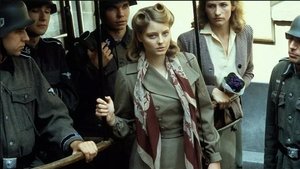
The Blood of Others
In the German-occupied Paris, Helene is torn between the love for her boyfriend Jean, working for the resistance and the German administrator Bergmann, who will do anything to gain her affection.
1984
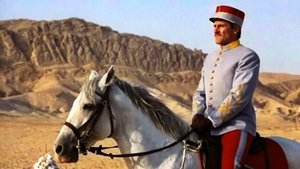
Fort Saganne
In 1911, a willful and determined man from peasant stock named Charles Saganne enlists in the military and is assigned to the Sahara Desert under the aristocratic Colonel Dubreuilh.
1984
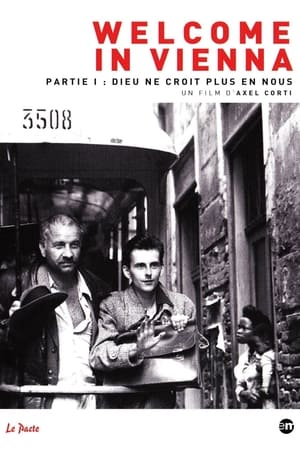
God Does Not Believe in Us Anymore
After his father is murdered by the Nazis in 1938, a young Viennese Jew named Ferry Tobler flees to Prague, where he joins forces with another expatriate and a sympathetic Czech relief worker. Together with other Jewish refugees, the three make their way to Paris, and, after spending time in a French prison camp, eventually escape to Marseille, from where they hope to sail to a safe port.
1982
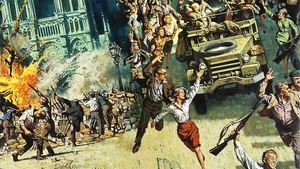
Is Paris Burning?
Near the end of World War II, General Dietrich von Choltitz receives orders to burn down Paris if it becomes clear the Allies are going to invade, or if he's unable to maintain control of the city. After much contemplation, Choltitz ignores orders, enraging the Germans and giving hope to various resistance factions that the city will be liberated. Choltitz, alongside Swedish diplomat Raoul Nordling, helps a leader organise his forces.
1966
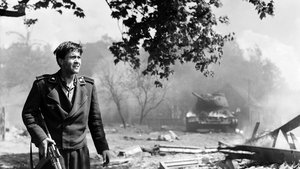
The Adventures of Werner Holt
Two 17-year-olds, Werner Holt and Gilbert Wolzow, are pulled out of school and into Hitler's army. Gilbert becomes a fanatical soldier; but at the front, Werner begins to understand the senselessness of war.
1965
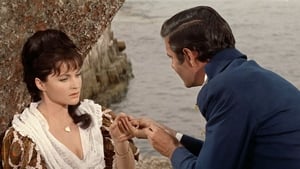
The Count of Monte Cristo
Young sailor Edmond Dantès is wrongfully imprisoned, escapes, finds treasure, and reinvents himself as the wealthy Count of Monte Cristo to exact revenge on those who betrayed him.
1961
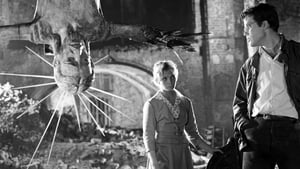
Ashes and Diamonds
A young academy soldier, Maciek Chelmicki, is ordered to shoot the secretary of the KW PPR. A coincidence causes him to kill someone else. Meeting face to face with his victim, he gets a shock. He faces the necessity of repeating the assassination. He meets Krystyna, a girl working as a barmaid in the restaurant of the "Monopol" hotel. His affection for her makes him even more aware of the senselessness of killing at the end of the war. Loyalty to the oath he took, and thus the obligation to obey the order, tips the scales.
1958
Malý partyzán
Thirteen-year-old Jenda, whose father is the leader of an illegal movement in a small town at the end of World War II, proves his bravery and sense of duty when, despite all the dangers, he delivers an important message to the partisans.
1951