Watch El amanecer de una nueva era en España (1931) Online Free
Loading Cinehub...
A chronicle of the demonstrations and public events held on the occasion of the proclamation of the Second Spanish Republic on April 14, 1931 (Sound newsreel shot by Fox Movietone News discovered in 2009.)
Cast
Niceto Alcalá-Zamora, Ramón Franco, Miguel de Unamuno, Fernando de los Ríos, Victoria Kent, Indalecio Prieto, Pedro Rico López, Salvador de Madariaga, Adela Anaya
More Like This
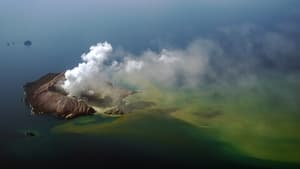
The Volcano: Rescue from Whakaari
A close examination of the Whakaari / White Island volcanic eruption of 2019 in which 22 lives were lost, the film viscerally recounts a day when ordinary people were called upon to do extraordinary things, placing this tragic event within the larger context of nature, resilience, and the power of our shared humanity.
2022
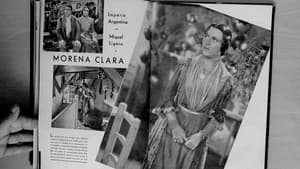
La Antorcha de los Éxitos: Cifesa (1932-1961)
The amazing story of Cifesa, a mythical film production company founded in Valencia by the Casanova family that managed to dominate the box office during the turbulent times of the Second Spanish Republic, the carnage of the Civil War and the hardships of the long post-war period and Franco's dictatorship — and survive until the sixties, when Spain was timidly beginning to change.
2022

Carceller, the Man Who Died Twice
The life story of Vicente Miguel Carceller (1890-1940), a Spanish editor committed to freedom who, through his weekly magazine La Traca, connected with the common people while maintaining a dangerous pulse with the powerful.
2021

Antonio García-Trevijano: Transición e historia política de España en primera persona
Spanish jurist and republican thinker Antonio García-Trevijano (1927-2018) expounds his political thought and reflects on the recent political history of Spain.
2021
Aquí y allí: journal d'une exilée
While cleaning the apartment of Lucía, her deceased grandmother, Anna finds a notebook where she discovers the story of a secretly kept love, lived during the turbulent years of the Second Republic and the Spanish Civil War.
2020
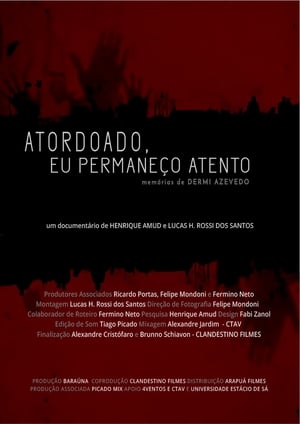
Stunned, I Remain Alert
Journalist Dermi Azevedo has never stopped fighting for human rights and now, three decades after the end of the military dictatorship in Brazil, he's witnessing the return of those same practices.
2020
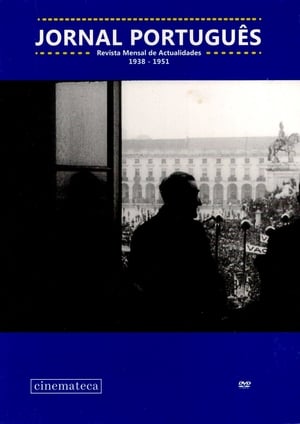
Jornal Português (1938-1951)
The newsreel series Jornal Português (1938-1951) was produced for the Secretariat of National Propaganda (SPN/SNI) by the "Portuguese Newsreel Society" (SPAC), under the technical supervision of António Lopes Ribeiro. It was conceived and employed as part of the propaganda machinery of Salazar's regime. Screened in cinema theatres prior to the main feature film, each issue of Jornal had approximately ten minutes in length and covered a variety of official government acts, national political news, major sports events and other assorted social and cultural affairs. Jornal Português is not only an indispensable document for the history of Estado Novo's propaganda, but also an unparalleled audiovisual archive of 1940s Portugal.
2015
The Man Who Was There
The Spanish journalist Manuel Chaves Nogales (1897-1944) was always there where the news broke out: in the fratricidal Spain of 1936, in Bolshevik Russia, in Fascist Italy, in Nazi Germany, in occupied Paris or in the bombed London of World War II; because his job was to walk, see and tell stories, and thus fight against tyrants, at a time when it was necessary to take sides in order not to be left alone; but he, a man of integrity to the bitter end, never did so.
2013

El cine libertario: cuando las películas hacen historia
Upon the outbreak of the Spanish Civil War in July 1936, the anarchist union CNT socialized the film industry in Spain, so in Madrid and Barcelona film workers took over the production assets and, between 1936 and 1938, numerous films on a wide variety of topics were released, composing a varied mosaic that gives rise to one of the most unusual and original moments of Spanish cinematography.
2010
A War in Hollywood
The Spanish Civil War (1936-1939) caused a great impression on the lives of most of the American artists of that era, so many movies were made in Hollywood about it. The final defeat of the Spanish Republic left an open wound in the hearts of those who sympathized with its cause. The eventful life of screenwriter Alvah Bessie (1904-1985), one of the Hollywood Ten, serves to analyze this sadness, the tragedy of Spain and its consequences.
2009
Francisco Boix: A Photographer in Hell
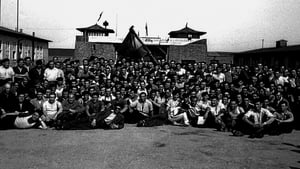
In 1939, just finished the Spanish Civil War, Spanish republican photographer Francesc Boix escapes from Spain; but is captured by the Nazis in 1940 and imprisoned in the Mauthausen concentration camp, in Austria, a year later. There, he works as a prisoner in the SS Photographic Service, hiding, between 1943 and 1945, around 20,000 negatives that later will be presented as evidence during several trials conducted against Nazi war criminals after World War II.
2000
The Atomic Cafe
A disturbing collection of 1940s and 1950s United States government-issued propaganda films designed to reassure Americans that the atomic bomb was not a threat to their safety.
1982
Swastika
Comprised of footage shot during the Nazi regime, including propaganda, newsreels, broadcasts and even some of Eva Braun's colorized personal home movies, we explore the way in which the Third Reich infiltrated the lives of the German population, from 1933 to 1945.
1974
The Battle of France
A montage of newscasts tracing the events of the "damned war" and the German invasion of 1940.
1964
Suspense Story: Nat'l Press Club Hears Hitchcock
National Press Club hears a speech from Alfred Hitchcock.
1963

The Road to the Tokyo Olympics
A documentary film that includes footage of past Olympics held in different countries with an particular emphasis on the activities and successes of Japanese athletes and how they are currently (circa 1963) improving themselves.
1963

I Am Ireland
Inspired by Patrick Pearse’s poem Mise Éire (“I Am Ireland”), this documentary assembles archival footage from across Europe to trace the rise of Irish nationalism from the 1890s through the 1916 Easter Rising. Directed by George Morrison, the film chronicles key figures and events of the independence movement, with Irish-language narration and a score by Seán Ó Riada.
1959

Hindenburg Disaster Newsreel Footage
The airship Hindenburg, arriving from Europe, was being led to its mooring at Lakehurst, New Jersey when suddenly disaster struck. The hydrogen-filled zeppelin ignited, and was almost instantly transformed into an enormous fireball. In less than a minute, the entire ship had been consumed by flames. The Hindenburg explosion marked the end of the budding airship travel industry.
1937
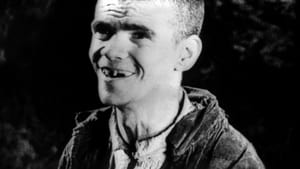
Land Without Bread
An exploration —manipulated and staged— of life in Las Hurdes, in the province of Cáceres, in Extremadura, Spain, as it was in 1932. Insalubrity, misery and lack of opportunities provoke the emigration of young people and the solitude of those who remain in the desolation of one of the poorest and least developed Spanish regions at that time.
1933
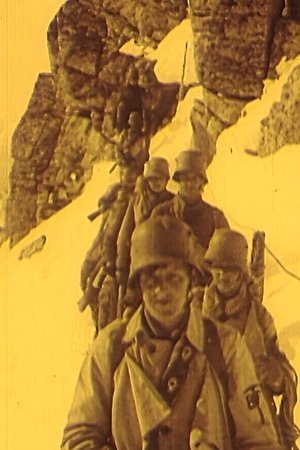
Heroes' War in Snow and Ice
Heroic Struggle in Snow and Ice is a 1917 Austro-Hungarian propaganda newsreel film produced by Sascha-Film for the Imperial and Royal War Press Headquarters. The film is hand-colored and presented in two parts. It depicts the fighting on the Alpine Front between Italy and Austria-Hungary.
1917