Watch El cine libertario: cuando las películas hacen historia (2010) Online Free
Upon the outbreak of the Spanish Civil War in July 1936, the anarchist union CNT socialized the film industry in Spain, so in Madrid and Barcelona film workers took over the production assets and, between 1936 and 1938, numerous films on a wide variety of topics were released, composing a varied mosaic that gives rise to one of the most unusual and original moments of Spanish cinematography.
Cast
José Padilla, Alfonso del Amo, Emeterio Díez Puertas, Juan Mariné, Juan Pablo Calero, Román Gubern
More Like This
1988
In the winter of 1988, in the depths of the Iraq/Iran war, the border town of Halabja was attacked by chemical weapons with all its people and their different stories.
2023

Handbook of Movie Theaters' History
Handbook of Movie Theaters' History is a documentary about the history, the development in the present days and the future of movie theaters in the city of Turin, Italy. It mixes the documentary language with comedy and fiction, and is enriched by interviews to some of the most important voices of Turin cinematography. The film follows the evolution of movie theaters by enlightening its main milestones: the pre-cinema experiences in the late 19th Century, the colossals and the movie cathedrals of the silent era, the arthouse theaters, the National Museum of Cinema, the Torino Film Festival, the movie theaters system today and the main hypothesis about its future. The mission of Handbook of Movie Theaters' History is to explore and give back to the audience a deep reflection about the identity and the value of movie theater, in its social and anthropological role and as a mass media, and to analyze the experience of the viewer.
2021

Bones of Contention
A history of the political and social repression carried out by the ruthless regime of Spanish dictator Francisco Franco between 1936 and 1975 that focuses on the lives of gays and lesbians during those dark years and the death of the Spanish gay poet Federico García Lorca.
2018
Hitler's Hollywood
Film journalist and critic Rüdiger Suchsland examines German cinema from 1933, when the Nazis came into power, until 1945, when the Third Reich collapsed. (A sequel to From Caligari to Hitler, 2015.)
2017
The Creep Behind the Camera
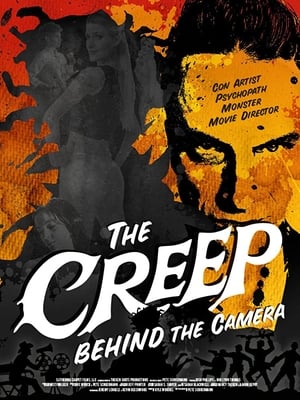
An exploration of the making of b-movie sci-fi cult classic "The Creeping Terror" and its con-man director Art "A.J." Nelson/Vic Savage.
2014

This Is Not a Dream
The video revolution of the 1970s offered unprecedented access to the moving image for artists and performers. This Is Not a Dream explores the legacies of this revolution and its continued impact on contemporary art and performance. Charting a path across four decades of avant-garde experiment and radical escapism, This Is Not a Dream traces the influences of Andy Warhol, John Waters and Jack Smith to the perverted frontiers of YouTube and Chatroulette, taking in subverted talk shows and soap operas, streetwalker fashions and glittery magic penises along the way.
2012

1:1 Thierry Henry
Global soccer hero Thierry Henry stars in this up-close sports documentary that covers his 2010 move from Barcelona to the New York Red Bulls.
2011

John Rabe
A true-story account of a German businessman who saved more than 200,000 Chinese during the Nanjing massacre in 1937-38.
2009

Shine a Light
Martin Scorsese’s electrifying concert documentary captures The Rolling Stones live at New York’s Beacon Theatre during their A Bigger Bang tour. Filmed over two nights in 2006 with an all-star team of cinematographers, the film combines dynamic performances with archival footage and rare glimpses behind the scenes, offering a vibrant portrait of the band’s enduring energy and legacy.
2008
Counter Shot: Departure of the Filmmakers
Documentary about filmmakers of the New German Cinema who were members of the legendary Filmverlag für Autoren (Film Publishing House for Authors). Among them are Werner Herzog, Rainer Werner Fassbinder, and Wim Wenders.
2008
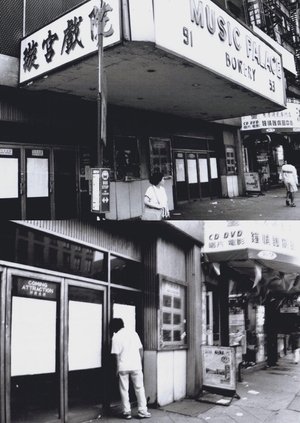
Music Palace
Previously a central part of communal life, the movie palaces of New York’s Chinatown are now extinct. This documentary short takes us inside the title theater located on the Bowery, as it’s about to close its doors, with its caretakers ruefully looking back at the life that once was. Eric Lin’s poignant first film serves as a glimpse into the usually private—and, according to the Music Palace’s projectionist, “lonely”—operations of a theater, and mourns the loss of a once-vital movie-going locale.
2005
Hitler's Forgotten Victims
The story of black and mixed race people in Nazi Germany who were sterilised, experimented upon, tortured and exterminated in the Nazi concentration camps. It also explores the history of German racism and examines the treatment of Black prisoners-of-war. The film uses interviews with survivors and their families as well as archival material to document the Black German Holocaust experience.
1997
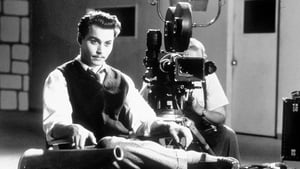
Ed Wood
The mostly true story of the legendary "worst director of all time", who, with the help of his strange friends, filmed countless B-movies without ever becoming famous or successful.
1994

São Paulo, Cinemacity
Mixing new images to existing São Paulo movies takes, the documentary presents the city from the perspective of five main attributes: transformation, anonymity, crowd, precariousness and dimension.
1994
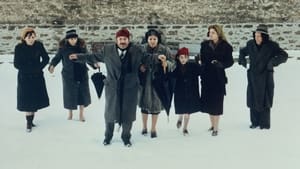
The Travelling Players
A traveling theatre troupe tours the Greek countryside from 1939 to the early 1950s, staging “Golfo the Shepherdess”. As the years pass, its members endure persecution, betrayal, executions, and exile. Their personal stories become entangled with the country’s major historical events, in a seemingly endless cycle of violence and loss.
1975
Twentieth Century
In this remake the Bertolucci's 1900, Olmo Dalco and Alfredo Berlingheiri's complicated friendship and struggles with the constantly changing political scope are chronicled as well as the rise of fascism and the communist revolution.
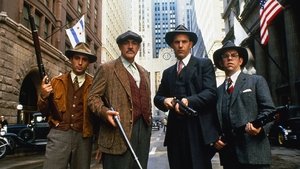
The Untouchables
Elliot Ness, an ambitious prohibition agent, is determined to take down Al Capone. In order to achieve this goal, he forms a group given the nickname “The Untouchables”.
1987

Prêtres interdits
1973

Land Without Bread
An exploration —manipulated and staged— of life in Las Hurdes, in the province of Cáceres, in Extremadura, Spain, as it was in 1932. Insalubrity, misery and lack of opportunities provoke the emigration of young people and the solitude of those who remain in the desolation of one of the poorest and least developed Spanish regions at that time.
1933
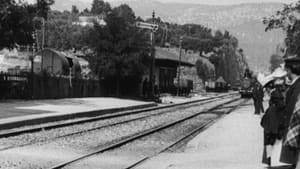
The Arrival of a Train at La Ciotat
A group of people are standing along the platform of a railway station in La Ciotat, waiting for a train. One is seen coming, at some distance, and eventually stops at the platform. Doors of the railway-cars open and attendants help passengers off and on. Popular legend has it that, when this film was shown, the first-night audience fled the café in terror, fearing being run over by the "approaching" train. This legend has since been identified as promotional embellishment, though there is evidence to suggest that people were astounded at the capabilities of the Lumières' cinématographe.
1896