Watch Drive-In Movie Memories (2001) Online Free
A nostalgic, informative history of drive-in movie theaters, featuring extensive archival photographs and interviews with Leonard Maltin, John Bloom, Samuel Z. Arkoff, Barry Corbin and many others... Drive-In Movie Memories is a film celebration of America's greatest icon of youth, freedom and the automobile. What began as an auto parts owner's business venture to make some easy money accidentally became a magical place where romance, fun and a sense of community flourished. This film chronicles the drive-in's birth and development, its phenomenal popularity with audiences of all ages, its tragic decline, and its inevitable comeback as a classic form of Americana.
Cast
Leonard Maltin, Samuel Z. Arkoff, Barry Corbin, Ewing Miles Brown, Jeanne Carmen, Robert Fuller, Beverly Garland, Burton Gilliam, Michael Granberry, Ann Robinson, Chill Wills, John Bloom
More Like This

Kathryn Bigelow: Hollywood Adrenaline
For more than 40 years Kathryn Bigelow has been making films that explore male violence. With movies like Blue Steel, Point Break, The Hurt Locker and Zero Dark Thirty, the Oscar winning American filmmaker has impressed with hard-hitting moviemaking that holds a mirror up to contemporary America and the world.
2023
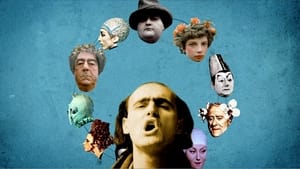
Fellinopolis
Ferruccio Castronuovo was the only authorized eye, between 1976 and 1986, to film the brilliant Italian filmmaker Federico Fellini (1920-1993) in his personal and creative intimacy, to capture the gears of his great circus, his fantastic lies and his crazy inventions.
2021

Handbook of Movie Theaters' History
Handbook of Movie Theaters' History is a documentary about the history, the development in the present days and the future of movie theaters in the city of Turin, Italy. It mixes the documentary language with comedy and fiction, and is enriched by interviews to some of the most important voices of Turin cinematography. The film follows the evolution of movie theaters by enlightening its main milestones: the pre-cinema experiences in the late 19th Century, the colossals and the movie cathedrals of the silent era, the arthouse theaters, the National Museum of Cinema, the Torino Film Festival, the movie theaters system today and the main hypothesis about its future. The mission of Handbook of Movie Theaters' History is to explore and give back to the audience a deep reflection about the identity and the value of movie theater, in its social and anthropological role and as a mass media, and to analyze the experience of the viewer.
2021
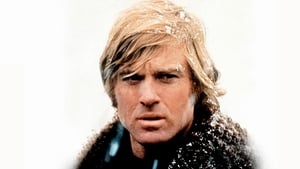
Robert Redford: The Golden Look
More than anyone in the cynical film industry, legendary artist Robert Redford embodies the United States' brightest side: perseverance, independence, idealism, and integrity. A champion of active environmentalism and the right to openly criticize any institutional abuse, he has put his artistic work at the service of his political commitments, whether as an actor, director, producer, or founder of the Sundance Festival, a formidable forum for his struggles since 1985.
2019
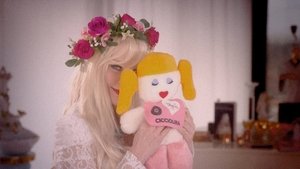
La Cicciolina: Godmother of Scandal
The personal and professional story of Ilona Staller, known as Cicciolina, is probably unique: she left communist Hungary and moved to Italy, where she found a fertile environment for a life dedicated to scandal.
2017
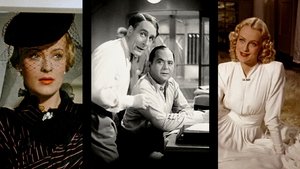
Hitler's Hollywood
Film journalist and critic Rüdiger Suchsland examines German cinema from 1933, when the Nazis came into power, until 1945, when the Third Reich collapsed. (A sequel to From Caligari to Hitler, 2015.)
2017
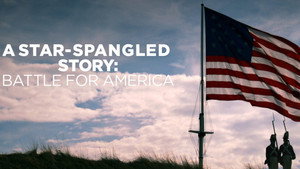
A Star-Spangled Story: Battle for America
"The Star-Spangled Banner" is known by all, treasured for its powerful melody and stirring lyrics. And yet, only about 40% of U.S. citizens know all the words. And even fewer know their meaning. Join us as we travel back to 1814, when Washington D.C. was under British attack during the "Second War of Independence," and the very bricks and mortar of American democracy were reduced to smoking rubble. We examine the battle that inspired witness Francis Scott Key to immortalize its final moments, then reveal how his poem transformed into an anthem.
2014

This Is Not a Dream
The video revolution of the 1970s offered unprecedented access to the moving image for artists and performers. This Is Not a Dream explores the legacies of this revolution and its continued impact on contemporary art and performance. Charting a path across four decades of avant-garde experiment and radical escapism, This Is Not a Dream traces the influences of Andy Warhol, John Waters and Jack Smith to the perverted frontiers of YouTube and Chatroulette, taking in subverted talk shows and soap operas, streetwalker fashions and glittery magic penises along the way.
2012
The Latino List
Documentary film interviews leading Latinos on race, identity, and achievement.
2011
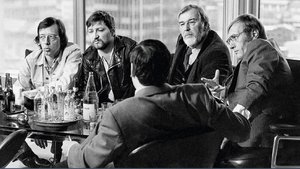
Counter Shot: Departure of the Filmmakers
Documentary about filmmakers of the New German Cinema who were members of the legendary Filmverlag für Autoren (Film Publishing House for Authors). Among them are Werner Herzog, Rainer Werner Fassbinder, and Wim Wenders.
2008
The Wave
The original classic on video, which introduces Gabrielle Roth's revolutionary system of moving meditation. Teaches how five core rhythms can teach, catalyze, and heal our entire being.
2005
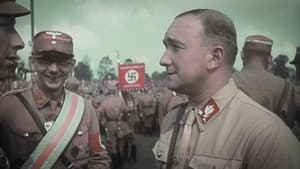
2 or 3 Things I Know About Him
What would your family reminiscences about dad sound like if he had been an early supporter of Hitler’s, a leader of the notorious SA and the Third Reich’s minister in charge of Slovakia, including its Final Solution? Executed as a war criminal in 1947, Hanns Ludin left behind a grieving widow and six young children, the youngest of whom became a filmmaker. It's a fascinating, maddening, sometimes even humorous look at what the director calls "a typical German story." (Film Forum)
2005
Le Club : Claude Jade
2001
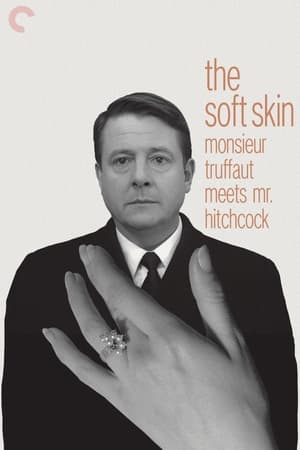
Monsieur Truffaut Meets Mr. Hitchcock
When Francois Truffaut approached Alfred Hitchcock in 1962 with the idea of having a long conversation with him about his work and publishing this in book form, he didn't imagine that more than four years would pass before Le Cinéma selon Hitchcock finally appeared in 1966. Not only in France but all over the world, Truffaut's Hitchcock interview developed over the years into a standard bible of film literature. In 1983, three years after Hitchcock's death, Truffaut decided to expand his by now legendary book to include a concluding chapter and have it published as the "Edition définitive". This film describes the genesis of the "Hitchbook" and throws light on the strange friendship between two completely different men. The centrepieces are the extracts from the original sound recordings of the interview with the voices of Alfred Hitchcock, Francois Truffaut, and Helen Scott – recordings which have never been heard in public before.
1999
In Search of James Bond with Jonathan Ross
Jonathan Ross delves into the world of James Bond and meets with new and former cast members who reveal humorous stories and anecdotes in a series of interviews. All the 5 Bonds at the time are featured, though only Lazenby (reflecting in the usual frank, self criticizing manner), Moore and Brosnan granted an interview. Connery and Dalton are featured through some unused footage from LWT's 30 years of James Bond program. The ever faithful Desmond Llewelyn turns up in character as well as some other less related peeps like Christopher Lee, Paul McCartney and the ultimate playboy: Hugh Hefner -- who all give an interesting perspective on the worlds most famous spy.
1995
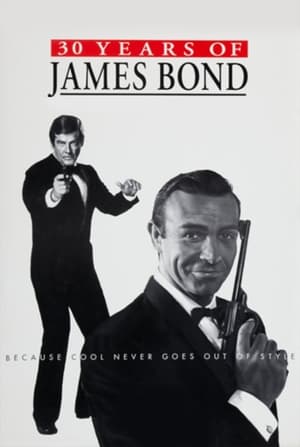
30 Years of James Bond
An examination of why the James Bond films have proved so popular including a discussion between the four actors who have played Bond, an interview with Cubby Broccoli and contributions from the directors, production designers, special effects and stuntmen.
1992
Vivement Truffaut
A tribute to the late, great French director Francois Truffaut, this documentary was undoubtedly named after his last movie, Vivement Dimanche!, released in 1983. Included in this overview of Truffaut's contribution to filmmaking are clips from 14 of his movies arranged according to the themes he favored. These include childhood, literature, the cinema itself, romance, marriage, and death.
1985
Omnibus: François Truffaut
1973

Escape to Paradise/Water Birds
A behind-the-scenes show on the filming of Swiss Family Robinson on the West Indian island of Tobago. Then the True Life Adventure Water Birds.
1960
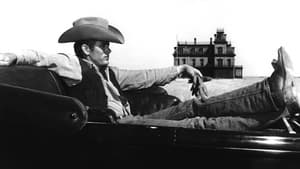
The James Dean Story
Released two years after James Dean's death, this documentary chronicles his short life and career via black-and-white still photographs, interviews with the aunt and uncle who raised him, his paternal grandparents, a New York City cabdriver friend, the owner of his favorite Los Angeles restaurant, outtakes from East of Eden, footage of the opening night of Giant, and Dean's ironic PSA for safe driving.
1957