Watch Chaplin Today: Monsieur Verdoux (2003) Online Free
A short documentary in the Chaplin Today series about Chaplin's "Monsieur Verdoux." Includes an interview with Claude Chabrol, whose 1963 film "Landru" concerns the same serial killer that inspired Chaplin's film.
Cast
Charlie Chaplin, Claude Chabrol, Norman Lloyd, Hanns Eisler, Margaret Hoffman, Marilyn Nash, Martha Raye, Ronald Reagan
More Like This

Aileen: Queen of the Serial Killers
Aileen Wuornos remains a rarity: a female serial killer. From childhood abuse to death-row revelations, this documentary revisits her life and crimes.
2025
My Father, the BTK Killer
Raised by a man leading a monstrous double life, the daughter of the BTK serial killer shares her chilling story.
2025
Lucy Letby:Unanswered Questions
Former nurse Lucy Letby became one of the UK’s most notorious child killers after she was convicted of harming and murdering babies in her care. The nurse was found guilty by two juries after lengthy trials, but now a growing number of experts are questioning the prosecution's evidence. Reporter Judith Moritz, who has covered the case from the start, investigates the questions that have been raised about Lucy Letby’s conviction.
2024

The Dating Game Killer
In 1978, Rodney Alcala won a date on the popular TV show, The Dating Game. What no one knew was that he was a prolific serial killer in the middle of a cross-country murder spree.
2021

Walker, Texas Ranger: Trial by Fire
Walker investigates a murder connected with a missing government weapon. In addition, he tries to track down a teen on the run from a crime syndicate.
2005
Frankenstein
An investigation into a serial killer leads two detectives to discover that Dr. Frankenstein and his creature are still alive after two centuries of genetic experiments.
2004
Le Club : Claude Jade
2001
Monsieur Truffaut Meets Mr. Hitchcock
When Francois Truffaut approached Alfred Hitchcock in 1962 with the idea of having a long conversation with him about his work and publishing this in book form, he didn't imagine that more than four years would pass before Le Cinéma selon Hitchcock finally appeared in 1966. Not only in France but all over the world, Truffaut's Hitchcock interview developed over the years into a standard bible of film literature. In 1983, three years after Hitchcock's death, Truffaut decided to expand his by now legendary book to include a concluding chapter and have it published as the "Edition définitive". This film describes the genesis of the "Hitchbook" and throws light on the strange friendship between two completely different men. The centrepieces are the extracts from the original sound recordings of the interview with the voices of Alfred Hitchcock, Francois Truffaut, and Helen Scott – recordings which have never been heard in public before.
1999

Perfect Prey
A former Texas Ranger is recruited by a Houston police captain to assist a homicide detective in the search for an elusive serial killer who collects antique dolls.
1998
Tell Me No Secrets
Jess Koster is a young attorney in Los Angeles, who is being stalked by the serial killer she is prosecuting.
1997
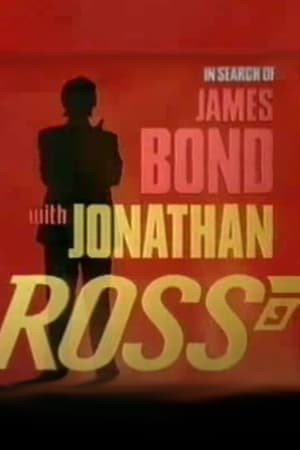
In Search of James Bond with Jonathan Ross
Jonathan Ross delves into the world of James Bond and meets with new and former cast members who reveal humorous stories and anecdotes in a series of interviews. All the 5 Bonds at the time are featured, though only Lazenby (reflecting in the usual frank, self criticizing manner), Moore and Brosnan granted an interview. Connery and Dalton are featured through some unused footage from LWT's 30 years of James Bond program. The ever faithful Desmond Llewelyn turns up in character as well as some other less related peeps like Christopher Lee, Paul McCartney and the ultimate playboy: Hugh Hefner -- who all give an interesting perspective on the worlds most famous spy.
1995

Dancing with Danger
A Portland taxi dancer is a suspect in a series of murders involving her former customers.
1994
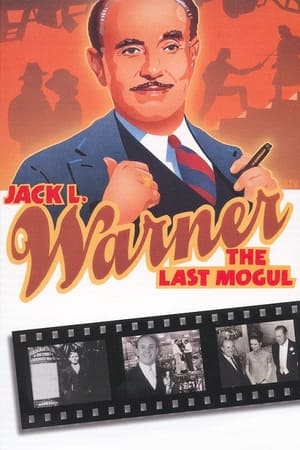
Jack L. Warner: The Last Mogul
An insider's account of Jack Warner, a founding father of the American film industry. This feature length documentary provides the rags to riches story of the man whose studio - Warner Bros - created many of Hollywood's most classic films. Includes extensive interviews with family members and friends, film clips, rare home movies and unique location footage.
1993
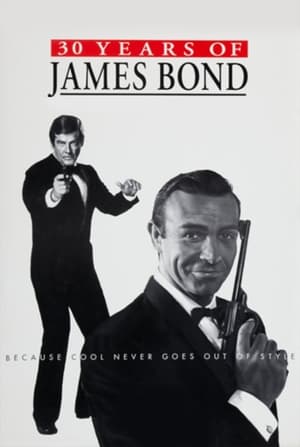
30 Years of James Bond
An examination of why the James Bond films have proved so popular including a discussion between the four actors who have played Bond, an interview with Cubby Broccoli and contributions from the directors, production designers, special effects and stuntmen.
1992
Vivement Truffaut
A tribute to the late, great French director Francois Truffaut, this documentary was undoubtedly named after his last movie, Vivement Dimanche!, released in 1983. Included in this overview of Truffaut's contribution to filmmaking are clips from 14 of his movies arranged according to the themes he favored. These include childhood, literature, the cinema itself, romance, marriage, and death.
1985
Thank You, Mr. Robertson
A glimpse of the pre-history of cinema starting with the projections of Etienne Gaspard Robert (also known as M. Robertson), who used magic lanterns and other optical illusions to develop the genre of the Gothic phantasmagoria in the late eighteenth century.
1985
Obituary of a Beast
Between 1962 and 1966, sex murderer Jurgen Bartsch cruelly tortured and killed four children in an old air raid bunker in Germany. This documentary examines the personality of the killer who died in 1976 during voluntary castration surgery at the age of 30. Vilified by the press for his heinous crime, Bartsch also became a case study for famous found criminal psychologists like Alice Miller (who maintains that no one abuses without being abused as a child, and murderers tend to have their own childhood abuse denied by the adults around them). Bartsch never met his birth parents, he was raised in a clinic and later adopted by a cold, unaffectionate couple. By the age of 15, he tortured and killed his first child victim. This informative, fact-filled documentary provides enough details for viewers to come away with a broader understanding of the nature of the criminally insane and society's role in their formation.
1985
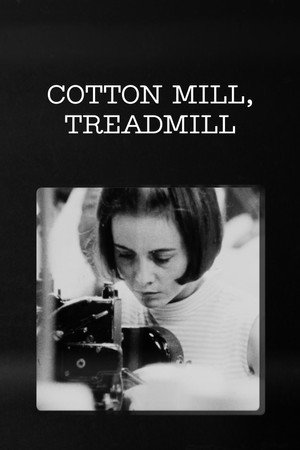
Cotton Mill, Treadmill
Director Denys Arcand made an inquiry on textile industry in Quebec, meeting employers and workers of that industry.
1970
The James Dean Story
Released two years after James Dean's death, this documentary chronicles his short life and career via black-and-white still photographs, interviews with the aunt and uncle who raised him, his paternal grandparents, a New York City cabdriver friend, the owner of his favorite Los Angeles restaurant, outtakes from East of Eden, footage of the opening night of Giant, and Dean's ironic PSA for safe driving.
1957
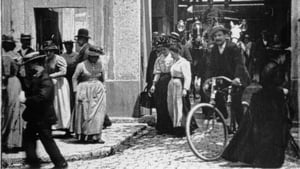
Workers Leaving the Lumière Factory
Working men and women leave through the main gate of the Lumière factory in Lyon, France. Filmed on 22 March 1895, it is often referred to as the first real motion picture ever made, although Louis Le Prince's 1888 Roundhay Garden Scene pre-dated it by seven years. Three separate versions of this film exist, which differ from one another in numerous ways. The first version features a carriage drawn by one horse, while in the second version the carriage is drawn by two horses, and there is no carriage at all in the third version. The clothing style is also different between the three versions, demonstrating the different seasons in which each was filmed. This film was made in the 35 mm format with an aspect ratio of 1.33:1, and at a speed of 16 frames per second. At that rate, the 17 meters of film length provided a duration of 46 seconds, holding a total of 800 frames.
1895