Watch Camp 14: Total Control Zone (2012) Online Free
Shin Dong-Huyk was born on November 19, 1983 as a political prisoner in a North Korean re-education camp. He was a child of two prisoners who had been married by order of the wardens. He spent his entire childhood and youth in Camp 14, in fact a death camp. He was forced to labor since he was six years old and suffered from hunger, beatings and torture, always at the mercy of the wardens. He knew nothing about the world outside the barbed-wire fences. At the age of 23, with the help of an older prisoner, he managed to escape. For months he traveled through North Korea and China and finally to South Korea, where he encountered a world completely strange to him.
More Like This
Mailin
While telling her daughter a bedtime story, Mailin pieces her memories back together. What could have been a fairy tale turns out to be the story of a young girl who suffered abuse from a priest for 15 years. It’s a long journey towards healing and justice, but also the chance to offer her daughter the childhood she never had.
2025
13 novembre, nos vies en éclats
On November 13, 2015, the attacks in Paris and Saint-Denis, carried out by three Islamist commandos and claimed by ISIS, were the deadliest in France since the end of World War II. In the months that followed, the November 13 Program was launched by the CNRS and Inserm to study the construction of individual and collective memory around an event that profoundly marked French society. Today, the testimonies of 27 volunteers—among some 1,000 people—who participated in the study form a mosaic of experiences that shows how trauma extends beyond the immediate circle to permeate the national collective memory.
2025

Kitchen Dialogue
A generational trauma through the lens of an Asian American teenager through food and poetry.
2025
Smong
This documentary film will follow Juman and Zahrina’s journey in the process of healing from the trauma of the Aceh Tsunami, 20 years ago.
2024
Soundtrack to a Coup d'Etat
Jazz and decolonization are intertwined in a powerful narrative that recounts one of the tensest episodes of the Cold War.
2024

No Māori Allowed
When an academic unearths a forgotten history, residents of the small township of Pukekohe, including kaumātua who have never told their personal stories before, confront its deep and dark racist past.
2022
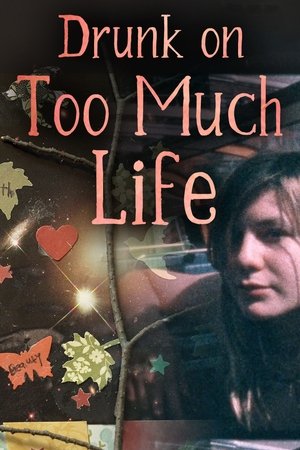
Drunk on Too Much Life
The filmmakers' 21-year-old daughter journeys from locked-down psych wards and diagnostic labels toward expansive worlds of creativity, connection, and greater meaning. Featuring insights from trauma experts and others, the film challenges the widespread idea that mental illness should be understood purely in biological terms, revealing the myriad ways that madness has meaning beyond brain chemistry.
2021
Stunned, I Remain Alert
Journalist Dermi Azevedo has never stopped fighting for human rights and now, three decades after the end of the military dictatorship in Brazil, he's witnessing the return of those same practices.
2020
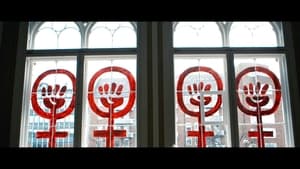
Violently in Love
Behind the closed doors of the Copenhagen-based women's shelter, the women and children are slowly recovering after having escaped domestic violence. Day by day the women are processing their traumas, building confidence and slowly understanding what it takes to break the cycle of violence.
2017
The Cult Next Door
A short documentary featuring a brief overview of Bill Gothard's ministries, and some of the consequences for his followers.
2017
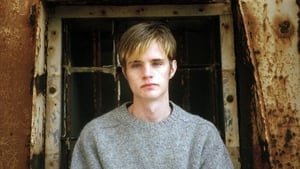
Matt Shepard Is a Friend of Mine
An intimate portrait of Matthew Shepard, the gay young man murdered in one of the most notorious hate crimes in U.S. history. Framed through a personal lens, it's the story of loss, love, and courage in the face of unspeakable tragedy.
2014

Nazi Death Camp: The Great Escape
The secret Nazi death camp at Sobibor was created solely for the mass extermination of Jews. But on the 14th October 1943, in one of the biggest and most successful prison revolts of WWII, the inmates fought back.
2014
Most 72
Most 72 is the very first film essay directed and produced by The Markerists and the inaugural installment in the series 'Most'. The footage and the audio were recorded in a single day on June 17th, 2013 on location in Auschwitz-Birkenau with post-production being completed within 72 hours. Surbhi Goel, a professor of cultural studies from India on her first trip outside of her homeland, recorded extemporaneous impressions as she walked the grounds of the death camp with the filmmakers. These were later used as the voice-over narration. The project serves as the template in which future Markerists film essays will be produced--shot and recorded on location and completed immediately afterwards, staying relevant in this age of instant global communication.
2013
Outlawed
The stories of Khaled El-Masri and Binyam Mohamed, two men who have survived extraordinary rendition, secret detention, and torture by the U.S. government working with various other ma
2006
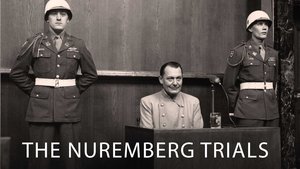
The Nuremberg Trials
One journalist described it as a chance "to see justice catch up with evil." On November 20, 1945, the twenty-two surviving representatives of the Nazi elite stood before an international military tribunal at the Palace of Justice in Nuremberg, Germany; they were charged with the systematic murder of millions of people. The ensuing trial pitted U.S. chief prosecutor and Supreme Court judge Robert Jackson against Hermann Göring, the former head of the Nazi air force, whom Adolf Hitler had once named to be his successor. Jackson hoped that the trial would make a statement that crimes against humanity would never again go unpunished. Proving the guilt of the defendants, however, was more difficult than Jackson anticipated. This American Experience production draws upon rare archival material and eyewitness accounts to recreate the dramatic tribunal that defines trial procedure for state criminals to this day.
2006
Diameter of the Bomb
Since the renewed Intifada began in 2000, there have been over 75 Palestinian suicide bombings. This is the story of 0ne-the bombing of bus 32 in Jerusalem in June 2002. The film connects the stories of a group of ordinary Israelis-Jews and Arabs. Each of them holds a clue to someone who died that day.
2005
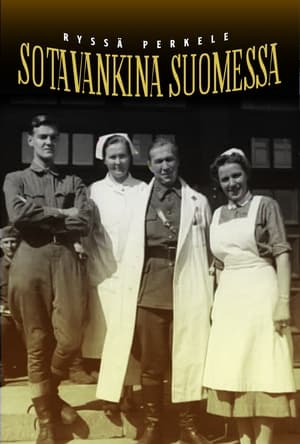
Damn Ruskies
2000
Homes Apart: Korea
They speak the same language, share a similar culture and once belonged to a single nation. When the Korean War ended in 1953, ten million families were torn apart. By the early 90s, as the rest of the world celebrated the end of the Cold War, Koreans remain separated between North and South, fearing the threat of mutual destruction. Beginning with one man's journey to reunite with his sister in North Korea, filmmakers Takagi and Choy reveal the personal, social and political dimensions of one of the last divided nations on earth. The film was also the first US project to get permission to film in both South & North Korea.
1991
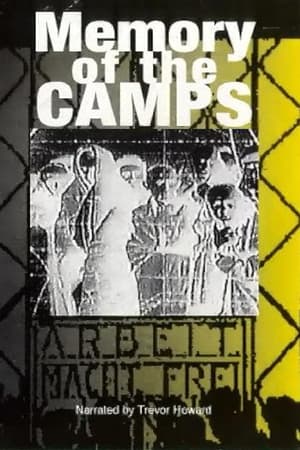
Memory of the Camps
In 1945, Allied troops invaded Germany and liberated Nazi death camps. They found unspeakable horrors which still haunt the world’s conscience. A film was made by British and American film crews who were with the troops liberating the camps. It was directed in part by Alfred Hitchcock and was broadcast for the first time in its entirety on PBS FRONTLINE in 1985.
1985
Reunion
Live footage from concentration camps after the liberation, and the complex transport and lodging of masses of prisoners of war and other deported people back to their home countries, at the end of World War II. A 45min 35mm print also exists (shown at Cinémathèque française in 2023).
1946