Watch Building for Books (1958) Online Free
Though commissioned by Trinity College Dublin as a fundraiser for the Berkeley Library and with extensive discussion of the history, architecture and collections of the Old Library, this film also provides a rare insight into student life in Dublin in the 1950s – at work and at play – and lauds the arrival of women and students from many lands.
More Like This

La success story des BD cultes
2026
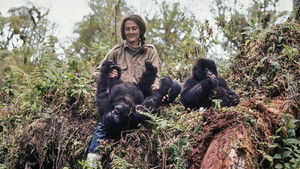
Dian Fossey: Ihr Leben für die Gorillas
She was the first to study gorillas in their natural environment: the high mountains of Rwanda, where she settled in 1967. For nearly twenty years, Dian Fossey lived with the gorillas, observed their behavior, and changed the way people viewed them. Her relentless fight against poaching prevented the species from becoming extinct. But in December 1985, the primatologist was murdered, and the mystery surrounding her death remains unsolved. Former colleagues, scientists, and biographers shed light on the impact of her work, but also on the darker sides of her personality and her uncompromising commitment.
2025
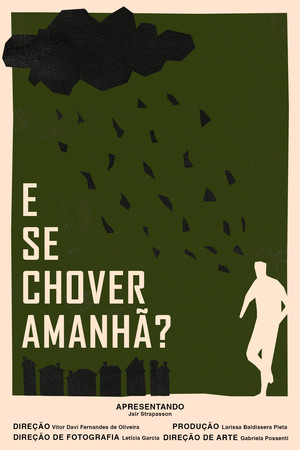
E Se Chover Amanhã?
2025
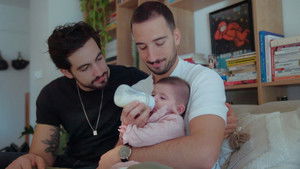
Paternité : une métamorphose décryptée
Becoming a father is an extraordinary adventure in a man's life, but it is also a real physiological metamorphosis that science is only just beginning to reveal. Researchers from multiple disciplines are lifting the veil on these changes taking place in men who are in contact with young children, and their discoveries are astonishing. By tracing the thread of evolution, the film reveals that these deep, long-ignored bonds between men and children are very ancient. And that they are just waiting for the right context to fully express themselves.
2025
Traquer l'invisible - Nos chercheurs face à la menace mondiale des virus et des bactéries
2025
13 novembre, nos vies en éclats
On November 13, 2015, the attacks in Paris and Saint-Denis, carried out by three Islamist commandos and claimed by ISIS, were the deadliest in France since the end of World War II. In the months that followed, the November 13 Program was launched by the CNRS and Inserm to study the construction of individual and collective memory around an event that profoundly marked French society. Today, the testimonies of 27 volunteers—among some 1,000 people—who participated in the study form a mosaic of experiences that shows how trauma extends beyond the immediate circle to permeate the national collective memory.
2025
An Inconvenient Study
In 2016, journalist Del Bigtree issued a challenge to the head of infectious disease at one of the most prestigious medical institutions in the world: conduct the most thorough vaxxed vs. unvaxxed study that has ever been done. The expert took up the challenge and ran the study to prove Del wrong. That study never saw the light of day... until now.
2025
The Weight Of My Name
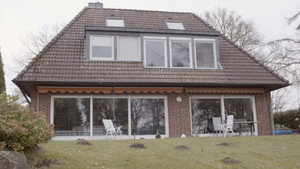
2-channel film installation 'Die Last meines Namens', wherein Heydt deals with an unpleasant part of his own family history. Heydt’s great-grandfather was a member of the NSDAP and mayor of the small town of Haselünne in Emsland for almost 10 years during the Third Reich. Based on interviews with his grandfather and research in various archives, Heydt develops a personal perspective on the subject. The film deals with how we construct identity from oral retellings, how we process family histories, and how we can find current and personal points of access to German remembrance culture. At the heart of the work are two conversations with his grandfather Heinrich Heydt, recorded at different points in the research process. In them, the grandfather describes his memories of his father, the time, and the two reflect on the subject and the results of the research.
2025
Transit
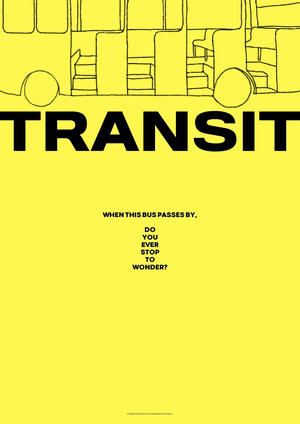
a short documentary about the yellow university vehicles in Thailand.
2025

Le jeûne, enquête sur un phénomène
Intermittent fasting, autophagy, "metabolic switch": ten years after their first successful documentary on fasting, Sylvie Gilman and Thierry de Lestrade delve back into promising research on a booming practice.
2025
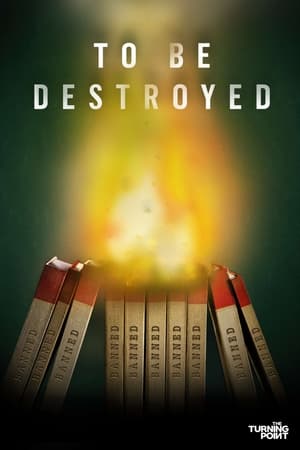
To Be Destroyed
A 30-minute documentary on book banning and censorship that follows author Dave Eggers as he investigates why a Rapid City, SD school board wanted to ban his book.
2024

The ABCs of Book Banning
In recent years, more than 2,500 books have been removed from school districts around the US, labeled as banned, restricted, or challenged, and made unavailable to millions of students. By no accident, the themes targeted are the usual scapegoats of the American Right—LGBTQ+ issues, Black History, and women’s empowerment—impeding the power of future generations to develop their own thoughts and opinions on critical social issues. By weaving together a lyrical montage of young readers and authors, THE ABCs OF BOOK BANNING reveals the voices of the impacted parties, and inspires hope for the future through the profound insights of inquisitive youthful minds.
2024
L'extraordinaire recherche du docteur Cartault
The film recounts the incredible research conducted by François Cartault, a pediatrician and geneticist on the island of Réunion. Conducted like a police investigation over more than 20 years, his research, both medical and historical, takes us on a journey through the disease of moon children, deprived of sunlight, and on the trail of slavery in Africa. The film shows how genetics is also an astonishing trace of history.
2023

EDGING (Verbal) - Solo
A 'very intellectual' dirty talk on online sex work and a remix of 23-different-sources on the lookout for the answer to 'What happens to violence when you are not looking at it?' In this new work, EMIRHAKIN traces the parabola of performativity and gauges the unequal distances of labor in performance art and webcam performances from the focus point of body politics.
2023
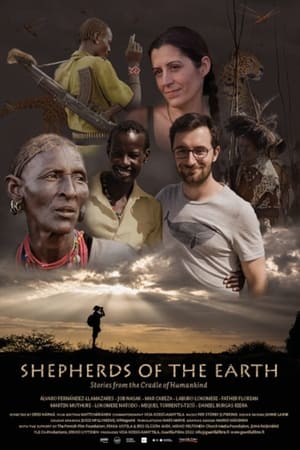
Shepherds of the Earth
The region of Lake Turkana, located in Kenya and Ethiopia, is considered to be “the Cradle of Humankind”. Among other finds, primate fossils from millions of years ago have been discovered in the region. But what about the region’s modern inhabitants and their relationship to their environment? Iiris Härmä, whose previous work includes the award-winning Leaving Africa, had the chance of joining Helsinki University’s researchers, Álvaro Fernández-Llamazares and Mar Cabeza, on their pre-pandemic trip to study the Daasanach people’s relationship to their environment through traditional animal tales. The researchers hope that storytelling would help to bridge the gap between people’s everyday lives and conservation efforts.
2022
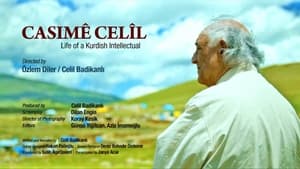
Jiyana Rewsenbireki Kurd: Casimê Celîl
Casimê Celîl was born into a Yezidi Kurdish family in 1908, in a village called Kızılkule, located in Digor, Kars. The village and family life, which he longed to remember throughout his life, ends with the massacre they endured in 1918. During his long road to Erivan, Armenia, he lost all his family members. Left all alone, Casim was placed into an orphanage and was forced to change his name. To remember who he was and where he came from, every morning he repeated the mantra “Navê min Casim e, Ez kurê Celîlim, Ez ji gundê Qizilquleyê Dîgorê me, Ez Kurdim, Kurdê Êzîdî me”, which translates to: “My name is Casim, I am the son of Celîl, I come from the village of Kızılkule in Digor, I am a Kurd, and I am Yezidi”. He clings to every piece of his culture he can find, reads, and saves whatever Kurdish literature or art he comes across. As the year’s pass, Casim finds himself with an impressive collection of Kurdish culture and history.
2021
Decolonising the Curatorial Process
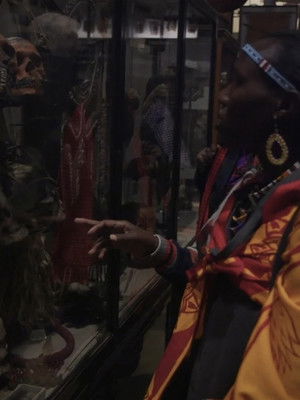
Decolonising the Curatorial Process is a forty-minute documentary which explores decolonial strategies in an academic and curatorial context. The film features academics, activists and practitioners, and contains case studies of institutions that are deploying critical, self-reflective forms of curatorial practice. The Museum of London Docklands exhibition on slavery and the sugar industry is examined as an example of how an institution can decolonise the curatorial process, utilise the work of artists in a museum context, and critically examine East London's imperial history. The Pitt Rivers museum in Oxford, who are working with Maasai activists from Kenya and Tanzania on a project centred on repatriating the museum's collection of sacred Maasai artefacts, also features in the film.
2020
Los prohibidos
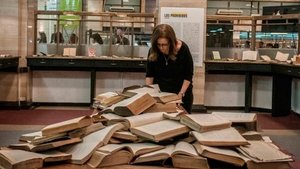
Documentary film that follows Silvana Castro, a woman who works at the National Congress Library in Argentina where the books that were forbidden during the military dictatorship are kept. After the exhibition of the books is suspended, she'll try to open it again.
2019
Elisabeth Kübler-Ross: Facing Death
Groundbreaking psychiatrist and author Elisabeth Kübler-Ross dedicated her career to working with the incurably ill. In this intimate documentary filmed near the end of her life, Kübler-Ross relates her life story, from childhood to her final years. Friends, family members and colleagues weigh in with insightful observations and share their memories of this remarkable woman whose innovative concepts helped spawn the field of thanatology.
2003

Project Grizzly
Documentary about the lifelong project of Troy Hurtubise, a man who has been obsessed with researching the Canadian grizzly bear up close, ever since surviving an early encounter with such a bear. The film documents Hurtubise's diligent work to improve his homemade "grizzly-proof" suit of armour, his efforts to test its resilience, and his forays into the Rockies to track down the grizzlies he dreams of meeting. The film manages to capture the humor of the project as well as its sincerity.
1997