Watch Los prohibidos (2019) Online Free
Documentary film that follows Silvana Castro, a woman who works at the National Congress Library in Argentina where the books that were forbidden during the military dictatorship are kept. After the exhibition of the books is suspended, she'll try to open it again.
Cast
Silvana Castro, María Julia Rillo, Diana Campi
More Like This
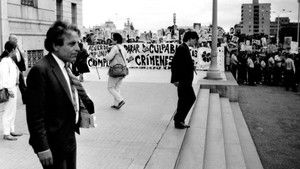
Germán Araújo
In Germán Araujo, director Aldo Novick revives the memory of a journalist who defied censorship during one of Uruguay's darkest periods. Through previously unseen archival footage, testimonies, and music, the film honors the courage of those who reported the truth when it was risky. This powerful documentary is shaping up to be one of the most important Uruguayan film releases of the year.
2025
The ABCs of Book Banning
In recent years, more than 2,500 books have been removed from school districts around the US, labeled as banned, restricted, or challenged, and made unavailable to millions of students. By no accident, the themes targeted are the usual scapegoats of the American Right—LGBTQ+ issues, Black History, and women’s empowerment—impeding the power of future generations to develop their own thoughts and opinions on critical social issues. By weaving together a lyrical montage of young readers and authors, THE ABCs OF BOOK BANNING reveals the voices of the impacted parties, and inspires hope for the future through the profound insights of inquisitive youthful minds.
2024
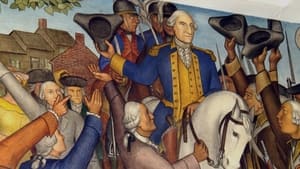
Town Destroyer
Controversy erupts over a New-Deal-era mural of the namesake of San Francisco’s George Washington High School. The thirteen-panel artwork "The Life of Washington" by Victor Arnautoff offers a view of the Founding Father both celebratory and critical, referencing his involvements in slavery and Native American genocide.
2022
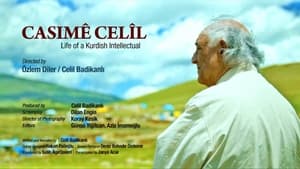
Jiyana Rewsenbireki Kurd: Casimê Celîl
Casimê Celîl was born into a Yezidi Kurdish family in 1908, in a village called Kızılkule, located in Digor, Kars. The village and family life, which he longed to remember throughout his life, ends with the massacre they endured in 1918. During his long road to Erivan, Armenia, he lost all his family members. Left all alone, Casim was placed into an orphanage and was forced to change his name. To remember who he was and where he came from, every morning he repeated the mantra “Navê min Casim e, Ez kurê Celîlim, Ez ji gundê Qizilquleyê Dîgorê me, Ez Kurdim, Kurdê Êzîdî me”, which translates to: “My name is Casim, I am the son of Celîl, I come from the village of Kızılkule in Digor, I am a Kurd, and I am Yezidi”. He clings to every piece of his culture he can find, reads, and saves whatever Kurdish literature or art he comes across. As the year’s pass, Casim finds himself with an impressive collection of Kurdish culture and history.
2021
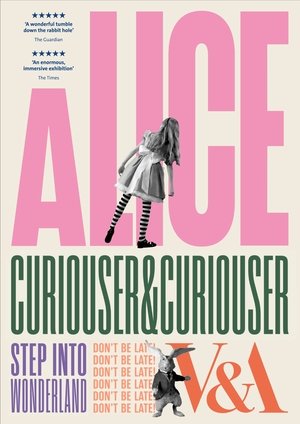
Alice: Curiouser and Curiouser
The V&A presents Alice: Curiouser and Curiouser, an exclusive private view of the ‘hugely enjoyable and thought-provoking exhibition’ (★★★★★ The Guardian) at the V&A in London, filmed especially for the big screen. Take a guided tour ‘down the rabbit hole’ with the V&A Curator Kate Bailey and presenter Andi Oliver as the documentary explores how Alice has become an enduring icon, influencing successive generations and inspiring creativity in fashion, film, photography and on the stage. This special cinema event will bring to life the magical world of a landmark exhibition that charts the evolution of Alice’s Adventures in Wonderland from manuscript to a global phenomenon beloved by all ages.
2021
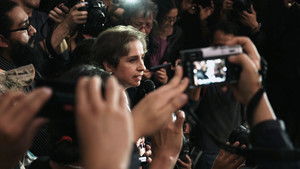
Radio Silence
Mexico, March 2015. Carmen Aristegui, incorruptible journalist, has been fired from the radio station where she has worked for years. Supported by more than 18 million listeners, Carmen continues her fight. Her goal: raising awareness and fighting against misinformation. The film tells the story of this quest: difficult and dangerous, but essential to the health of democracy. A story in which resistance becomes a form of survival.
2021
CORONA.FILM - Prologue
As the first part of our investigation, the CORONA.FILM prologue will delve into the science behind the pandemic. Starting at the very beginning, we shine a light on the responses. The aim is not to point the finger; our aim is to tell the whole story in all its complexity, as we believe that justice cannot prevail if only one side of the story is told.
2021
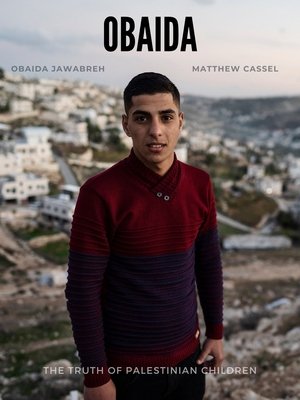
Obaida
OBAIDA, a short film by Matthew Cassel, explores a Palestinian child’s experience of Israeli military arrest. Each year, some 700 Palestinian children undergo military detention in a system where ill-treatment is widespread and institutionalized. For these young detainees, few rights are guaranteed, even on paper. After release, the experience of detention continues to shape and mark former child prisoners’ path forward.
2019
The Cleaners
A deep dive into the hidden industry of digital cleaning, which rids the Internet of unwanted violence, porn and political content.
2018
Book Hunters
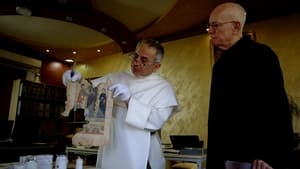
When chaos reigns, while barbaric and fanatical rulers, both ecclesiastical and secular, systematically burn entire libraries, book hunters, secret heroes of history, travel the world saving and copying texts, threatened by the madness of censors, with the noble purpose of preventing the ultimate loss of human knowledge.
2017

The Artist’s Garden: American Impressionism
Taking its lead from French artists like Renoir and Monet, the American impressionist movement followed its own path which over a forty-year period reveals as much about America as a nation as it does about its art as a creative power-house. It’s a story closely tied to a love of gardens and a desire to preserve nature in a rapidly urbanizing nation. Travelling to studios, gardens and iconic locations throughout the United States, UK and France, this mesmerising film is a feast for the eyes. The Artist’s Garden: American Impressionism features the sell-out exhibition The Artist’s Garden: American Impressionism and the Garden Movement, 1887–1920 that began at the Pennsylvania Academy of the Fine Arts and ended at the Florence Griswold Museum, Old Lyme, Connecticut.
2017
Històries de Bruguera
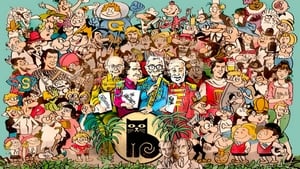
The history of Bruguera, the most important comic publisher in Spain between the 1940s and the 1980s. How the characters created by great writers and pencilers became Spanish archetypes and how their strips persist nowadays as a portrait of Spain and its people. The daily life of the creators and the founding family, the Brugueras. The world in which hundreds of vivid colorful paper beings lived and still live, in the memory of millions, in the smile of everyone.
2012
Video Nasties: Moral Panic, Censorship & Videotape
A documentary analyzing the furore which so-called "video nasties" caused in Britain during the 1980s.
2010
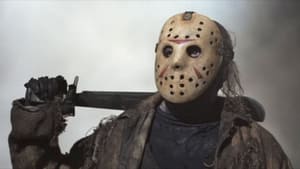
His Name Was Jason: 30 Years of Friday the 13th
A retrospective documentary about the groundbreaking horror series, Friday the 13th, featuring interviews with cast and crew from the twelve films spanning 3 decades.
2010
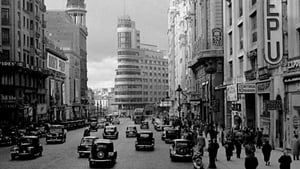
In the Lost City
The city of Madrid as it appears in the Spanish films of the 1950s. A small tribute to all those who filmed and portrayed Madrid despite the dictatorship, censorship and the critical situation of industry and society.
2009

This Film Is Not Yet Rated
Kirby Dick's provocative documentary investigates the secretive and inconsistent process by which the Motion Picture Association of America (MPAA) rates films, revealing the organization's underhanded efforts to control culture. Dick questions whether certain studios get preferential treatment and exposes the discrepancies in how the MPAA views sex and violence.
2006
Mr. N's Cutouts
The subject of the film is censorship in the broadest sense, and the narrator and guide of this story is the non-existent Mr. N. - a limited, though not humorous dignitary-censor. His inner monologue gives the whole film a certain course, and also "gives credibility" to the statements of artists, critics and officials of the time. In the documentary, almost all the prominent directors, screenwriters and critics of the post-war 50 years speak about artistic freedom and its restriction. We listen to Czesław Miłosz, Jerzy Stefan Stawiński, Janusz Morgenstern, Maria Kaniewska, Kazimierz Kutz, Janusz Głowacki, Feliks Falk, Wojciech Marczewski, Marek Piwowski, Janusz Kijowski, Wiesław Saniewski, Marek Ryszard Groński and Krzysztof Zanussi. There were also reviewers: Krzysztof Teodor Toeplitz and Zdzislaw Pietrasik.
2002
Walter: The secret life of a victorian pornographer
The story of the sexual memoirs of a Victorian gentleman who revealed himself as Walter. He documented his liaisons in a frank series of journals which ran to eleven volumes and 1.5 million words, titled 'My Secret Life'. Within the journals he documented details of his liaisons, the names of the women, their social standing, and their conversation. For a century, this material was considered obscene, its publication illegal. Today, however, it's seen as a unique insight into Victorian social and sexual mores, providing valuable information on class, gender, marriage, fidelity and morality. This film looks at the dark life of 'Walter', and examines the way his journals have shaped contemporary understanding of Victorian society. The film also examines the mystery that has surrounded this story - who exactly was 'Walter'? The film asks whether he could have been Henry Ashbee, a wealthy London gentleman who was obsessed with sex and attained a pornographic library of over 15,000 volumes.
2000
Princess Diana: The Mourning After
In "Diana: The Mourning After" Christopher Hitchens sets out to examine the bogusness of "a nation's grief", tries to uncover the few voices of sanity that cut against the grain of contrived hysteria. His findings suggested that the collective hordes of emotive Dianaphiles sobbing in the streets were not only encouraged but emulated by the media. In the aftermath of Diana's death a three-line whip was enforced on newspapers and on TV, selling the sainthood line wholesale. The suspicion was that journalists, like the public, greeted the death as a chance to wax emotional in print, as a change from the customary knowing cynicism, to wheel out all those portentous phrases they'd been saving up for the big occasion. Sadly, they just seemed to be showboating; the eulogies, laments and tear-soaked platitudes ringing risibly hollow.
1998
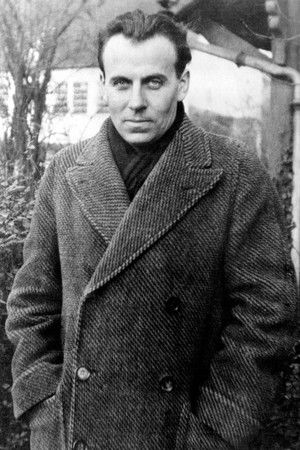
D'un Céline l'autre
Passers-by, those who knew him in his youth, René Barjavel, witness of his beginnings, his wife, his doctor, writers ... By questioning them Michel Polac tries to better understand the troubled personality of Louis-Ferdinand Céline, Notorious anti-Semite and genius writer.
1969