Watch Black Indians: An American Story (2004) Online Free
This award-winning feature examines a minority group that is discounted and often ignored by mainstream media. Sharing a common past, many African Americans and Native Americans have combined to create a unique culture that has meshed the traditions and fine heritage of both. Little known, little documented, and often marginalized, this group has become all but invisible at the dawn of the new millennium. James Earl Jones narrates this examination of the historical relationship between American Indians and African-Americans, who often merged their cultures to work and live together while mainstream white society shunned them. Through illuminating anecdotes and interviews, descendants of fused black and Indian families discuss the complications of their mixed heritage and how their culture was largely erased on official documents.
Cast
James Earl Jones
More Like This
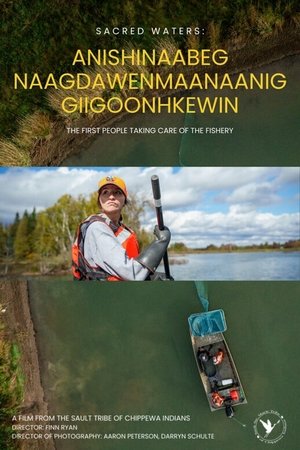
Sacred Waters: Anishinaabeg Naagdawenmaanaanig Giigoonhkewin
"The First People Taking Care of the Fishery" are the Sault Tribe of Chippewa Indians, the largest indigenous tribe east of the Mississippi. For generations, they have been stewarding the fisheries of their Great Lakes territory in Michigan's Upper Peninsula. This project explores the cultural and economic importance of the fishery to the tribe and how use historic and sustainable practices to ensure a healthy fishery and preserve their way of life for the next seven generations in the face of climate change and invasive species.
2025

Autodeclarado
2022
Killing the Indian in the Child
The Indian Act, passed in Canada in 1876, made members of Aboriginal peoples second-class citizens, separated from the white population: nomadic for centuries, they were moved to reservations to control their behavior and resources; and thousands of their youngest members were separated from their families to be Christianized: a cultural genocide that still resonates in Canadian society today.
2021

Imagining the Indian: The Fight Against Native American Mascoting
Examining the movement that is ending the use of Native American names, logos, and mascots in the world of sports and beyond.
2021
State Funeral
The enigma of the personality cult is revealed in the grand spectacle of Stalin’s funeral. The film is based on unique archive footage, shot in the USSR on March 5 - 9, 1953, when the country mourned and buried Joseph Stalin.
2019
There's Something in the Water
Elliot Page brings attention to the injustices and injuries caused by environmental racism in his home province, in this urgent documentary on Indigenous and African Nova Scotian women fighting to protect their communities, their land, and their futures.
2019
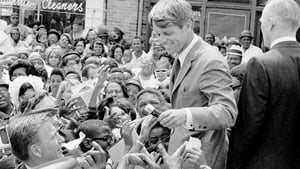
1968: A Year of War, Turmoil and Beyond
The Tet Offensive during the Vietnam War, the Civil Rights Movement, the May events in France, the assassinations of Martin Luther King and Robert F. Kennedy, the Prague Spring, the Chicago riots, the Mexico Summer Olympics, the presidential election of Richard Nixon, the Apollo 8 space mission, the hippies and the Yippies, Bullitt and the living dead. Once upon a time the year 1968.
2018

Zensur: Die organisierte Manipulation der Wikipedia und anderer Medien
2017

Black Ballerina
BLACK BALLERINA tells the story of several black women from different generations who fell in love with ballet. Six decades ago, while pursuing their dreams, Joan Myers Brown, Delores Browne and Raven Wilkinson confronted racism, exclusion and unequal opportunity. Today, young dancers of color continue to face formidable challenges breaking into the overwhelmingly white world of ballet. Moving back and forth in time, this lyrical, character driven film shows how far we still have to go and stimulates a fresh discussion about race, inclusion and opportunity across all sectors of American society.
2016
World War Two: A Timewatch Guide
Professor Saul David uses the BBC archive to chart the history of the world's most destructive war, by chronicling how the story of the battle has changed. As new information has come to light, and forgotten stories are remembered, the history of World War Two evolves. The BBC has followed that evolution, and this programme examines the most important stories, and how our understanding of them has been re-defined since the war ended over 70 years ago.
2016
I'm Not Racist... Am I?
What if this next generation could transcend racism? One year, 12 teens, on a remarkable journey to face racism and white privilege, have the conversations most of us are too afraid to have. Once they push through naivete, guilt and tears, what they learn may change us all.
2014
Operation Stonehenge: What Lies Beneath
Stonehenge is an icon of prehistoric British culture, an enigma that has seduced archaeologists and tourists for centuries. Why is it here? What is its significance? And which forces inspired its creators? Now a group of international archaeologists led by the University of Birmingham and the Ludwig Boltzman Institute in Vienna believe that a new state-of-the-art approach is the key to unlocking Stonehenge's secrets. For four years the team have surveyed and mapped every monument, both visible and invisible, across ten square kilometres of the sacred landscape to create the most complete digital picture of Stonehenge and the surrounding area over millennia. Operation Stonehenge takes the viewer on a prehistoric journey from 8000BC to 2500BC as the scientists uncover the very origins of Stonehenge, learning why this landscape is sacred, preserved and has been revered by following generations.
2014
The Reaper
Efrain, known as the Reaper, has worked at a slaughterhouse for 25 years. We will discover his deep relationship with death and his struggle to live.
2013

Planet Food: Spice Trails
In this remarkable journey, Planet Food travels the world to see how control of the spice trails, over the last five millennia, has made great cities and destroyed ancient civilizations. Our guides travel from the Molucca Islands of Indonesia, the original home of cloves and nutmeg, to the Indian province of Kerala, with its native pepper and cardamom. Additional stops include Venice, Beirut, Cairo and other significant places in the spice trade that created and toppled empires.
2012
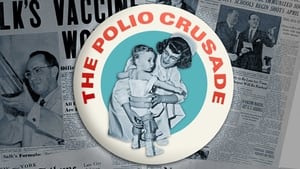
The Polio Crusade
The film interweaves the personal accounts of polio survivors with the story of an ardent crusader who tirelessly fought on their behalf while scientists raced to eradicate this dreaded disease. Based in part on the Pulitzer Prize-winning book Polio: An American Story by David Oshinsky, Features interviews with historians, scientists, polio survivors, and the only surviving scientist from the core research team that developed the Salk vaccine, Julius Youngner.
2009
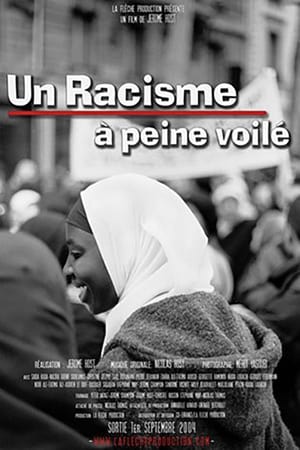
Un racisme à peine voilé
October 2003, Alma and Lila Levy are excluded from the Lycée Henri Wallon in Aubervilliers solely because they were wearing a headscarf. What follows is a deafening political and media debate, justifying in most cases the exclusion of girls wearing head-scarves to school. February 2004, a law was eventually passed by the National Assembly. "A thinly veiled racism" is about this controversy since the affair of Creil in 1989 (where two schoolgirls were excluded for the same reasons) and attempts to "reveal" that maybe what hides behind is the desire to exclude these girls. This film gives them a voice as well as others - teachers, community activists, feminists, researchers - gathered around the group "A School for You-All" fighting for the repeal of this law they consider sexist and racist ... This movie was censured in Septembre 2004 in France.
2004
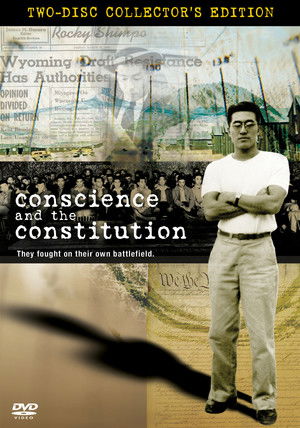
Conscience and the Constitution
Americans refused to be drafted from the concentration camp at Heart Mountain, Wyoming. Ready to fight, but not before their rights as U.S. citizens were restored and families released.
2000
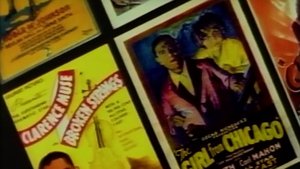
Midnight Ramble
A documentary chronicling the pioneering efforts of black filmmaker William D. Foster in the early years of the industry and Oscar Micheaux's controversial impact on the subsequent "race movies".
1994
Café au Lait
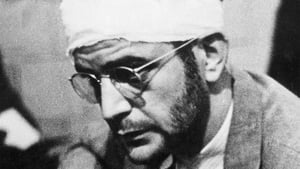
Asaltar los cielos
Documentary about the killer of Trotsky
1996