Watch Armenian Lullaby (2005) Online Free
Armenian Lullaby is based on the verse of my great-great-grandfather, Rafael Patkanian (1830-1892) about a mother who is singing a lullaby to her child, calling on different birds who are associated with various professions. The baby falls asleep only to the song of Falcon, who is singing battle songs, in other words, chooses the profession of a soldier. Traditionally it's considered a patriotic song: in the country that survived genocide, Soviet regime and recent war with Azerbaijan, sons' primary vocation is to become soldiers. This interpretation is dedicated to Mothers of all soldiers.
More Like This

The Falcons
The Falcons is an intimate, observational documentary that delves into the world of the Tshakhruk Ethnoband, a remarkable musical ensemble in the Armenian highlands. Comprised of special-needs children that reside at the state orphanage, these young musicians find solace, strength, and self-expression through the transformative power of music.
2025

Caparrós. Las botas del entrenador
Year 2021. Veteran coach Joaquín Caparrós leads the Armenian National Football Team. 5,000 km away from his native Utrera and in just one year, he has become a hero for a country at war.
2024

Armenia, My Home
Experience spectacular aerial and ground views and cultural revelations of a country like no other in a virtual tour of Mount Ararat, Khor Virap, Yerevan, the Genocide memorial, and more. Narrated by Andrea Martin, the documentary features prominent voices from the Armenian diaspora including Eric Bogosian, Chris Bohjalian, Peter Balakian, Michael Aram, and others.
2024
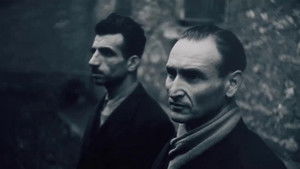
Missak Manouchian and the Red Poster
In February 1944, in a courtyard at Fresnes Prison, the Germans staged a spectacle to stigmatize a group of communist resistance fighters—all foreigners and mostly Jewish—who had been arrested a few weeks earlier. The propaganda aimed to discredit these fighters, portraying them as terrorists and criminals, even though they had managed to carry out numerous attacks against the occupiers in Paris. The red poster, plastered in thousands of copies across the country, would immortalize them in legend. They were subsequently executed at Mont-Valérien, near Paris. Missak Manouchian, the Armenian who led these fighters, now embodies this group in the collective memory as he is enshrined in the Panthéon, on behalf of all his comrades, 80 years after their execution.
2024

Nina's Children
The 40-day war has just ended in Armenia. David completed a 2-year service and has returned home from the front. Uncertain about his next steps, he is actively searching for a job that resonates with him. Arthur served in the army for a year and is currently on vacation. He continues his efforts to recall his favorite tune on the piano. Serezha harbors jealousy toward his brothers who experienced the war. He is getting ready to enlist in the army, as he will turn 18 this year. All three are brothers, and they are all Nina's children.
2023
A Story of Home
As a result of the second Karabakh war, a village should be ceded to Azerbaijan since a new highway is built through the Lachin corridor. The family of Narine, like many other Armenian families, needs to find a new place.
2022
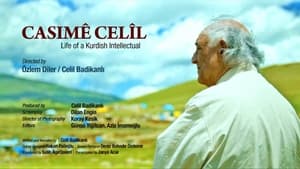
Jiyana Rewsenbireki Kurd: Casimê Celîl
Casimê Celîl was born into a Yezidi Kurdish family in 1908, in a village called Kızılkule, located in Digor, Kars. The village and family life, which he longed to remember throughout his life, ends with the massacre they endured in 1918. During his long road to Erivan, Armenia, he lost all his family members. Left all alone, Casim was placed into an orphanage and was forced to change his name. To remember who he was and where he came from, every morning he repeated the mantra “Navê min Casim e, Ez kurê Celîlim, Ez ji gundê Qizilquleyê Dîgorê me, Ez Kurdim, Kurdê Êzîdî me”, which translates to: “My name is Casim, I am the son of Celîl, I come from the village of Kızılkule in Digor, I am a Kurd, and I am Yezidi”. He clings to every piece of his culture he can find, reads, and saves whatever Kurdish literature or art he comes across. As the year’s pass, Casim finds himself with an impressive collection of Kurdish culture and history.
2021
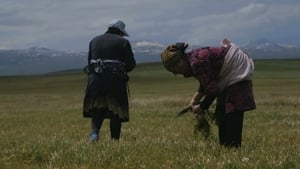
Village of Women
Only women, children and old people live in this Armenian village, while the men work in Russia. A life with a rhythm of its own, an independent daily life marked nonetheless by exile.
2019
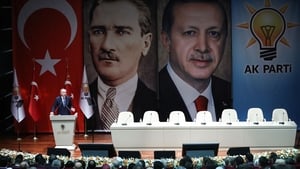
From Atatürk to Erdoğan: Building a Nation
Turkey's history has been shaped by two major political figures: Mustafa Kemal (1881-1934), known as Atatürk, the Father of the Turks, founder of the modern state, and the current president Recep Tayyıp Erdoğan, who apparently wants Turkey to regain the political and military pre-eminence it had as an empire under the Ottoman dynasty.
2019
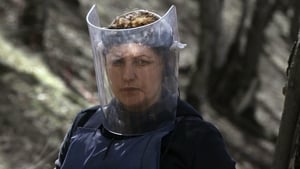
Nothing to be Afraid of
Ever since the war in Nagorno-Karabakh, the still disputed territory is contaminated by landmines. This documentary follows five female de-miners on their risky job.
2019
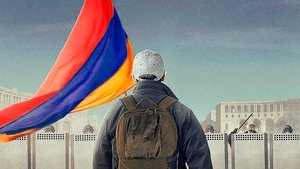
I Am Not Alone
On Easter 2018, a man put on a backpack and began to walk across Armenia. His mission: to inspire a velvet revolution and topple the corrupt regime that enjoys absolute power in his former Soviet nation. With total access to all key players, this documentary tells the story of what happened in the next 40 days.
2019
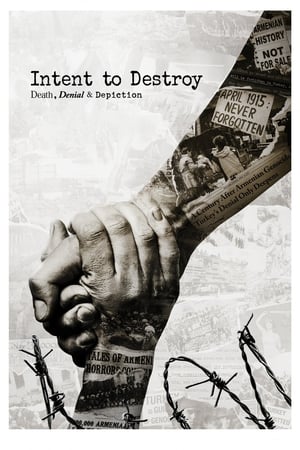
Intent to Destroy: Death, Denial & Depiction
INTENT TO DESTROY embeds with a historic feature production as a springboard to explore the violent history of the Armenian Genocide and legacy of Turkish suppression and denial over the past century.
2017

Architects of Denial
Though both the historical and modern-day persecution of Armenians and other Christians is relatively uncovered in the mainstream media and not on the radar of many average Americans, it is a subject that has gotten far more attention in recent years.
2017

Es geht um Alles
2008
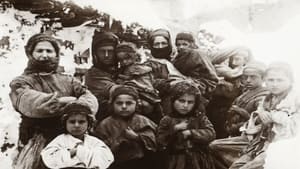
The Armenian Genocide
Explores the Ottoman Empire killings of more than one million Armenians during World War I. The film describes not only what happened before, during and since World War I, but also takes a direct look at the genocide denial maintained by Turkey to the present day.
2006
The Armenian Genocide
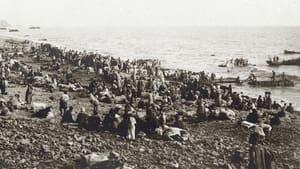
More than one million Armenians perished between 1915 and 1916 in massacres or brutal deportation programs. Turkey still denies it ever happened. Laurence Jourdan examines massacres of Armenians in the decades leading up to the mass murder, and the geopolitical situation both before and after the genocide. Contemporaneous reports and documents written by Western diplomats stationed in the Ottoman Empire describe the methods used and the deportation routes. These accounts are mixed with personal stories from the living survivors and archive footage from Ottoman authorities.
2005
Kajaran: Metamorphosis of Stone
Humans transform the world. In a stone mine, huge majestic rocks are blasted into pieces and after passing through the stone processing line, they gradually transform into pebbles.
2001

A Kind Trace
The documentary is about an old man from Yerevan who paints on garages, transforming rusty metal walls into vivid landscapes and leaving a subtle yet unforgettable mark on the city.
1980
The Seasons
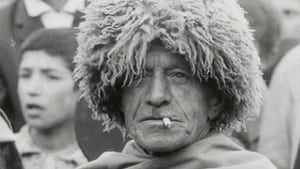
The last collaboration of Artavazd Peleshian and cinematographer Mikhail Vartanov is a film-essay about Armenia's shepherds, about the contradiction and the harmony between man and nature, scored to Vivaldi's Four Seasons.
1975

First Armenian Church
An elaborate ceremony marks the opening of the first Armenian church in England.
1923