Watch Intent to Destroy: Death, Denial & Depiction (2017) Online Free
INTENT TO DESTROY embeds with a historic feature production as a springboard to explore the violent history of the Armenian Genocide and legacy of Turkish suppression and denial over the past century.
Cast
Terry George, Eric Bogosian, Kevork Malikyan
More Like This

Tombstone
This movie tells the story of the centuries of cross-stones and how firmly they stand on the face of the earth, but at the same time, people forget about them.
2025
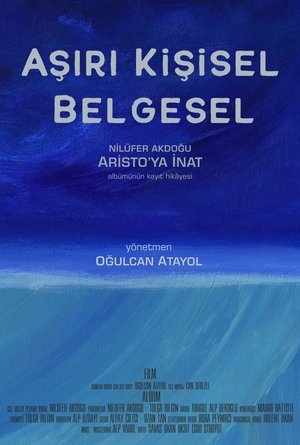
Extremely Personal Documentary
The recording process of musician Nilufer Akdogu's Turkish jazz album Aristo'ya Inat (Against Aristotle). The film presents the musical searches during the creation of an album with all its fragility. At the same time, it is a record of special sharings which elements from world jazz history are discussed with experiences, and the joy is never lost despite the setbacks.
2024
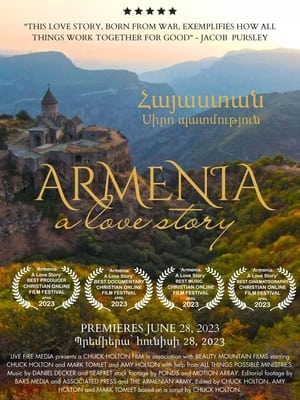
Armenia: A Love Story
Two American teenagers become intrigued by Armenia's history and culture after learning about the 2020 aggression by Azerbaijan that devastated the Armenian-populated Nagorno-Karabach district from a friend's war correspondent father. Mark Tomlet and his friend Amy Holton embark on a life-changing journey to Armenia, visiting the war zone only months after an uneasy ceasefire was declared, and interview people affected by the war. In the process, the two learn a lot about themselves and how much they take for granted. That first trip leads to more engagement with Armenia, leading tours to the country, and eventually, something amazing happens that brings joy out of the tragedy of war. It's a serendipitous story of hope from tragedy, a chance adventure, and love blossoming even in the worst of circumstances.
2023
The War Diary
The War Diary is a contemporary road movie that confronts history with the current reality of Russia, Ukraine, Armenia and Georgia. An extraordinary document leads Hakob Melkonyan to undertake the journey of a lifetime:
2023
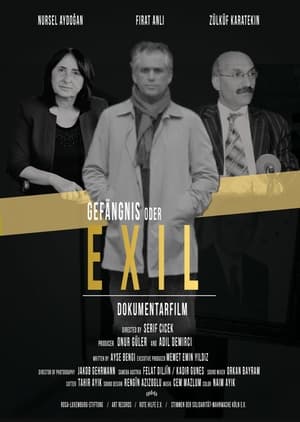
Prison or Exile
Nursel Aydoğan, Fırat Anlı and Zülküf Karatekin are linked by political exile in Europe after threatened prison sentences in Turkey.
2021
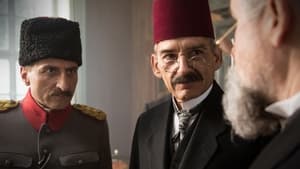
Atatürk: Father of Modern Turkey
Docudrama examining the life of Mustafa Kemal Atatürk, who founded the Republic of Turkey from the ruins of the Ottoman Empire. Monuments to him can be found in every city; the anniversary of his death is commemorated every year; derogatory words about him are punishable by law. Rarely has a politician changed a society so radically in such a short time as Atatürk did Turkey.
2018
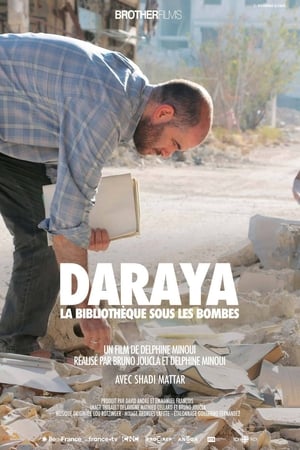
Daraya: A Library Under Bombs
At the heart of the Syrian civil war, a group of activists created an underground library in the besieged outskirts of Damascus. After years of blockade, they were forced to leave their city. But they managed to save their videos illustrating a unique experiment of cultural resistance under the bombs. This film, built between the past and the present, follows the story of three friends who met during the 2011 revolution and never gave up on their cultural resistance and peaceful struggle. Despite ceaseless bombing, they not only saved books from the rubble, but created a secret library, which quickly became a safe haven for peace, freedom and democracy: a special experience that they filmed and documented meticulously. Separated by war and exile, they are striving to reunite with each other. They reminisce on the past and tell us the extraordinary story of the library, based on dozens of hours of video archives. “A Library Under Bombs” is a story of hope and survival.
2018
Attention!
A 32-year-old PhD candidate Onur finds himself in a dilemma whereby he needs to make a decision between doing paid military service and serving the army for 6 months. Throughout this decision making process Onur not only questions the ethical and political aspects of the choice he will make, but also the compulsory military system in his country. He has only 2 months to decide. Will he go or pay?
2016
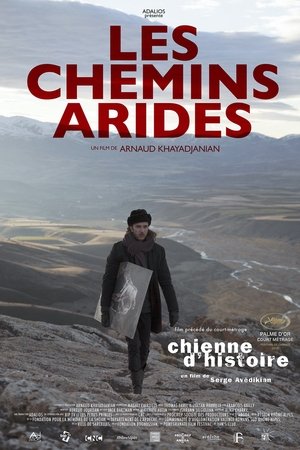
Stony Paths
Stony Paths is the story of a walk across Anatolia. Arnaud Khayadjanian starts a trek in Turkey, on the land of his forefathers who survived the Armenian Genocide. Starting from a painting, from encounters and from accounts by his relatives, he goes on exploring the little known issue of the Righteous, all these anonymous people who saved lives in 1915.
2015
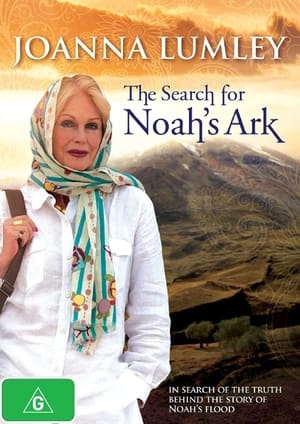
Joanna Lumley: The Search for Noah's Ark
In search of the truth behind the story of Noah's Flood, Joanna Lumley and her team examine the theory that Noah's Ark was preserved on Mount Ararat, in Turkish Armenia.
2012
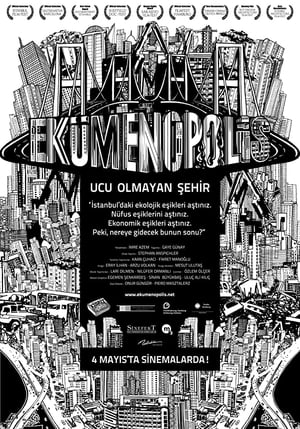
Ecumenopolis: City Without Limits
Ecumenopolis: City Without Limits" tells the story of Istanbul and other Mega-Cities on a neo-liberal course to destruction. It follows the story of a migrant family from the demolition of their neighborhood to their on-going struggle for housing rights. The film takes a look at the city on a macro level and through the eyes of experts, going from the tops of mushrooming skyscrapers to the depths of the railway tunnel under the Bosphorous strait; from the historic neighborhoods in the south to the forests in the north; from isolated islands of poverty to the villas of the rich. It's an Istanbul going from 15 million to 30 million. It's an Istanbul going from 2 million cars to 8 million. It's the Istanbul of the future that will soon engulf the entire region. It's an Istanbul nobody has ever seen before.
2011
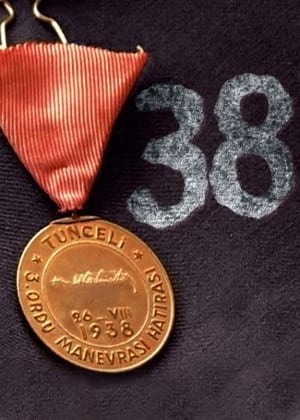
38
Documentary on the massacres commited in the Dersim region in Turkey in 1937/38.
2006
Mustafa Kemal Atatürk - From Revolutionary to Statesman.
Mustafa Kemal Atatürk was an Ottoman and Turkish army officer, revolutionary statesman, writer, and the first President of Turkey. He is credited with being the founder of the Republic of Turkey. His surname, Atatürk (meaning "Father of the Turks"), was granted to him in 1934 and forbidden to any other person by the Turkish parliament.
2005
Dark Forest in the Moutains
In the early 1990's, as the Soviet Empire disintegrated, two former Soviet Republics, Armenia and Azerbaijan, squared off against each other over the fate of the 170,000 Armenians living in the small mountainous region of Nagorno-Karabakh. The war eventually claimed tens of thousands of lives and displaced close to a million people. By the time of the tenuous cease-fire, most of the enclave was in the hands of its longtime Armenian inhabitants. Dark Forest in the Mountains was shot on location in Nagorno-Karabakh and uses a mix of digital animation, live footage and expert interviews to tell the story of that region of the world, and the events that led up to the conflict. It also focuses on N.K.'s northernmost territory, Shahumian, and the partisans who manned its treacherous Gulistan Front.
2002
Our Century
A man paves his own way to his own soul through an intellectual quest, tragedies of nations and personal drama. The road moving through the cosmic distances is a flight into one's internal world. This flight and this drama are revealed in this philosophical film-poem.
1983
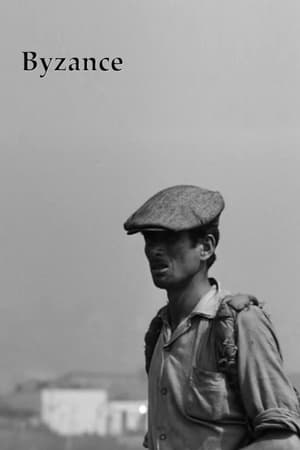
Byzance
Byzance uses a text by Stefan Zweig to describe the Ottoman conquest of the city in 1453. Before he turned to feature filmmaking in 1968 with Naked Childhood, Pialat worked on a series of short films, many of them financed by French television. Byzance is one of Pialat’s six Turkish shorts.
1964
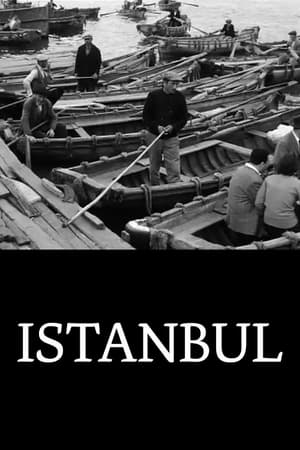
Istanbul
All of Pialat's Turkish films are uniquely interested in the country — especially Istanbul — as it was, not just as it is at the precise moment that Pialat is filming it. History informs these films in a big way, with the voiceover narration (which incorporates excerpts from various authors) introducing tension between the images of the modern-day city and the descriptions of incidents from its long and rich history. Istanbul is probably the most conventional documentary of Pialat's Turkish series, providing a general profile of the titular city, its different neighborhoods, and the different cultures and ways of living that coexist within its sprawling borders. As the other films in the series also suggest, Pialat sees Turkey, and Istanbul in particular, as a junction point between Europe and the East, between the old and the new, between history and modernity.
1964
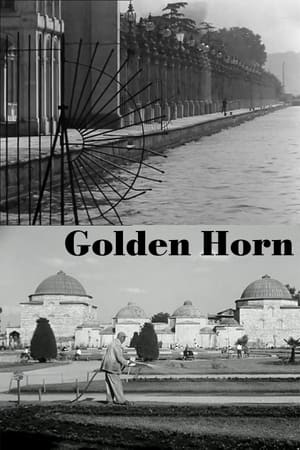
Golden Horn
La Corne d'or is mostly concerned with religious ritual, examining the mosque (and former cathedral) discussed in Byzance. As a contrast against Istanbul's status as a center of historical religious conflict, Pialat — drawing here on texts by the French poet Gérard de Nerval — also describes the city as a place of strange ethnic and religious harmony, with representatives of various cultures and religions living in close contact. He emphasizes the city's hybrid culture, its blend of Southern European and Arab influences, reflected in both its people and its very construction.
1964
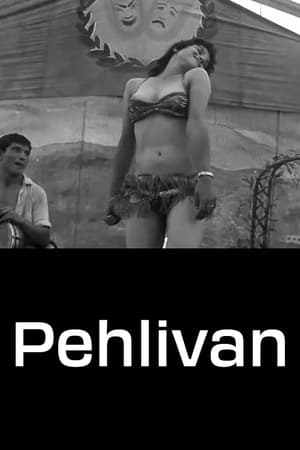
Pehlivan
Pehlivan focuses on a three-day wrestling competition, an ancient tradition that dates back over a thousand years to the time of the Ottoman Empire, originating in the games the soldiers would play to entertain themselves in between battles. Maybe that's why there's more than a hint of homoeroticism in the way the wrestlers oil themselves up with grease, making sure to cover every inch of their bodies so that their opponents will be unable to get a grip. Pialat's closeups emphasize the men's muscular bodies jammed together and sliding off one another, posed in intimate, twisted arrangements, struggling desperately for a grip on each other's bodies. Arms are jammed down pants, one of the only places there's some potential for a handhold, and the whole thing is very suggestive and sensual, a form of intimate male contact that's sanctioned as a show of strength and masculinity.
1964

Bosphore
Short doc by Maurice Pialat. The first film in the series set at Turkey, Bosphore, is also the only one that was shot in color.
1964