Watch I Am Not Alone (2019) Online Free
On Easter 2018, a man put on a backpack and began to walk across Armenia. His mission: to inspire a velvet revolution and topple the corrupt regime that enjoys absolute power in his former Soviet nation. With total access to all key players, this documentary tells the story of what happened in the next 40 days.
Cast
Nikol Pashinyan, Serzh Sargsyan, Valeriy Osipyan, Anna Hakobyan, Raffi Hovannisian, Serj Tankian, Chalo
More Like This
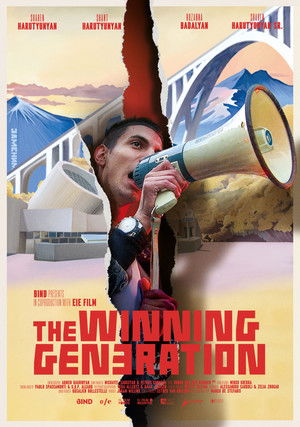
The Winning Generation
The Winning Generation is a documentary filmed over 12 years, following Shahen Harutyunyan from a 14-year-old activist to an emerging political leader. Carrying the legacy of his father and grandfather in Armenia's long struggle for independence, he transforms their tradition of resistance into a new democratic vision. As Armenia navigates political instability and strong Russian influence, Shahen seeks to forge his own path while redefining what a new generation's fight for freedom could look like.
2026

The Falcons
The Falcons is an intimate, observational documentary that delves into the world of the Tshakhruk Ethnoband, a remarkable musical ensemble in the Armenian highlands. Comprised of special-needs children that reside at the state orphanage, these young musicians find solace, strength, and self-expression through the transformative power of music.
2025

Armenia, My Home
Experience spectacular aerial and ground views and cultural revelations of a country like no other in a virtual tour of Mount Ararat, Khor Virap, Yerevan, the Genocide memorial, and more. Narrated by Andrea Martin, the documentary features prominent voices from the Armenian diaspora including Eric Bogosian, Chris Bohjalian, Peter Balakian, Michael Aram, and others.
2024
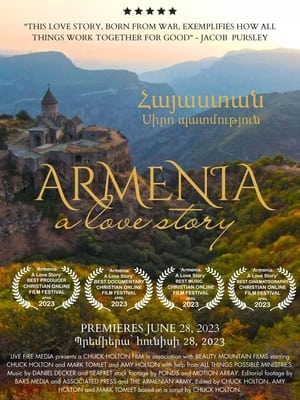
Armenia: A Love Story
Two American teenagers become intrigued by Armenia's history and culture after learning about the 2020 aggression by Azerbaijan that devastated the Armenian-populated Nagorno-Karabach district from a friend's war correspondent father. Mark Tomlet and his friend Amy Holton embark on a life-changing journey to Armenia, visiting the war zone only months after an uneasy ceasefire was declared, and interview people affected by the war. In the process, the two learn a lot about themselves and how much they take for granted. That first trip leads to more engagement with Armenia, leading tours to the country, and eventually, something amazing happens that brings joy out of the tragedy of war. It's a serendipitous story of hope from tragedy, a chance adventure, and love blossoming even in the worst of circumstances.
2023

Nina's Children
The 40-day war has just ended in Armenia. David completed a 2-year service and has returned home from the front. Uncertain about his next steps, he is actively searching for a job that resonates with him. Arthur served in the army for a year and is currently on vacation. He continues his efforts to recall his favorite tune on the piano. Serezha harbors jealousy toward his brothers who experienced the war. He is getting ready to enlist in the army, as he will turn 18 this year. All three are brothers, and they are all Nina's children.
2023
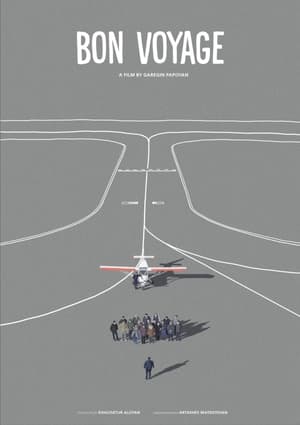
Bon Voyage
Stepanakert's only airport has been operational for 8 years, employing over 50 people. Something is not quite right, however...airplanes and passengers are nowhere to be seen.
2021
Jiyana Rewsenbireki Kurd: Casimê Celîl
Casimê Celîl was born into a Yezidi Kurdish family in 1908, in a village called Kızılkule, located in Digor, Kars. The village and family life, which he longed to remember throughout his life, ends with the massacre they endured in 1918. During his long road to Erivan, Armenia, he lost all his family members. Left all alone, Casim was placed into an orphanage and was forced to change his name. To remember who he was and where he came from, every morning he repeated the mantra “Navê min Casim e, Ez kurê Celîlim, Ez ji gundê Qizilquleyê Dîgorê me, Ez Kurdim, Kurdê Êzîdî me”, which translates to: “My name is Casim, I am the son of Celîl, I come from the village of Kızılkule in Digor, I am a Kurd, and I am Yezidi”. He clings to every piece of his culture he can find, reads, and saves whatever Kurdish literature or art he comes across. As the year’s pass, Casim finds himself with an impressive collection of Kurdish culture and history.
2021
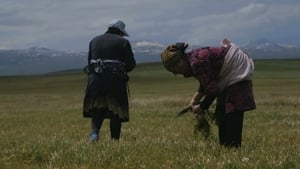
Village of Women
Only women, children and old people live in this Armenian village, while the men work in Russia. A life with a rhythm of its own, an independent daily life marked nonetheless by exile.
2019
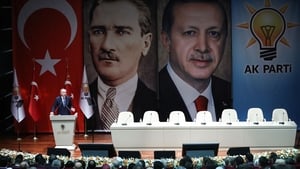
From Atatürk to Erdoğan: Building a Nation
Turkey's history has been shaped by two major political figures: Mustafa Kemal (1881-1934), known as Atatürk, the Father of the Turks, founder of the modern state, and the current president Recep Tayyıp Erdoğan, who apparently wants Turkey to regain the political and military pre-eminence it had as an empire under the Ottoman dynasty.
2019
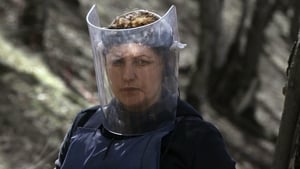
Nothing to be Afraid of
Ever since the war in Nagorno-Karabakh, the still disputed territory is contaminated by landmines. This documentary follows five female de-miners on their risky job.
2019
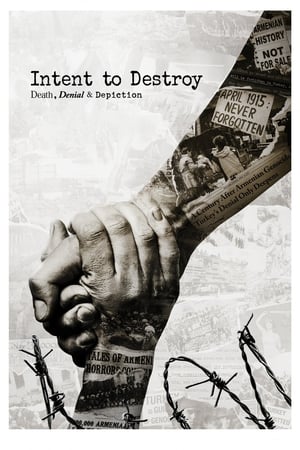
Intent to Destroy: Death, Denial & Depiction
INTENT TO DESTROY embeds with a historic feature production as a springboard to explore the violent history of the Armenian Genocide and legacy of Turkish suppression and denial over the past century.
2017
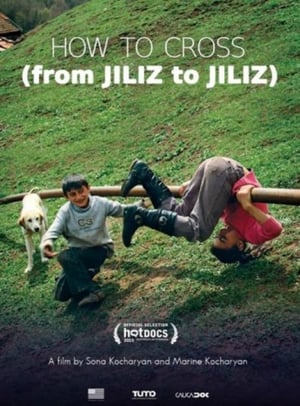
How to Cross (from Jiliz to Jiliz)
An official border divides the village of Jiliz, with one side being in Armenia and the other in Georgia. Lousine, a young girl, dreams about uniting with her grandmother and relatives who lives across the stream that divides the village. Just what is a border? Why does it take her such a long route to travel? She decides to take the journey to see her family and reflects on these questions.
2015
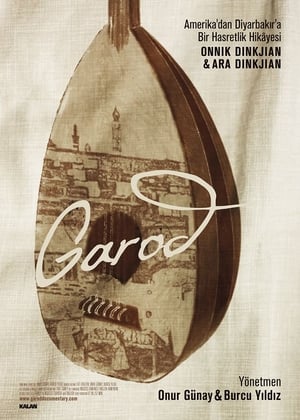
Longing
Garod means longing in Armenian. Longing for a land that lost its people. Longing for the homeland. Longing for a time that is eternally lost. “Garod” is a story of longing. It is about the lives and the musical stories of two Armenian musicians - a father and his son, Onnik Dinkjian and Ara Dinkjian. It tells the story of the remaking of a musical tradition and life in diaspora, passes through different geographies and countries following the traces of a musical tradition. In this documentary, Garod means not only longing for loss but also remaking of a musical tradition and the life itself.
2013
Es geht um Alles
2008
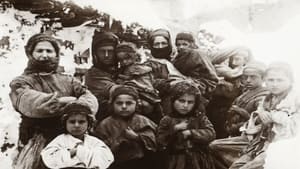
The Armenian Genocide
Explores the Ottoman Empire killings of more than one million Armenians during World War I. The film describes not only what happened before, during and since World War I, but also takes a direct look at the genocide denial maintained by Turkey to the present day.
2006
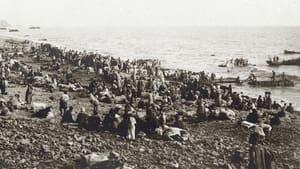
The Armenian Genocide
More than one million Armenians perished between 1915 and 1916 in massacres or brutal deportation programs. Turkey still denies it ever happened. Laurence Jourdan examines massacres of Armenians in the decades leading up to the mass murder, and the geopolitical situation both before and after the genocide. Contemporaneous reports and documents written by Western diplomats stationed in the Ottoman Empire describe the methods used and the deportation routes. These accounts are mixed with personal stories from the living survivors and archive footage from Ottoman authorities.
2005

A Kind Trace
The documentary is about an old man from Yerevan who paints on garages, transforming rusty metal walls into vivid landscapes and leaving a subtle yet unforgettable mark on the city.
1980
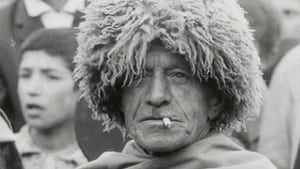
The Seasons
The last collaboration of Artavazd Peleshian and cinematographer Mikhail Vartanov is a film-essay about Armenia's shepherds, about the contradiction and the harmony between man and nature, scored to Vivaldi's Four Seasons.
1975
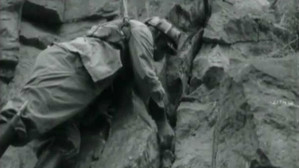
Mountain Vigil
Poetic film about the struggle of man's will and muscles against nature, about the rock-climbers who prevent landslides and eliminate their consequences.
1964
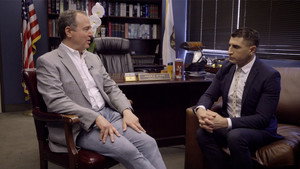
ARTSAKH Armenian Genocide Continues
ARTSAKH Armenian Genocide Continues is a documentary film by multi-award-winning journalist & documentary filmmaker, Vic Gerami, about the Artsakh Genocide (Nagorno-Karabakh) perpetrated by Azerbaijan and Turkiye. It tells the story of this ongoing tragic chapter through the lens of Armenian-American journalist and LGBTQ+ activist Vic Gerami. Through a journalist’s perspective, ARTSAKH documents Azerbaijan’s and Turkey’s unprovoked genocidal attack and ethnic cleansing against Armenians of Artsakh, also known as Nagorno-Karabakh, starting on September 27, 2020. Azerbaijan, with the declared assistance from Turkey, launched a large-scale offensive against Artsakh. In its war effort, Azerbaijan relied on thousands of Turkish-paid jihadist mercenaries airlifted from terrorist camps in Syria, Libya, and Pakistan and brought to fight alongside the Azerbaijani Army. For 44 days, the world watched mainly in deafening silence as over 5,000+ Armenians were massacred.