Watch And the Dogs Were Silent (1976) Online Free
For 'Et les chiens se taisaient' Maldoror adapted a piece of theatre by the poet and politician Aimé Césaire (1913–2008), about a rebel who becomes profoundly aware of his otherness when condemned to death. His existential dialogue with his mother reverberates around the African sculptures on display at the Musée de l'Homme, a Parisian museum full of colonial plunder whose director was the Surrealist anthropologist Michel Leiris.
Cast
Sarah Maldoror, Gabriel Glissant
More Like This
Hear O, Mahatma
In an open letter to the most influential modern Indian political leader, the Late Mohandas Karamchand Gandhi, the filmmaker sequentially narrates the stories of three distinct individuals - that of a confused filmmaker who flows with time, a dedicated social reformer who guides the stratified masses into social upliftment and a divisive and regressive politician. The juxtaposition of their disfigured trajectories provokes a pertinent question: Did Gandhi ever foresee the dehumanized shape that his legacy has now dangerously morphed into?
2024

Terra incognita
2024
TETHERS
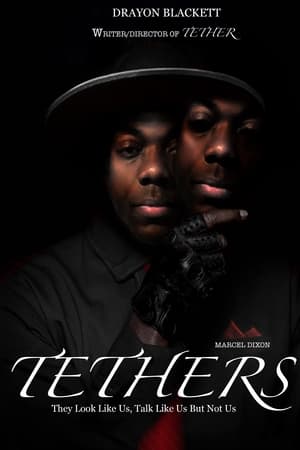
Prepare for an eye-opening journey into the heart of identity and division. 'Tethers' is a groundbreaking interview-style documentary that delves deep into the complex tapestry of cultural differences, racial tension, and the ethnocentric divide between Africans, African Americans, and Foundation Black Americans.
2023
Measures of Men
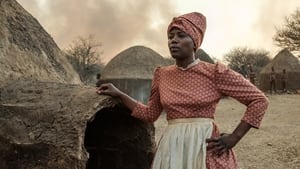
Berlin at the end of the 19th Century. Alexander Hoffmann is an ambitious PhD student of Ethnology. When a delegation of the Herero and Nama tribes travels to Berlin during a ‘Colonial Exhibition’, he takes a special interest in their young female translator Kezia Kambazembi as subject for his studies.
2023
The March on Rome
The fascinating story of the rise to power of dictator Benito Mussolini (1883-1945) in Italy in 1922 and how fascism marked the fate of the entire world in the dark years to come.
2022
Madatrek
Embark on a journey of discovery in Madagascar with Alexandre and Sonia Poussin, Philaé, 10 years old, and Ulysse, 7 years old, along with their quirky cart pulled by zebu. Their mission was multi-faceted: to produce a documentary series, raise funds for NGOs encountered along the way, open their children's eyes to the beauty but also the fragility of the island's endemic nature, and finally to live a life of long-term, joyful simplicity. Challenges of crossing, encounters, and lessons learned will always be present in this slow-paced alternative learning journey.
2018

Race War
The explosive documentary from Black Channel Films daring to ask the question "Is it still just racism or is it a race war?" NOW IS THE TIME TO ASK IS IT STILL JUST "RACISM" OR IS IT A RACE WAR? RACE WAR IS THE FIRST DOCUMENTARY IN HISTORY THAT EXAMINES EVERY LEVEL OF AMERICAN SOCIETY TO EXPLORE THE MOST EXPLOSIVE ISSUE FACING AMERICA ALL OF OUR YESTERDAYS . . . AND TOMORROW.
2018

Vila do Conde Extended
A boy from Vila do Conde records a love letter on a cassette. His voice blends with music, archive images and stories from the past, some lived and others heard.
2015
Las Vegas Meditation
Florent Tillon takes an anthropological lens to Las Vegas, Nevada. What he finds is some curious new species of Americana. (Dorothy Woodend, DOXA Documentary Film Festival)
2014
Locations: Looking for Rusty James
A personal meditation on Rumble Fish, the legendary film directed by Francis Ford Coppola in 1983; the city of Tulsa, Oklahoma, USA, where it was shot; and its impact on the life of several people from Chile, Argentina and Uruguay related to film industry.
2013
Una identidad en absurdo Vol. 1
Guillermo Gómez Álvarez explores the identity politics of Puerto Rico via archival footage from various sources that clash with nine original songs from local independent musicians and a thematic analysis from a psychoanalyst and a historian. From the juxtaposition the absurd becomes coherent and the coherent becomes absurd as Puerto Rican identity is defined and rejected almost simultaneously.
2011
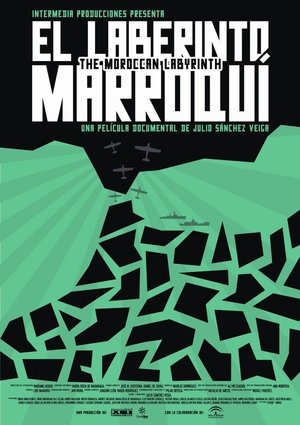
The Moroccan Labyrinth
2007
Lagaan: Once Upon a Time in India
The year is 1893 and India is under British occupation. In a small village, the tyrannical Captain Russell has imposed an unprecedented land tax on its citizens. Outraged, Bhuvan, a rebellious farmer, rallies the villagers to publicly oppose the tax. Russell offers a novel way to settle the dispute: he challenges Bhuvan and his men to a game of cricket, a sport completely foreign to India. If Bhuvan and his men can defeat Russell's team, the tax will be repealed.
2001

Traps
The year is 1950 and an English couple, Louise and Michael, have arrived in French-occupied Indochina to cover a story on a French-owned rubber plantation. They are to be the guests of the enigmatic plantation overseer, Daniel, and his beautiful yet difficult daughter Viola, at their elegant, decaying villa amid a tropical jungle. Michael and Louise hope that some time spent working in an exotic location will help reignite the passion in their floundering marriage. Instead they become unwittingly involved in the personal, sexual and political tensions of their hosts. Daniel is desperate to hold onto a way of life no longer possible in a country struggling for independence, bringing him into conflict with not only his daughter but also with his adopted country.
1994
The Last of the Mohicans
In war-torn colonial America, in the midst of a bloody battle between British, the French and Native American allies, the aristocratic daughter of a British Colonel and her party are captured by a group of Huron warriors. Fortunately, a group of three Mohican trappers comes to their rescue.
1992
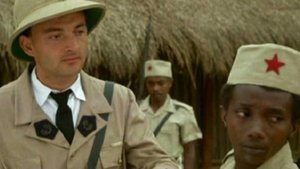
Tabataba
Tabataba tells the story of a small Malagasy village during the independence uprising which took place in 1947 in the south of the country. For several months, part of the Malagasy population revolted against the French colonial army in a bloody struggle. The repression in villages that followed was terrible, leading to fires, arrests and torture. Women, children and the elderly were the indirect victims of the conflict and suffered particularly from famine and illness. One leader of the MDRM Malagasy Party, which campaigns for the independence of the country, arrives in a village. Solo (François Botozandry), the main character, is still too young to fight but he sees his brother and most of the men in his clan join up. His grandmother, Bakanga (Soavelo), knows what will happen, but Solo still hopes his elder brother will return a hero. After months of rumours, he sees instead the French army arrive to crush the rebellion.
1989
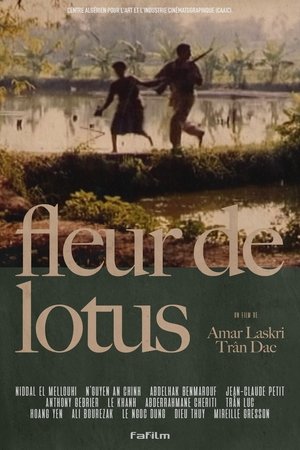
Lotus Flower
After his family was brutally murdered by French settlers on his wedding day, an Algerian man joins the French army and is sent to Vietnam to fight in the First Indochina War.
1988
Objetivo - Sáhara
1981
Objetivo - Con el polisario
1981
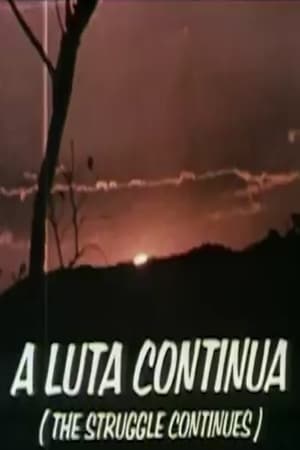
The Struggle Continues
A Luta Continua explains the military struggle of the Liberation Front of Mozambique (FRELIMO) against the Portuguese. Produced and narrated by American activists Robert Van Lierop, it details the relationship of the liberation to the wider regional and continental demands for self-determination against minority rule. It notes the complicit roles of foreign governments and companies in supporting Portugal against the African nationalists. Footage from the front lines of the struggle helps contextualize FRELIMO's African socialist ideology, specifically the role of the military in building the new nation, a commitment to education, demands for sexual equality, the introduction of medical aid into the countryside, and the role of culture in creating a single national identity.
1971