Watch Almost Anything (2017) Online Free
More Like This
welcome_home.exe
As technology accelerates, our species' collective imagination of the future grows ever more kaleidoscopic. We are all haunted by temporal distortion, perhaps no more than when we attempt to remember what the future looked like to our younger selves. As the mist of time devours our memories, the future recedes; each of us burdened by the gaping mouth of entropy. Yet, emerging technology provides a glimmer of hope; transhumanism promises a future free from mortality, disease and pain. Does our salvation lie in digital simulacra? We're here to sell you the answer to that question, for the low, low price of four hundred and seventy seconds.
2021
La Vita Olistica
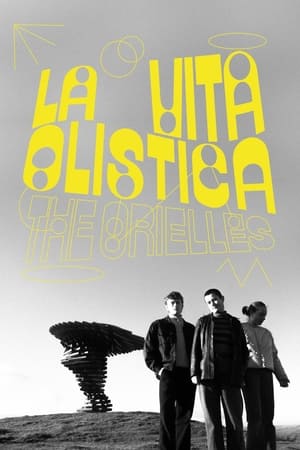
Gaining ideology from their last album Disco Volodar, the short film uses the core theme of space. The short film is filmed at Unit 3 Regents Trading Estate, the usual area for Sounds From The Other City. Using the philosophy of avante garde pioneer Maya Deren ‘one must at least begin with the body feeling’, the films opening is of the four piece standing atop of the hill in the Pendle countryside. This quickly melts into a warped reality and lands you into the POV of a camera and trapped in a liminal space where you see a band in session.
2021

Brutalism
Beneath towering Brutalist architecture, a man is driven to do what must be done.
2019

We Could All Do With a Little Back & Forth As Far As It Concerns the To & Fro of Everywhere Each of Us Go
(Some of us) Still run down the same [mental&emotional] streets we revered/reproached/replaced as children.
2017
Disparate, Shifty Fate
Wax and wane until there is naught but boring pain.
2017
Finds Itself in Corners
Lines align during acclimated apexes, shadowy vertices, and bright burrows.
2017
Scroll on Thru
Scroll][Stop{{Scroll}}Stop/}{~Scrollllllll
2017

Maybe That's Enough
Platitudes begin at peaks then rapidly descend and dismantle in order to ascend more acutely until they repeatedly and successively overwhelm.
2017
This Must Be My Face
10 minute experimental film. Warning: this video involves frequent strobing.
2017
Roadz2Home
3 minute experimental film.
2017
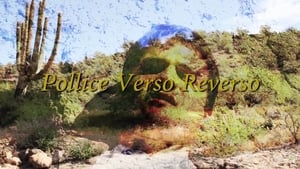
Pollice Verso Reverso
A 'reversal' of Jean-Léon Gérôme's 1872 painting Pollice Verso.
2017

Sweet-Smelling Movie: Be a Light to the World
A coming-of-age story about a high-school girl who wants to use magic, featuring the 11-member experimental band Vampillia
2016
Memory Vague
Sourced entirely from YouTube, converted and edited using Windows Media Maker. A comprehensive list of video credits is available at pointnever.com Root Strata, 2009 Pro-duplicated DVD-R in a slimline DVD case with translucent colour cover and transparent insert. Limited to 250 copies.
2009
The Getty Address
James Sumner directs and animates the entire Dirty Projectors’ The Getty Address.
2007
Cremaster 5
CREMASTER 5 is a five-act opera (sung in Hungarian) set in late-ninteenth century Budapest. The last film in the series, it represents the moment when the testicles are finally released and sexual differentiation is fully attained. The lamenting tone of the opera suggests that Barney invisions this as a moment of tragedy and loss. The primary character is the Queen of Chain (played by Ursula Andress). Barney, himself, plays three characters who appear in the mind of the Queen: her Diva, Magician, and Giant. The Magician is a stand-in for Harry Houdini, who was born in Budapest in 1874 and appears as a recurring character in the Cremaster cycle.
1997
Moonwalker
This fantastical movie inspired by the music of Michael Jackson features imaginative interpretations of hit tracks from the iconic 1987 album “Bad”.
1988
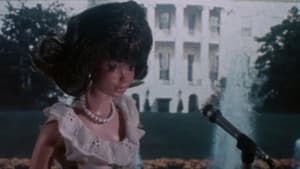
Superstar: The Karen Carpenter Story
The final 17 years of American singer and musician Karen Carpenter, performed almost entirely by modified Barbie dolls.
1987
What You Mean We?
WHAT YOU MEAN WE is a surreal short film by experimental artist Laurie Anderson.
1986

Beatles Electroniques
Part of a collection of restored early works by Nam June Paik, the haunting Beatles Electronique reveals Paik's engagement with manipulation of pop icons and electronic images. Snippets of footage from A Hard Day's Night are countered with Paik's early electronic processing.
1969
Rytmus
An experimental film from Jirí Lehovec, mixing the sound process with animated rhythms.
1942