Watch The Getty Address (2007) Online Free
James Sumner directs and animates the entire Dirty Projectors’ The Getty Address.
Cast
David Longstreth, Bidisha Banerjee, Anneli Chambliss
More Like This
welcome_home.exe
As technology accelerates, our species' collective imagination of the future grows ever more kaleidoscopic. We are all haunted by temporal distortion, perhaps no more than when we attempt to remember what the future looked like to our younger selves. As the mist of time devours our memories, the future recedes; each of us burdened by the gaping mouth of entropy. Yet, emerging technology provides a glimmer of hope; transhumanism promises a future free from mortality, disease and pain. Does our salvation lie in digital simulacra? We're here to sell you the answer to that question, for the low, low price of four hundred and seventy seconds.
2021

Roda Viva Roda Brasil
2019

The Astronaut
A short film recounting the travels of a lonely astronaut confronted by the unknown. Unfolding as a mystery, it becomes a carefully subtle, autobiographical examination of the feeling of loneliness and the existential issue of not understanding life on earth and ones place among it.
2017
What Was It Supposed to Be Like?
Rather pointless, rather stilted, fetid; not what we want us going after.
2017
No Impersonator , Perpetrator
Pounding backbeats beaten by [(Don't Get)] warm[welcomes]th.
2017

We Could All Do With a Little Back & Forth As Far As It Concerns the To & Fro of Everywhere Each of Us Go
(Some of us) Still run down the same [mental&emotional] streets we revered/reproached/replaced as children.
2017
Scroll on Thru
Scroll][Stop{{Scroll}}Stop/}{~Scrollllllll
2017
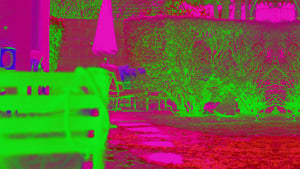
This Must Be My Face
10 minute experimental film. Warning: this video involves frequent strobing.
2017
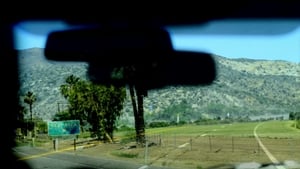
Roadz2Home
3 minute experimental film.
2017
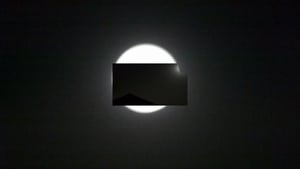
Highlights
Lights flicker & fade as focus shifts from artificial to natural light, ending on a second artificial light speeding through the blackened miasma of the night sky.
2017
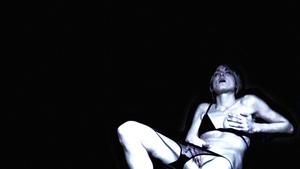
Bedways
A huge, run-down apartment in Berlin Mitte. Two women and a man, rehearsals for a movie about love and sex, that will never be shot. Acting and reality mingle into a dangerous mélange.
2010
Memory Vague
Sourced entirely from YouTube, converted and edited using Windows Media Maker. A comprehensive list of video credits is available at pointnever.com Root Strata, 2009 Pro-duplicated DVD-R in a slimline DVD case with translucent colour cover and transparent insert. Limited to 250 copies.
2009
Cremaster 5
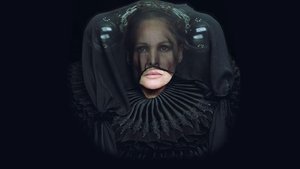
CREMASTER 5 is a five-act opera (sung in Hungarian) set in late-ninteenth century Budapest. The last film in the series, it represents the moment when the testicles are finally released and sexual differentiation is fully attained. The lamenting tone of the opera suggests that Barney invisions this as a moment of tragedy and loss. The primary character is the Queen of Chain (played by Ursula Andress). Barney, himself, plays three characters who appear in the mind of the Queen: her Diva, Magician, and Giant. The Magician is a stand-in for Harry Houdini, who was born in Budapest in 1874 and appears as a recurring character in the Cremaster cycle.
1997
Superstar: The Karen Carpenter Story
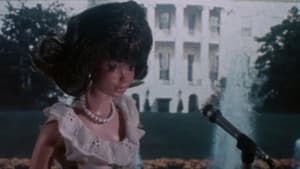
The final 17 years of American singer and musician Karen Carpenter, performed almost entirely by modified Barbie dolls.
1987
Memoria
Surrendering the mind to the hypnotic dance of fire, a candle's glimmer reveals dreamlike memories, illustrated by flickering fragments of experimental films that overlap alongside a deconstructed soundscape. Entering a hallucinatory state in a haunted ambience, one's own subconscious is put on display.
38/79: Sentimental Punk
'It was in San Francisco at a punk festival. I was already high and the air was so thick in the rooms that you could cut it with a knife. I had a photograph camera with me; I stood in a corner of the entrance hall and took 36 pictures on slide film. At home I put the slides into a slide projector. I took out the lens and filmed the slides by filming directly from the projector - using single frames according to a certain plan.'
1979
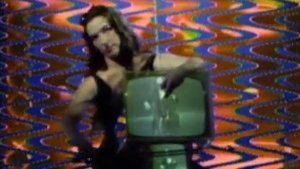
Global Groove
Global Groove was a collaborative piece by Nam June Paik and John Godfrey. Paik, amongst other artists who shared the same vision in the 1960s, saw the potential in the television beyond it being a one-sided medium to present programs and commercials. Instead, he saw it more as a place to facilitate a free flow of information exchange. He wanted to strip away the limitations from copyright system and network restrictions and bring in a new TV culture where information could be accessed inexpensively and conveniently. The full length of the piece ran 28 minutes and was first broadcasted in January 30, 1974 on WNET.
1973

Beatles Electroniques
Part of a collection of restored early works by Nam June Paik, the haunting Beatles Electronique reveals Paik's engagement with manipulation of pop icons and electronic images. Snippets of footage from A Hard Day's Night are countered with Paik's early electronic processing.
1969
Time Piece
Dislocation in time, time signatures, time as a philosophical concept, and slavery to time are some of the themes touched upon in this 9-minute experimental film, which was written, directed, and produced by Jim Henson. Screened for the first time at the Museum of Modern Art in May of 1965, "Time Piece" enjoyed an eighteen-month run at one Manhattan movie theater and was nominated for an Academy Award for Outstanding Short Subject.
1965
Rytmus
An experimental film from Jirí Lehovec, mixing the sound process with animated rhythms.
1942