Watch Ali in Wonderland (1975) Online Free
Ali in Wonderland unveils the condition of immigrant workers in Paris in the 1970s. It is a cry of anger against exploitation and racism, uncompromisingly raising the role of the French state, the media, capitalism, and colonization in this system of domination that crushes those who suffer it. In this experimental essay on the condition of Algerian migrants in Giscard's France in the mid-1970s, every aesthetic choice has a precise and legible political motivation and gives body and voice to a figure completely absent from the experimental cinema of the time: that of the immigrant worker. Abouda is one of the children of immigrants seen in the film, and not a simple activist serving a cause, which is why the emotion of her experimental gesture, which she throws in the viewer's face, springs from a ferocity inscribed in her body, from an insatiable anger that inhabits her gaze.
More Like This
Madatrek
Embark on a journey of discovery in Madagascar with Alexandre and Sonia Poussin, Philaé, 10 years old, and Ulysse, 7 years old, along with their quirky cart pulled by zebu. Their mission was multi-faceted: to produce a documentary series, raise funds for NGOs encountered along the way, open their children's eyes to the beauty but also the fragility of the island's endemic nature, and finally to live a life of long-term, joyful simplicity. Challenges of crossing, encounters, and lessons learned will always be present in this slow-paced alternative learning journey.
2018
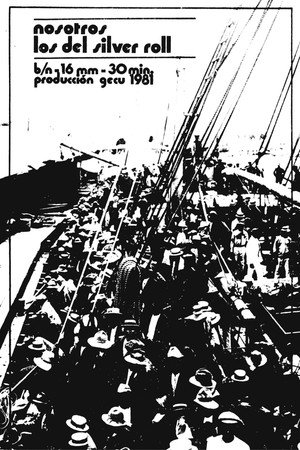
Nosotros los del Silver Roll
Afro-Antillean workers hired for the construction of the Panama Canal are brought from their homes to work in conditions that were not those promised. They, the descendants of African slaves and domesticated from England, manage to raise their voices against American injustices.
1981
Mémoires du 8 mai 1945
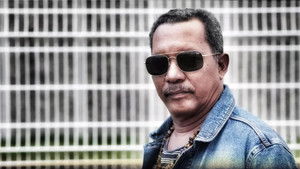
Loïc Léry, du flingue au stylo
2023
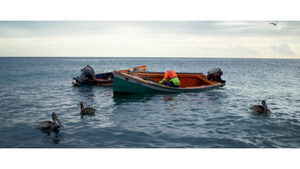
DOUBOUT OUBIEN MÔ
Since August 2024, in Martinique, a popular protest movement against the high cost of living has been reemerging under the leadership of the RPPRAC (Rassemblement Pour La Protection Des Peuples Et Des Ressources Afro-Caribéens – Gathering for the Protection of Afro-Caribbean Peoples and Resources). On the island, food prices are on average 54% higher than in mainland France.* Through various cultural figures, the people of Martinique are expressing their anger and seeking concrete solutions. *Source: Kiprix, Price comparison between supermarkets in the French overseas territories and mainland France.
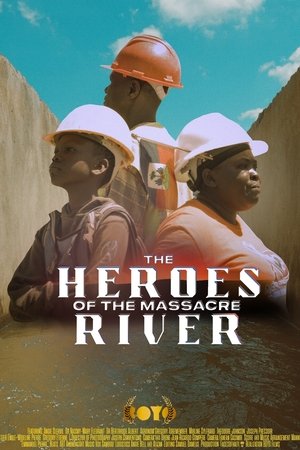
The Heroes of the Massacre River
The Heroes of the Massacre River is a powerful documentary that chronicles the stories of the pioneers behind the construction of the historic Canal of Ouanaminthe, a project that united Haitians across the nation and the diaspora. This film celebrates the groundbreaking efforts of key figures, centering on Dr. Bertrhude Albert, Dr. Naismy-Mary Fleurant, architect Wideline Pierre, economist Etzer Emile as well as dedicated canal workers Milourie Sylfrard, Theodore Johnson and Joseph Pressoir — all guided by the investigative journey of Max Angie Clervil. It also serves as a commentary on the complexity of colonialism and borders, tracing the role that the Massacre River continues to play in the history of Ayiti.
2025
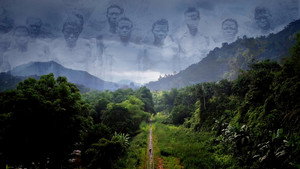
Congo-Océan, un chemin de fer et de sang
2024
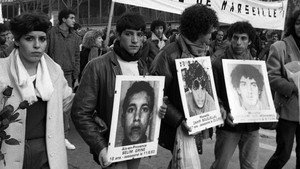
1983, The Marchers for Equality
In the 1980s, young people of North African descent born in France and a priest from the Lyon suburbs organized the "March of the Beurs." Launched on October 15, 1983, by seventeen people from the La Cayolle neighborhood in Marseille following a racist crime, the march concluded two months later—on December 3—on the streets of Paris, with 100,000 participants. This movement demanded equal rights. Was their cry heard?
2023
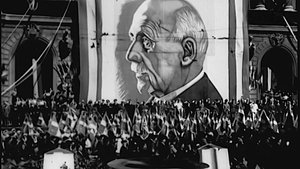
Vichy in the Colonies
After the defeat of 1940, and faced with the unexpected collapse of French power, all eyes turned to a horizon of both hope and uncertainty: the colonies. France had suddenly become an empire without a metropolis, reduced to two-thirds of its former size. Pétain saw the colonies as a "consoling myth" after the defeat, while de Gaulle considered them essential strategic locations for the Resistance. The two clashed in a propaganda war.
2023

The Revolution Of El Harrachi
The artistic journey of Dahmane El Harrachi, born in 1925 in Algiers, bears the mark of his experience. An attentive and vigilant observer of the environment of immigrant workers, Dahmane has always avoided falling into the ambient miserabilism. From the Algerian Chaâbi, he has kept certain melodic lines and a clear propensity for sayings drawn from the oral poetic tradition. El Harrachi uses simple language, understandable by all popular sectors of the Maghreb, which partly explains its wide success. In 1949, he went to France and it was in cafes, springboard places where people come to breathe the air of the country, that he performed regularly. Elegant, with his beautiful atmosphere, the “bluesman” of the suburbs seduces, upsets and stirs consciences. Discovered late by the new generation, the creator of Ya Rayah met a tragic end, on August 31, 1980, in a car accident, on the Algiers coast which he sublimated above all else.
2014
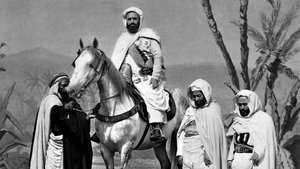
Abd El-Kader
Illustrated with archival photographs, animations and live action, this film explores the history and historical and spiritual heritage of Emir Abd El-Kader. Algerian leader of the 19th century, was admired by Abraham Lincoln and celebrated to this day by the Red Cross as a great humanitarian. Emir Abd el-Kader, the man who challenged the French armies from 1832 to 1847 before creating the bases of a real Algerian state, is today considered by independent Algeria as one of the most outstanding figures. of its history. The nobility of his attitude after his capture and the very effective protection he brought to the Christians of Damascus at the end of his life also earned him great prestige among his former adversaries. A documentary told in dialectal Arabic by the voice of Amazigh Kateb.
2014
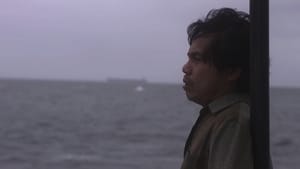
Polaris
Work. Eat. Sleep. And back to work. For a long time skippers in the North East of Scotland could not find locals to work on their fishing vessels. That was until Filipino fishermen started coming to town for work. Both nationalities strive to shorten the distance between two very different worlds.
2012

They Chose Algeria
Many of them participated in the struggle for Algerian independence. There are "those who believed in heaven", priests, Christians committed against torture, friends of the "natives", there are "those who did not believe in it", communist activists, students, progressive intellectuals, others remained in this country because they could not imagine living anywhere other than in this land of all passions. They are European and chose to stay in Algeria after independence, most of them opted for Algerian nationality. The film is another vision of the history of Algeria from the end of the fifties to the present day, told by these Europeans filmed at home, or in the context of their activities, illustrated by unpublished archive documents.
2007

Bledi, This is Our Home
Fleeing their war-torn homeland, forty thousand Algerians come to Montreal, Quebec in the 1990’s. Many are refused refugee status and are not allowed to study or work normally. Years go by, children are born and Canada becomes home. Then comes 911. Deportations begin.
2006

Algeria 1954, The Revolt Of A Colonized
This film presents the point of view of an Arab from Algeria who rebels against colonization. He analyzes the process of awareness, the transition to revolt, to armed insurrection. Algeria and the settlers are seen through this lens and not the way a Frenchman saw the country. He gives voice to the Arabs at a time when this word was not heard: sometimes it was not even produced, at least publicly. The testimonies are based on real propositions, most of them were made to the author during his stay in Algeria from 1948 to 1956, then in 1958 and 1959. The comments are borrowed from the texts of Arab theorists of the revolution Algerian. This film thus completely evacuates the point of view of those who are not insurgents; he does not give the opinion of the colonists. It is the direct expression of what was the revolt of a colonized person: it thus constitutes the very type of the historical document.
1974
Ahora ya no estamos solos
In March 1973, the United Nations Security Council met in Panama City to debate the Panamanian claim for a new treaty that would end the colonial presence of the United States in its territory. The majority of the participating states of the Council recognize the justice of Panama's cause and give it their support, but the United States vetoes the resolution.
1973

Canto a la patria que ahora nace
Based on a poem and archive images, the military aggression of the US army stationed in the Canal Zone against the Panamanian people who demand to raise their flag in the territory occupied since the beginning of the 20th century is reconstructed and denounced. The aggression that occurred between January 9 and 11, 1964 left a balance of 21 patriots.
1972

Les Mains Libres
In 1964, Algeria, just two years after the end of the war of independence, found itself catapulted into new contradictions, a still rural territory which responded to the modernity brought by the revolution. Filmed during the winter of 1964-1965 by the young director Ennio Lorenzini, it is the first international Algerian production which paints a rare portrait in color of a multifaceted nation, far from the simplistic vision created by the press and the French army. Produced by Casbah Film, Les Mains Libres (initially titled Tronc De Figuier) bears witness to the stigmata of colonization and the future of free Algeria throughout the Algerian territory and reveals the richness of its landscapes and the diversity of its traditions . The documentary, using the aesthetics of militant cinema of the time, is made up of four scenes: Sea and Desert, The Struggle, The Earth, Freedom.
1965
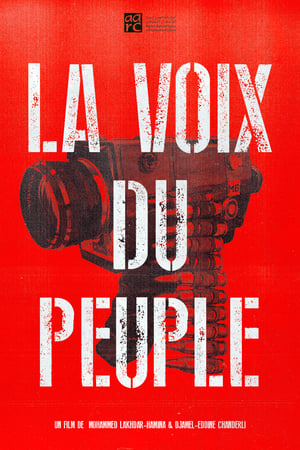
Sawt Echaâb
“La Voix du Peuple,” composed of archival photographs by René Vauthier and others, exposes the root causes of the armed conflict of the Algerian resistance. Participating in a war of real images against French colonial propaganda, these images aimed to show the images that the occupier had censored or distorted, by showing the extortions of the French occupation army: torture, arrests and arbitrary executions, napalm bombings, roundabout fires, erasing entire villages from the map, etc. This is what the French media described as a “pacification campaign”.
1961

Of Another Place
On a Summer afternoon, Pedro packs the last few boxes before having to leave his apartment in New York. 12 years ago, Pedro and Ana had arrived in America from Portugal, in search of a dream. Now, Ana's voice describes, from the other side of the ocean, that same country to which they are returning. As the rooms are emptied, Pedro bids farewell to one life, welcoming another. But the dream that brought him will remain forever in the city that never sleeps, awaiting his return.