Watch Les Mains Libres (1965) Online Free
In 1964, Algeria, just two years after the end of the war of independence, found itself catapulted into new contradictions, a still rural territory which responded to the modernity brought by the revolution. Filmed during the winter of 1964-1965 by the young director Ennio Lorenzini, it is the first international Algerian production which paints a rare portrait in color of a multifaceted nation, far from the simplistic vision created by the press and the French army. Produced by Casbah Film, Les Mains Libres (initially titled Tronc De Figuier) bears witness to the stigmata of colonization and the future of free Algeria throughout the Algerian territory and reveals the richness of its landscapes and the diversity of its traditions . The documentary, using the aesthetics of militant cinema of the time, is made up of four scenes: Sea and Desert, The Struggle, The Earth, Freedom.
Cast
Si Mohamed Baghdadi
More Like This

Sahel: Pátria ou Morte
For decades, the countries of the African Sahel region have been targets of colonialism and exploitation by France and other Western powers. This documentary addresses the popular resistance and new paths of development forged by Burkina Faso, Niger, and Mali after experiencing civil and military uprisings in recent years. The film explores the popular resistance that sustains the revolution in the three Sahel countries and was made after extensive coverage of the ongoing social dynamics and geopolitical disputes.
2025
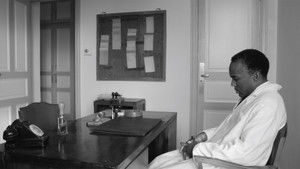
True Chronicles of the Blida Joinville Psychiatric Hospital in the Last Century, when Dr Frantz Fanon Was Head of the Fifth Ward between 1953 and 1956
1953, colonized Algeria. Fanon, a young black psychiatrist is appointed head doctor at the Blida-Joinville Hospital. He was putting his theories of ‘Institutional Psychotherapy’ into practice in opposition to the racist theories of the Algies School of Psychiatry, while a war broke out in his own wards.
2025

Fanon
Frantz Fanon, a French psychiatrist from Martinique, has just been appointed head of department at the psychiatric hospital in Blida, Algeria. His methods contrast with those of the other doctors in a context of colonization. A biopic in the heart of the Algerian war where a fight is waged in the name of Humanity.
2025
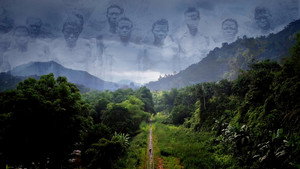
Congo-Océan, un chemin de fer et de sang
2024
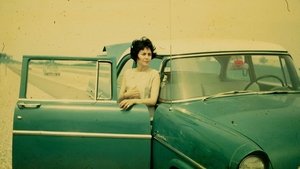
Mariner of the Mountains
Filmmaker Karim Aïnouz decides to take a boat, cross the Mediterranean, and embark on his first journey to Algeria. Accompanied by the memory of his mother, Iracema, and his camera, Aïnouz gives a detailed account of the journey to his father’s homeland, interweaving present, past, and future.
2023
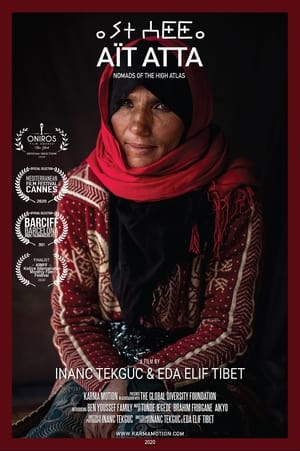
AÏT ATTA: Nomads of the High Atlas
The Aït Atta tribe of the High Atlas mountain range in Morocco preserves their ancestral right of access to the agdal, a communal land management system that dates back hundreds of years. The film follows Ben Youssef family’s arduous transhumance journey from the desert-like landscape of Nkob to the green pastures of Agdal Igourdane, throughout uneven terrain of steep climbs and descents of these High Atlas mountains. They migrate each summer with their 800 goats, donkeys, mules, camels and dogs, as they embark on this formidable journey on foot.
2020

Des femmes
As the peaceful and determined Hirak movement gathers momentum and hopes for profound political change sweep across Algeria, women are combining femininity and feminism in the past, present, and future.
2020
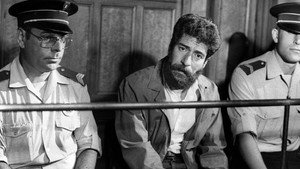
Fedayin, the fight of Georges Abdallah
A leading figure in the Palestinian cause and the fight against imperialism, the Lebanese communist activist Georges Ibrahim Abdallah had been languishing in French prisons for thirty-eight years—a unique case in France. Arrested in Lyon in 1984 with false papers, he was sentenced two years later to four years in prison for possession of weapons and explosives, then in 1987 received a life sentence for complicity in the assassinations in Paris five years earlier of an Israeli Mossad agent and an American military attaché—charges he has always denied. Although he has been eligible for release since 1999, French political authorities, under pressure from the United States and Israel, opposed his release. Interventions by Palestinian figures, his relatives, his lawyer and ex-prisoners from the extreme left, retrace the journey of the village schoolteacher who became an anti-colonial activist.
2020
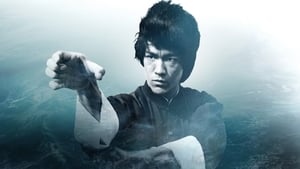
Be Water
In 1971, after being rejected by Hollywood, Bruce Lee returned to his parents’ homeland of Hong Kong to complete four iconic films. Charting his struggles between two worlds, this portrait explores questions of identity and representation through the use of rare archival footage, interviews with loved ones and Bruce’s own writings.
2020
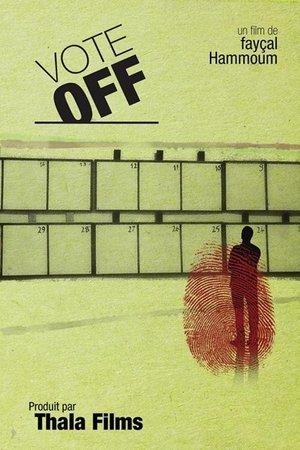
Vote off
Fayçal Hammoum recounts the 2014 presidential election through non-voting inhabitants of Algiers who, like him, are in their thirties. Be it Bilel, a grocer by default exposed to his customers’ political babbling, or the more politically-charged comments of Younes, a militant FM radio journalist opposed to President Bouteflika’s fourth term, the variety of conversational scenes in no way changes the determination not to vote for an old man who has been invisible for almost two years. The rappers Omar and Brahim are as bereft of hope and voter’s cards as the Tellek webradio DJ, since “the match is fixed”. Moving away from his focus on this subject to film their daily life, the filmmaker draws the portrait of a generation who, as Bilal says with poignant simplicity, “just wants to live
2017

The Revolution Of El Harrachi
The artistic journey of Dahmane El Harrachi, born in 1925 in Algiers, bears the mark of his experience. An attentive and vigilant observer of the environment of immigrant workers, Dahmane has always avoided falling into the ambient miserabilism. From the Algerian Chaâbi, he has kept certain melodic lines and a clear propensity for sayings drawn from the oral poetic tradition. El Harrachi uses simple language, understandable by all popular sectors of the Maghreb, which partly explains its wide success. In 1949, he went to France and it was in cafes, springboard places where people come to breathe the air of the country, that he performed regularly. Elegant, with his beautiful atmosphere, the “bluesman” of the suburbs seduces, upsets and stirs consciences. Discovered late by the new generation, the creator of Ya Rayah met a tragic end, on August 31, 1980, in a car accident, on the Algiers coast which he sublimated above all else.
2014
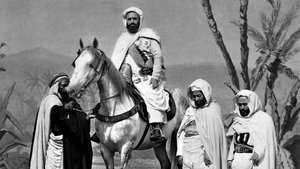
Abd El-Kader
Illustrated with archival photographs, animations and live action, this film explores the history and historical and spiritual heritage of Emir Abd El-Kader. Algerian leader of the 19th century, was admired by Abraham Lincoln and celebrated to this day by the Red Cross as a great humanitarian. Emir Abd el-Kader, the man who challenged the French armies from 1832 to 1847 before creating the bases of a real Algerian state, is today considered by independent Algeria as one of the most outstanding figures. of its history. The nobility of his attitude after his capture and the very effective protection he brought to the Christians of Damascus at the end of his life also earned him great prestige among his former adversaries. A documentary told in dialectal Arabic by the voice of Amazigh Kateb.
2014
La Langue de Zahra
2011
A Captain's Honor
During a televised debate on the Algerian war in the early 1980s, Professor Paulet denounced the methods of Captain Caron, killed in action in 1957. The widow of the captain, Patricia, decided to file a defamation suit.
1982
Colonial Times
Three centuries of Venezuela's history as a Spanish colony are considered from economic, political and social standpoints; evocations of the past are compared to the present. Based on the ideas and research of Federico Brito Figueroa, Alfredo A. Alfonso, Miguel A. Saignes, Josefina Jordan, and Thaelman Urgelles among others.
1976
Hearts and Minds
Many times during his presidency, Lyndon B. Johnson said that ultimate victory in the Vietnam War depended upon the U.S. military winning the "hearts and minds" of the Vietnamese people. Filmmaker Peter Davis uses Johnson's phrase in an ironic context in this anti-war documentary, filmed and released while the Vietnam War was still under way, juxtaposing interviews with military figures like U.S. Army Chief of Staff William C. Westmoreland with shocking scenes of violence and brutality.
1974
The Pan-african Festival in Algiers
Festival panafricain d'Alger is a documentary by William Klein of the music and dance festival held 40 years ago in the streets and in venues all across Algiers. Klein follows the preparations, the rehearsals, the concerts… He blends images of interviews made to writers and advocates of the freedom movements with stock images, thus allowing him to touch on such matters as colonialism, neocolonialism, colonial exploitation, the struggles and battles of the revolutionary movements for Independence.
1969

Algeria, Year Zero
Documentary on the beginnings of Algerian independence filmed during the summer of 1962 in Algiers. The film was banned in France and Algeria but won the Grand Prize at the Leipzig International Film Festival in 1965. Out of friendship, the production company Images de France sent an operator, Bruno Muel, who later declared: "For those who were called to Algeria (for me, 1956-58), participating in a film on independence was a victory over horror, lies and absurdity. It was also the beginning of my commitment to the cinema."
1965
Porto Rico
The life of Puerto Rican revolutionary José Maldonado Román, known as Águila Blanca, on the island in the late 19th century. Maldonado Román fought against colonialism by leading a gang of ex-convicts to vindicate Puerto Rico as it sought its identity as a country.

Le Grand Désert
In 1950, the explorer Roger Frison-Roche made a crossing of more than a thousand kilometers on the back of a camel with the photographer Georges Tairraz II, in the heart of the Sahara, from Hoggar then Djanet in Algeria to Ghat in Libya. From their journey they brought back a large number of color films and documents. Among thousands of photos, they selected 47 images which reflect the various aspects of these immense spaces which occupy a third of Africa in the book "The Great Desert". “The Great Desert, 1000 kilometers on camelback” is the eponymous 85-minute documentary of this epic, released in 1950.
1950