Watch Access to the Danger Zone (2012) Online Free
Directed by Peter Casaer and narrated by Daniel Day-Lewis, this documentary provides a harrowing look at the challenges of delivering humanitarian aid in armed conflicts. “Access to the Danger Zone” explores the strategies that Doctors Without Borders has employed to save lives in the world’s worst war zones, including Afghanistan, Somalia, and eastern Democratic Republic of Congo—strategies that are tested each and every day. Interviews with key experts from Doctors Without Borders, the International Committee of the Red Cross, and the United Nations are accompanied by dramatic footage shot in these countries in 2011 and 2012.
Cast
Daniel Day-Lewis
More Like This

Muganga
Denis Mukwege, a Congolese doctor, pastor and future Nobel Peace Prize laureate, meets Guy Cadière, a Belgian surgeon and atheist. Despite their differences, they unite for a common purpose: to restore the bodies and dignity of thousands of women who have been used as weapons of war in the eastern Democratic Republic of Congo.
2025

Gauze
14-year-old Zain, a Palestinian swimming champion, faces war and man-made famine. He becomes the sole caregiver to his little brother. When aid drops into the sea, desperate for food, Zain is forced to swim - not for passion, but for survival.
2025

Children beyond the war
2024

Kiss the Future
An exploration of the perils of nationalism and art’s role as a weapon of resistance and activism throughout the 1990s Siege of Sarajevo during the Bosnian War. Explore how art and music sustained hope, thanks in part to humanitarians and the band U2.
2024
Hiver 54 : L'Abbé Pierre et l'insurrection de la bonté
2024
Abbé Pierre - A Century of Devotion
The life of Henri Grouès, known as Abbé Pierre, from his time in the Resistance in WWII to his fights against poverty and for the homeless.
2023

Sara Mardini - Gegen den Strom
The documentary begins when the fictionalized drama ends. Sara spent three years volunteering to save refugees on the same journey that made her so famous, and was suddenly arrested in Aug. 2018, accused by Greek authorities of running a criminal enterprise with charges including “international espionage and people smuggling.” If convicted, she faces up to 25 years in prison and the end of her humanitarian career. Shot over three years, the film follows Sara’s fight for justice and journey of self-discovery.
2023

Diana: In Her Own Words
Using home videos recorded by her voice coach, Diana takes us through the story of her life.
2017
Facing Darkness
A Christian relief organization is met with the challenge of fighting the Ebola epidemic in west Africa, through this enormous challenge their faith grew.
2017

Flatball: A History of Ultimate
On May 8, 1989, Sports Illustrated ran an article about Ultimate frisbee… about a team with no name hailing from New York City that was about to change the sport forever. From its 1968 New Jersey birth to its unanimous 2015 recognition by the International Olympic Committee, FLATBALL circles the globe to showcase four decades of world-class Ultimate and goes even further: to a set of fields in the Middle East to understand and demystify the unique spirit of the game.
2016
Les Pépites
2016

All of Me
"Take my love" is a documentary film about "Las Patronas", a group of women who daily cook, pack and throw food to the migrants riding the "Beast" train.
2014

Medici con l'Africa
Documentary about Medici con l'Africa CUAMM, one of Italy's foremost humanitarian NGOs to operate in Africa.
2012
One Peace at a Time
One Peace at a Time is a film by Turk and Christy Pipkin. It was produced by The Nobelity Project and was premiered to a sold out audience at the Paramount Theatre in Austin, Texas, USA, on April 14, 2009. It is the sequel to the film Nobelity. It has been shown all across the United States and in multiple countries across the world
2009
Muttur : crime contre l'humanitaire
2007
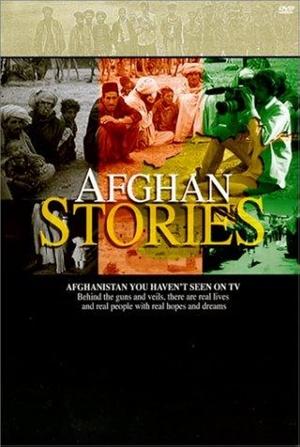
Afghan Stories
Horrified by the 9/11 attacks on America, filmmaker Taran Davies and Afghan American, Walied Osman, set out for Afghanistan to observe how the Afghan people have survived 24 years of war. They meet a member of the Afghan royal family once tortured by the Taliban, a refugee family stuck in a one-room apartment, a revered Muslim elder, an aid worker and a warlord. A unique and intimate film, Afghan Stories documents the torment, resolve and dreams of a people whose lives have been torn apart by war.
2003
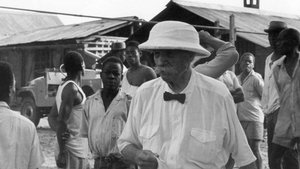
The Great White of Lambarene
Albert Schweitzer (1875-1965), the mission doctor, theologian and philosopher who founded a hospital in the rainforests of Gabon, achieved sainthood in his lifetime, at least in the popular imagination. The critical assessment of his life and works in recent years, however, has been slightly more ambivalent. Ba Kobhio Bassek is the first director to examine this medical missionary from a purely African point-of-view.
1995
Surviving Cyclones
Using film footage shot by the Genevese film director, Fernand Reymond, in Bangladesh in 1972, this documentary film describes the cyclone prevention programme drawn up by the governmental authorities and the League of Red Cross Societies. It particularly depicts the cyclone warning system set up to protect the population. (League Film Library Catalogue Supplement No. 2, p. 39)
1973
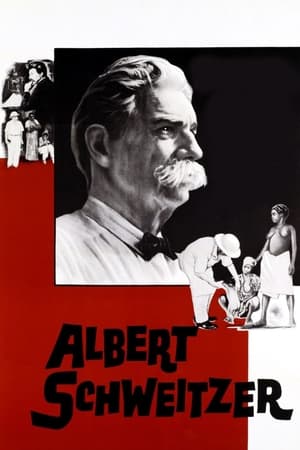
Albert Schweitzer
This biographical docudrama traces the life of Dr. Albert Schweitzer, from his birth in Alsace, up to the age of 30 when he made the decision to go to French Equatorial Africa and build his jungle hospital. The latter half of the film encompasses a full day in the hospital-village, following the octogenarian Samaritan in his daily rounds.
1957
The Price of Aid
Every day the U.S. donates millions of tons of food to famine victims and other starving people in the world's poorest countries. This provocative documentary, through an in-depth case study of a recent famine crisis in Zambia, shows how these aid programs may address an immediate crisis but at the same time can create long-term problems for the recipient nation.