Watch The Great White of Lambarene (1995) Online Free
Albert Schweitzer (1875-1965), the mission doctor, theologian and philosopher who founded a hospital in the rainforests of Gabon, achieved sainthood in his lifetime, at least in the popular imagination. The critical assessment of his life and works in recent years, however, has been slightly more ambivalent. Ba Kobhio Bassek is the first director to examine this medical missionary from a purely African point-of-view.
Cast
André Wilms, Marisa Berenson, Alex Descas, Élisabeth Bourgine, Philippe Maury, Anne-Marie Pisani, Marcel Mvondo, Magaly Berdy, Michel Peyrelon, Jérémie Ahouandjinou, Dine Alougbin, Yves-Jacques Cabasso
More Like This

Ships, seas, power - beginning of globalization
People have always wanted to reach the horizon and go beyond it. It wasn't and isn't just about discovering for the sake of discovering. Exotic goods, wealth and power were the driving forces of these people. The steamship ultimately brought the breakthrough for global mobility and trade. In the past, as now, shipping is the engine of globalization.
2025

T.A.N.
Confused, in a haze of consciousness and intolerance, five fragile souls enter an eerie dimension. This journey forces an artist, junkie, an unapologetic queer, a racist cop and a forged reverend to confront their own demons. In the waiting room, a trickster deity illuminates the shadows hiding within each subject. Piece by piece, each person realizes the darkness they've left behind.
2021
Burn Motherfucker, Burn!
An in-depth and provocative look at the 1992 Los Angeles riots exploring the roots of civil unrest in California and the relationship between African Americans and LAPD.
2017
Beasts of No Nation
Based on the experiences of Agu, a child fighting in the civil war of a West African country. Follows Agu's journey as he's forced to join a group of soldiers. While he fears his commander and many of the men around him, his fledgling childhood has been brutally shattered by the war raging through his country, and he is at first torn between conflicting revulsion and fascination.
2015

Man to Man
An epic about anthropologists who hunt and capture pygmies for study back in Europe, in an attempt to illustrate the link between man and ape.
2005
Anbe Sivam
Anbarasu, young and arrogant, and Nallasivam, damaged - physically but not spiritually - by life, are thrown together by circumstances, and find that they are in some ways bound together by fate.
2003

Dragonfly
A grieving doctor is being contacted by his late wife through his patient's near death experiences.
2002
Aristotle's Plot
Tourneur, a self-proclaimed cinéaste, feuds with Cinema and his gang, who are obsessed with foreign action movies.
1997

Traps
The year is 1950 and an English couple, Louise and Michael, have arrived in French-occupied Indochina to cover a story on a French-owned rubber plantation. They are to be the guests of the enigmatic plantation overseer, Daniel, and his beautiful yet difficult daughter Viola, at their elegant, decaying villa amid a tropical jungle. Michael and Louise hope that some time spent working in an exotic location will help reignite the passion in their floundering marriage. Instead they become unwittingly involved in the personal, sexual and political tensions of their hosts. Daniel is desperate to hold onto a way of life no longer possible in a country struggling for independence, bringing him into conflict with not only his daughter but also with his adopted country.
1994
Gettysburg
In the summer of 1863, General Robert E. Lee leads the Confederate Army of Northern Virginia into Gettysburg, Pennsylvania with the goal of marching through to Washington, D.C. The Union Army of the Potomac, under the command of General George G. Meade, forms a defensive position to confront the rebel forces in what will prove to be the decisive battle of the American Civil War.
1993
Denko
An African mother will do just about anything to protect her child. Bilaly is a simple peasant who is blind. He wants to “know” a woman before he dies, but try as his mother might, she cannot find someone to oblige. She finally gets an idea – an idea that completely stuns the village.
1993

The Power of One
PK, an English orphan terrorized for his family's political beliefs in Africa, turns to his only friend, a kindly world-wise prisoner, Geel Piet. Geel teaches him how to box with the motto “fight with your fists and lead with your heart”. As he grows to manhood, PK uses these words to take on the system and the injustices he sees around him - and finds that one person really can make a difference.
1992
Tabataba
Tabataba tells the story of a small Malagasy village during the independence uprising which took place in 1947 in the south of the country. For several months, part of the Malagasy population revolted against the French colonial army in a bloody struggle. The repression in villages that followed was terrible, leading to fires, arrests and torture. Women, children and the elderly were the indirect victims of the conflict and suffered particularly from famine and illness. One leader of the MDRM Malagasy Party, which campaigns for the independence of the country, arrives in a village. Solo (François Botozandry), the main character, is still too young to fight but he sees his brother and most of the men in his clan join up. His grandmother, Bakanga (Soavelo), knows what will happen, but Solo still hopes his elder brother will return a hero. After months of rumours, he sees instead the French army arrive to crush the rebellion.
1989
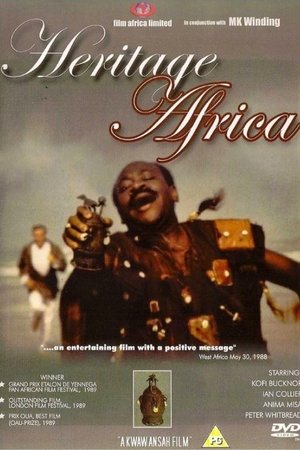
Heritage Africa
The story of Quincy Bosomfield who is the product of colonial education and has risen to become the district commissioner. In the process, he abandons his African heritage and all that has real meaning to him.
1989

Ablakon
A city with its problems. A gang of abandoned children provide for themselves and pose as heroes. The police are on their backs day and night. They are enterprising, energetic, and full of fresh vitality. Despite the fact they are rejected by their parents and ignored by the world, they form among themselves a powerful example of solidarity. Ablakon is something of a different order. He is an adult delinquent and a swindler. Posing as a businessman, he has deceived a countless number of people. When he and his accomplice return to the village, his extravagant behaviour is mistaken for a sign of success. Following his example many young people leave for the city. But they will soon understand their mistake...
1985
Lion of the Desert
Resistance leader Omar Mukhtar opposes Italian colonization before World War II. The brutal guerrilla war against Italian General Rodolfo Graziani and the Fascist forces of Benito Mussolini highlights the struggle for Libyan independence and the harsh tactics utilised by the colonisers.
1981
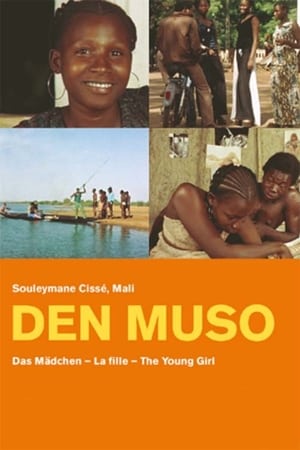
The Young Girl
A young mute woman is raped and becomes pregnant, with disastrous consequences within her family. The film also sketches the social/economic situation in urban Mali in the 1970s, particularly in relation to the treatment of women.
1975
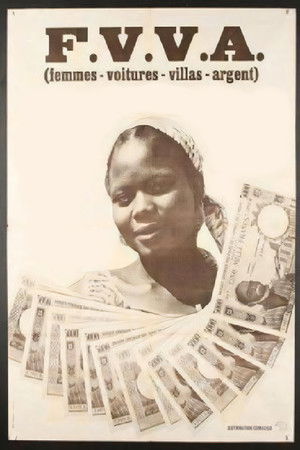
Women Cars Villas Money
Ali is the image of modern Africa. He happily returns from a football match on his motorbike but a nasty surprise is waiting for him at his parents' home: he finds Haoua, his bride-to-be, waiting for him. The wedding is celebrated shortly afterwards and the two begin living together under the same roof. They are strangers but cannot stand each other. Haoua is the classic traditional woman who has just arrived from the village, God-fearing and faithful to the laws of tradition. Ali's friends advise him to look for a second wife. He meets Henriette, an uninhibited and provocative city girl, the woman of his dreams. To meet Henriette's constant requests, Ali 'borrows' some money from the coffers of commander Soleymane, but he is discovered and ends up in prison. Henriette is furious and leaves him, whilst Haoua cries for him in despair.
1972
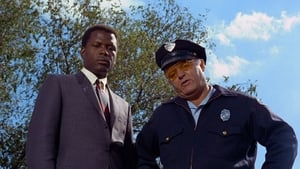
In the Heat of the Night
African-American Philadelphia police detective Virgil Tibbs is arrested on suspicion of murder by Bill Gillespie, the racist police chief of tiny Sparta, Mississippi. After Tibbs proves not only his own innocence but that of another man, he joins forces with Gillespie to track down the real killer. Their investigation takes them through every social level of the town, with Tibbs making enemies as well as unlikely friends as he hunts for the truth.
1967
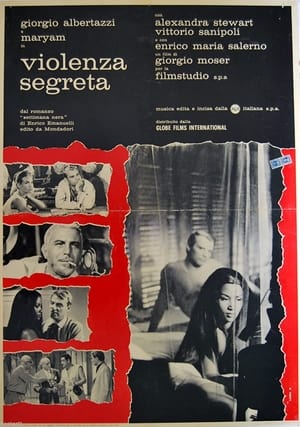
Secret Violence
An Italian in East Africa having an affair with a coloured woman realises that his treatment of her is as tyrannical as more overt superior colonialist dogma. Based on a novel by Enrico Emmanuele.
1963