Watch One Peace at a Time (2009) Online Free
One Peace at a Time is a film by Turk and Christy Pipkin. It was produced by The Nobelity Project and was premiered to a sold out audience at the Paramount Theatre in Austin, Texas, USA, on April 14, 2009. It is the sequel to the film Nobelity. It has been shown all across the United States and in multiple countries across the world
Cast
Donna Berber, Philip Berber, Caroline Boudreaux, Steve Chu, Helene Gayle, Steve Goose
More Like This
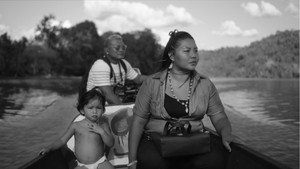
Parasisi
On the border of Surinam and French Guyana, indigenous Wayana territory is overrun by intruders. Illegal gold miners poison the river, missionaries repress indigenous identity, and even doctors with the best intentions leave marks that are often silently violent. The Wayana call these intruders Parasisi.
2026
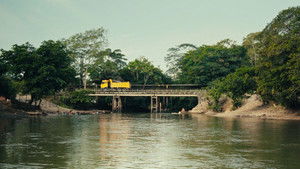
buen vivir – ñutse canseye
Oil extraction in the Amazon region is contaminating the land and water of a natural paradise. A slow process that threatens the health and traditional culture of local communities. Thirteen women raise their voices against the destruction of their land. Through protests and silent resistance, they confront an opaque global power structure.
2025
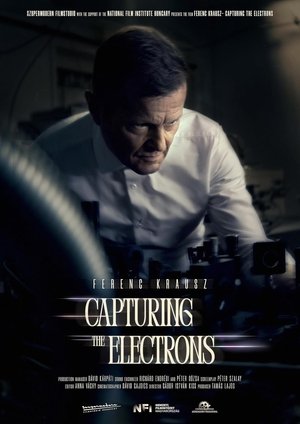
Capturing the Electrons
Capturing the Electrons documents the life and career of Nobel Prize-winning Hungarian physicist Ferenc Krausz. His research team has generated and measured the first attosecond light pulse and used it for capturing electrons' motion inside atoms, marking the birth of attophysics. In 2023, jointly with Pierre Agostini and Anne L'Huillier, he was awarded the Nobel Prize in Physics.
2024
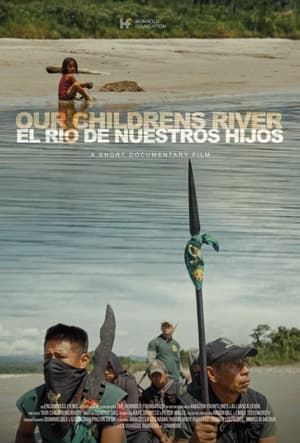
Our Children's River
Across the Amazon, Indigenous guards are unarmed patrols that peacefully defend ancestral territories against threats like oil, mining and poaching. They use diverse technologies to monitor their lands, and when necessary, force out illegal operations and actors. Most of this daily work, which involves lengthy hikes and patient observation, goes unseen. This film depicts the process of the Indigenous Guard: its patrols, its watchful vigilance over the landscape, and its support of the community. Their work as guards helps ensure that destruction in the Amazon doesn’t advance, and that their community has the vital space it needs to live life on their own terms.
2023
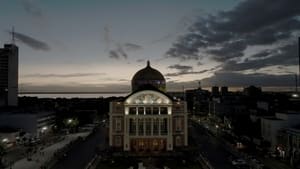
Teatro Amazonas: The Art of Sound and Nature
The history of the Teatro Amazonas in Manaus, an opera house located in the middle of the Amazon rainforest, whose construction, between 1884 and 1896, depended on the labor exploitation of the local indigenous populations, provides an insight into the cultural, social and political situation in Brazil.
2022
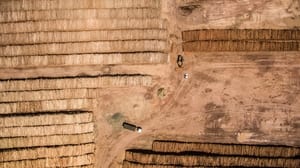
Mata
Faced with the advancement of eucalyptus plantations, a farmer and an indigenous community stand as resistance and reveal the impact of monoculture on the environment, in contrast to traditional ways of life. The enemy can also be green.
2020

The World According to Amazon
This film dives into the world of Amazon, its story and view of the world. It offers a large social fresco backed up by an in-depth investigation where private lives meet the mega-machine.
2019

The Last Shaman
James, giving himself 12 months before he has "a license to kill himself," sets off to the Amazon rainforest with hopes of finding a shaman who can save his life.
2017
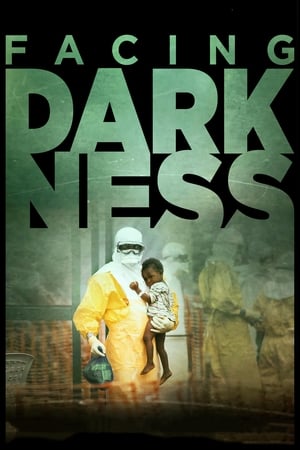
Facing Darkness
A Christian relief organization is met with the challenge of fighting the Ebola epidemic in west Africa, through this enormous challenge their faith grew.
2017

Flatball: A History of Ultimate
On May 8, 1989, Sports Illustrated ran an article about Ultimate frisbee… about a team with no name hailing from New York City that was about to change the sport forever. From its 1968 New Jersey birth to its unanimous 2015 recognition by the International Olympic Committee, FLATBALL circles the globe to showcase four decades of world-class Ultimate and goes even further: to a set of fields in the Middle East to understand and demystify the unique spirit of the game.
2016
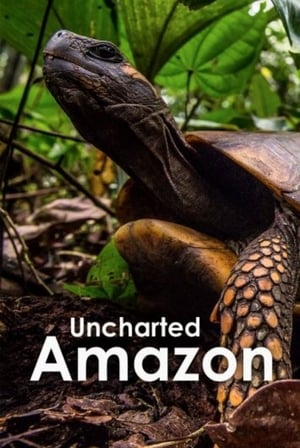
Uncharted Amazon
Deep in the jungles of Peru, a silky anteater is fighting to stay awake and a mother humming bird is struggling to raise her chick. Through millions of years of evolution they have developed bizarre relationships and unexpected strategies to overcome them changing conditions, but for all their ingenuity, they were never prepared for the arrival of a new species on the scene.
2016
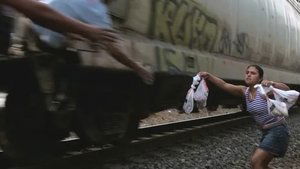
All of Me
"Take my love" is a documentary film about "Las Patronas", a group of women who daily cook, pack and throw food to the migrants riding the "Beast" train.
2014
Access to the Danger Zone
Directed by Peter Casaer and narrated by Daniel Day-Lewis, this documentary provides a harrowing look at the challenges of delivering humanitarian aid in armed conflicts. “Access to the Danger Zone” explores the strategies that Doctors Without Borders has employed to save lives in the world’s worst war zones, including Afghanistan, Somalia, and eastern Democratic Republic of Congo—strategies that are tested each and every day. Interviews with key experts from Doctors Without Borders, the International Committee of the Red Cross, and the United Nations are accompanied by dramatic footage shot in these countries in 2011 and 2012.
2012
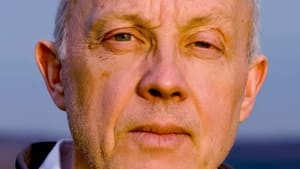
The Genius and the Boys
D Carleton Gajdusek won the Nobel Prize for the discovery of Prions - the particles that would emerge as the cause of Mad Cow disease - while working with a cannibal tribe on New Guinea. He was a star of the scientific world. Over his years working amongst the tribes of the South Seas, he adopted 57 kids, bringing them to a new life in Washington DC. His adoptions were hailed as wonderful fatherly beneficence. But, at the height of his career, rumours began to spread he was a paedophile. Gajdusek would argue that if sex with children was okay in their own cultures, he wasn't wrong to join in. How could a great mind like Gajdusek's lose insight so totally, and why would the scientific community to which he was a hero be so quick to leap to his defence and dismiss the allegations? (Storyville)
2009
Big River Man
Follows Martin Strel as he attempts to cover 3,375 miles of the Amazon River in what is being billed as the world's longest swim.
2009
Amazon
Explore the mysterious Amazon through the amazing IMAX experience. Amazon celebrates the beauty, vitality and wonder of the rapidly disappearing rain forest.
1997
Itapoa - Un proyecto que camina
Muttur : crime contre l'humanitaire
2007
Anaconda: Giant Snake of the Amazon
No animal in the Amazon is more feared and more respected than the 'spirit of the river' - The Anaconda
1999
Amazon: Longest River in the World
Documentary by Portuguese Silvino Santos, about the Amazon, its flora, fauna, its inhabitants and among other wonderful images from the beginning of the 20th century with alternating close-up shots of caimans, jaguars and tropical flora with footage of Indigenous rituals--including some of the earliest known moving images of the Indigenous Witoto people--and longer sequences showcasing the region’s extractive industries: rubber, the Brazil nut, timber, fishing, even the egret feathers that were a staple of women’s fashion at the time.
1918