Watch A Philosopher in the Arena (2019) Online Free
After his retirement, french philosopher and bullfighting enthusiast Francis Wolff decides to embark on a journey to France, Spain and Mexico joined by two mexican filmmakers who hardly know anything about bullfighting, a culture whose days seem to be numbered. During their road trip, they encounter numerous personalities with whom they reflect on mankind’s relationship with animals and nature, but most importantly on our relationship with death and the meaning of the ultimate journey: life itself.
Cast
Francis Wolff, Juan Ramón de la Fuente, Eduardo Matos Moctezuma, José Cueli, Mario Vargas Llosa, Joselito Adame, Miquel Barceló, Claude Lanzmann, Georges Didi-Huberman, Catherine Millet, Agustín Díaz Yañez, Antonio Calera-Grobet
More Like This
Kankel, el corazón de la plaza
Miguel Ángel Pérez, better known as “Kankel,” is a well-known and beloved figure in Santander (Cantabria). In this short documentary, he shares his amusing stories from the bullring spanning nearly 60 years, making him Spain's longest-serving bullfighter. The story is told through a series of photographs, all delivered with his characteristic sense of humor.
2025
Afternoons of Solitude
The life of the bullfighter Andrés Roca Rey during a day of bullfighting, from the moment he dresses up to the moment he undresses.
2025

A French Youth
In the heart of the Camargue region, in the south of France, Jawad and Belka find freedom in their love of Camargue races. For these young Maghrebi men, the event is more than a simple tradition. Facing off with a bull is an opportunity to establish their place in the arena—and in French society. But at what cost?
2024
Curro Romero, Maestro del Tiempo
2021
Blood Is White
Based on the negatives of the 33 'La Tauromaquia' engravings made by Goya in 1816, the director invites us to witness the transformation of bodies at the approach of death.
2020
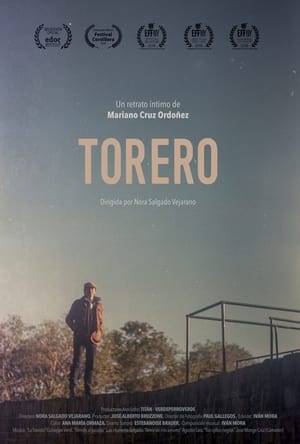
Torero
Mariano Cruz Ordóñez is an Ecuadorian bullfighter at the end of his artistic career. Mariano was a figure of bullfighting in Ecuador and participated in the most important bullrings of his country and the world. The glory years have passed and prohibitions have arisen regarding bullfighting shows, and the only thing left is, with tenacity and faith, to fight against various adverse circumstances looking for a chance to move foward.
2019
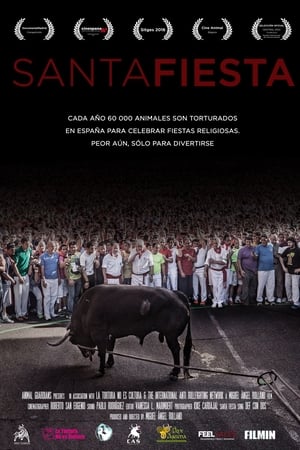
Santa Fiesta
SINOPSIS / SYNOPSIS Every year in Spain, some 16,000 Fiestas are organized, during which animals are used. Honoring the Holy Virgin and the Patron Saints, and with the blessing of religious and political authorities, entire towns -including children- are involved in celebrations of unbelievable cruelty. 60,000 animals are hence abused each year during these “Fiestas of Blood”.
2016
American Bullfighter
The story of one American overcoming the demons of his past by entering the secretive world of Spanish bullfighting.
2008
La cosa nuestra
La Cosa Nuestra is a journey to the most hidden and surreal face of the bovid-bullfighting universe. Fun and tremendous, operating in iconographic cannibalism. It is a work that shows another reading of the national holiday, demystifying it. Confronts the Spanish bullfighting culture with the visions and uses of the bull in other civilizations. This video creation immerses itself in the aesthetic, ritual and cultural universe of the world of bullfighting, rebuilding it critically, but at the same time with healthy irony.
2006
Death: The Ultimate Horror
This grisly documentary presents horrifying journalistic footage of suicides, assassinations, bombings, mob hits, decapitations, and more in bloody detail. Not for the faint of heart.
1995
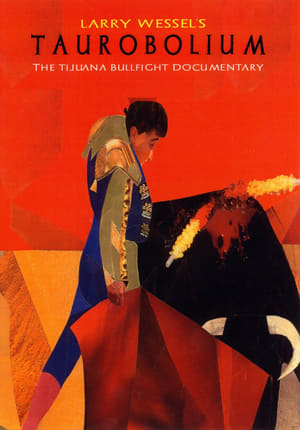
Taurobolium
Have you ever been to the bullfights in Tijuana? Larry Wessel's TAUROBOLIUM is not only cinema verite at it's best, Larry Wessel's TAUROBOLIUM is the best documentary on bullfighting ever made!
1994
Only the Brave
Documentary on bullfighting by Spanish director Sonia Herman Dolz.
1993
You Alone
In their spare time, after their studies or their work, children and adolescents between the ages of eight and sixteen meet at the School of Bullfighting in Madrid to learn the Art of Cúchares: Torear. In their stomachs there is no hunger as in the past, their dreams do not lie in having a farmhouse and being famous. Their only dreams are to be in front of a bull, animal with which death goes, fact of which they are fully aware, as their teachers continually remind them. These, retired bullfighters, some by age, others by force and all with their bodies full of scars produced by the horns of a bull. The nude bullfighting scene is fascinating without being exploitive, and it serves as an analogy for the vulnerability these young bullfighters have when in the ring with the bulls.
1984
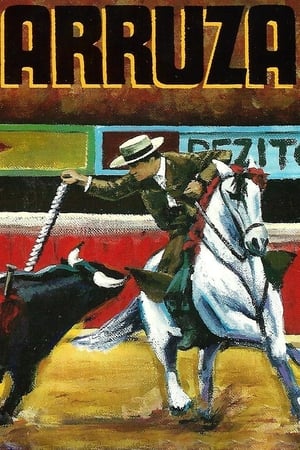
Arruza
Eight years in the making, Boetticher’s portrait of his longtime friend, the famous bullfighter Carlos Arruza, was a labor of love that the renowned director of westerns pursued despite contending with illnesses, bankruptcy, jail time, and lucrative offers from Hollywood. The result is an astonishing work of poetry, immediacy, and violence that fearlessly wrestles with the filmmaker’s own ambivalence about the titular matador’s triumphs prior to his death by automobile accident at the age of 46.
1972
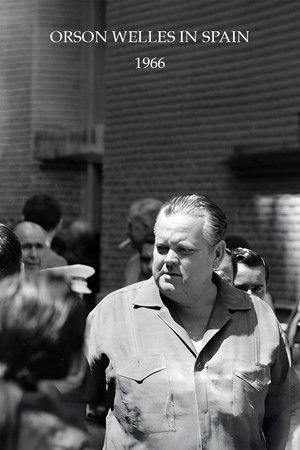
Orson Welles in Spain
Orson Welles presents a proposed film project to prospective investors in Spain. Speaking to an audience of wealthy arts patrons, Welles outlines his vision for an improvised, documentary-style fiction set in the world of bullfighting, centered on a solitary, existential matador who stands apart from his peers. As he expounds on cinema, performance, and the ritualized spectacle of death, the film captures a project that would ultimately remain unrealized.
1966
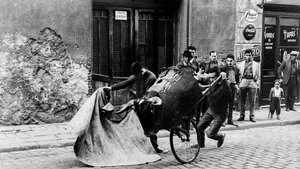
52 Sundays
The misadventures of a group of young people who seek a better life by becoming bullfighters, the only way to leave their poor existence in the slums of Barcelona.
1965
Cordobés 65
A brief portrait of famous and brave bullfighter Manuel Benítez el Corbobés; an account on still photos of his triumphs and failures.
1965
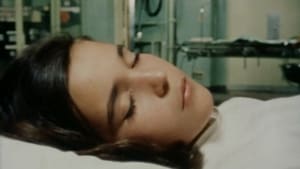
Méditerranée
[Here] Pollet made a work that is the very definition of what French critics like to call an ovni or ufo (as in ‘unidentified filmic object’). [It] has been described as being ‘like a comet in the sky of French cinema,’ an ‘unknown masterpiece,’ and an ‘unprecedented’ work that refuses interpretation even as it has provoked reams of critical writing. Its rhythmic collage of images – a girl on a gurney, a fisherman, Greek ruins, a Sicilian garden, a Spanish corrida – is accompanied by an abstract commentary written by Sollers, and only the somber lyricism of Antoine Duhamel’s score holds the film’s elements together. At first viewing, you fear that [it] might fly apart into incoherent fragments. Instead, over the course of its 45 minutes it invents its own rules, and you realize you’re watching something like the filmic channeling of an ancient ritual.
1963
Torerillos, 61
This short film "Torerillos 61" is one of the first works of the master Patino, which tries to portray the Spanish society of the time outside the state convention and dodging the hand of censorship. Social commitment is the brand director throughout his long career, starting with short films such as this one, made in the early sixties, in the wake of the statements in Talks Salamanca. The sadness off the characters portrayed is bleak, "Maletillas" (aspiring bullfighters) in search of luck to pull them out of poverty.
1962
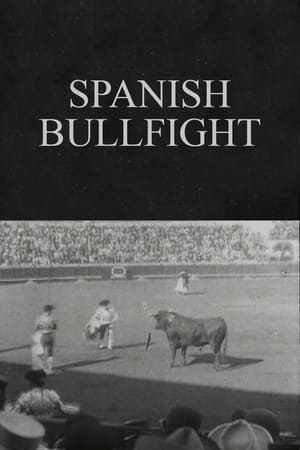
Spanish Bullfight
With a crowded arena in the background, a stationary camera records a bull charging a picador astride his horse. An attendant on foot throws stones at the rump of the horse to get it to move. Various toreadors run past the bull to try to get him to charge or at least run about.
1900