Watch 52 Sundays (1965) Online Free
The misadventures of a group of young people who seek a better life by becoming bullfighters, the only way to leave their poor existence in the slums of Barcelona.
Cast
Pepe Antequera
More Like This

A French Youth
In the heart of the Camargue region, in the south of France, Jawad and Belka find freedom in their love of Camargue races. For these young Maghrebi men, the event is more than a simple tradition. Facing off with a bull is an opportunity to establish their place in the arena—and in French society. But at what cost?
2024

Voy a saco, Guitarras y Clubs
2023

Everything at Once (Paco & Manolo's Gaze)
Paco and Manolo are two Catalan photographers from the outskirts of Barcelona who have been working together for thirty years as if they were a single person, capturing their images in Kink magazine, a very personal photography fanzine with a homoerotic aesthetic of Mediterranean essence.
2021

Los locos que no pararon la tele
The famous Spanish comedian Andreu Buenafuente, CEO of the production company El Terrat and prestigious TV host, tells how he and his numerous collaborators, both on set and behind the cameras, managed to carry on with their work despite the chaos and the several logistical and human problems caused by the global pandemic that began in early 2020.
2021
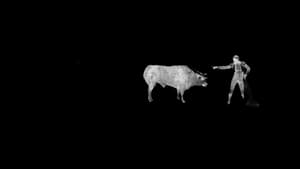
Blood Is White
Based on the negatives of the 33 'La Tauromaquia' engravings made by Goya in 1816, the director invites us to witness the transformation of bodies at the approach of death.
2020
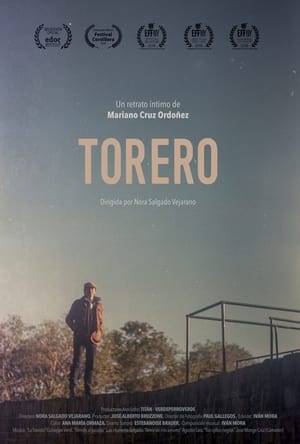
Torero
Mariano Cruz Ordóñez is an Ecuadorian bullfighter at the end of his artistic career. Mariano was a figure of bullfighting in Ecuador and participated in the most important bullrings of his country and the world. The glory years have passed and prohibitions have arisen regarding bullfighting shows, and the only thing left is, with tenacity and faith, to fight against various adverse circumstances looking for a chance to move foward.
2019
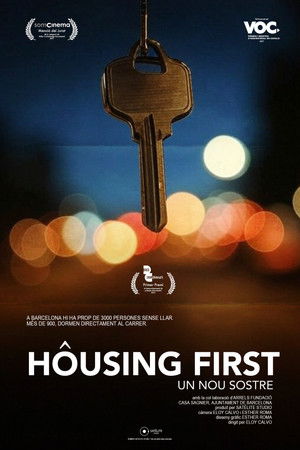
Housing First: a new shelter
Arrels Fundació's experience with housing first in the city of Barcelona, a policy that offers permanent housing to homeless people. The documentary features both professionals and volunteers from Arrels, as well as people like Lluís, Pedro, or Manuel, who already have their own homes.
2016
Parrot at the Milk Bar
A humorous observation in Barcelona’s immigrant neighbourhood El Raval. Four barber shops, four places of remembrance, strange time and space capsules inhabited by people who left their home to find a better one, while the Spaniards are about to leave their own country themselves.
2014
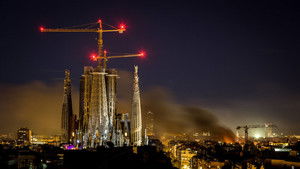
Barcelona, la rosa de foc
The many faces of Barcelona are portrayed in this documentary, shot in a false sequence shot that goes across the streets, squares, markets and bars of a city that is presented as both conventional and law-breaking, exquisit and shameless, elegant and dispossessed.
2014

Lentejuelas de sangre
Antonio Gracia José (1942-2011), known as “Pierrot,” was a prominent member of the Barcelona art scene, a pioneer in the filmmaking of underground short films and Fantaterror movies, writer and playwright, magazine editor, movie poster painter, cartoonist and cabaret showman.
2012
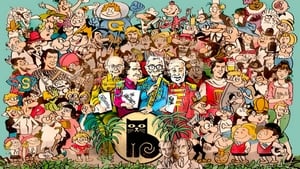
Històries de Bruguera
The history of Bruguera, the most important comic publisher in Spain between the 1940s and the 1980s. How the characters created by great writers and pencilers became Spanish archetypes and how their strips persist nowadays as a portrait of Spain and its people. The daily life of the creators and the founding family, the Brugueras. The world in which hundreds of vivid colorful paper beings lived and still live, in the memory of millions, in the smile of everyone.
2012

1:1 Thierry Henry
Global soccer hero Thierry Henry stars in this up-close sports documentary that covers his 2010 move from Barcelona to the New York Red Bulls.
2011
Meerdolen
2006
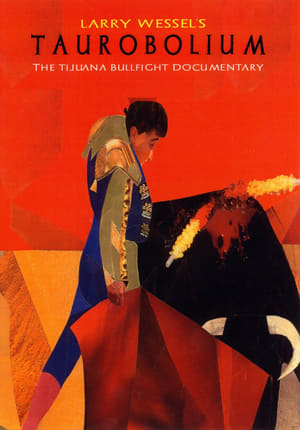
Taurobolium
Have you ever been to the bullfights in Tijuana? Larry Wessel's TAUROBOLIUM is not only cinema verite at it's best, Larry Wessel's TAUROBOLIUM is the best documentary on bullfighting ever made!
1994
Gritos... a ritmo fuerte
Maria, the last member of a good provincial family of long tradition, wants to live the atmosphere of these musical groups that proliferate all over the world. He meets Ricardo, a former partner in the advertising world, who has self-marginalized because he got to the point where he felt disgusted by this false world. Maria tries to leave him, but has just integrated into this chaotic environment.
1984
Spain '68
Spain, 1968. An analysis of the political and social situation of the country, suffocated by the boot of General Franco's tyrannical regime. (Filmed clandestinely in Madrid and Barcelona during the spring of 1968.)
1968

Margarita
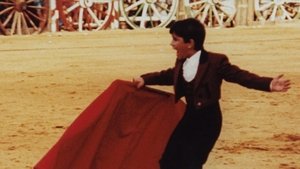
Only the Brave
Documentary on bullfighting by Spanish director Sonia Herman Dolz.
1993
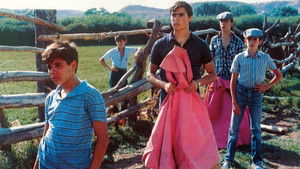
You Alone
In their spare time, after their studies or their work, children and adolescents between the ages of eight and sixteen meet at the School of Bullfighting in Madrid to learn the Art of Cúchares: Torear. In their stomachs there is no hunger as in the past, their dreams do not lie in having a farmhouse and being famous. Their only dreams are to be in front of a bull, animal with which death goes, fact of which they are fully aware, as their teachers continually remind them. These, retired bullfighters, some by age, others by force and all with their bodies full of scars produced by the horns of a bull. The nude bullfighting scene is fascinating without being exploitive, and it serves as an analogy for the vulnerability these young bullfighters have when in the ring with the bulls.
1984
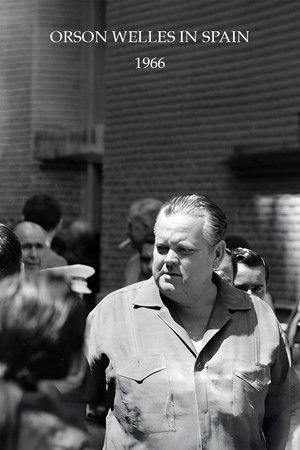
Orson Welles in Spain
Orson Welles presents a proposed film project to prospective investors in Spain. Speaking to an audience of wealthy arts patrons, Welles outlines his vision for an improvised, documentary-style fiction set in the world of bullfighting, centered on a solitary, existential matador who stands apart from his peers. As he expounds on cinema, performance, and the ritualized spectacle of death, the film captures a project that would ultimately remain unrealized.
1966