Watch A Film Inspired by Real Events (2019) Online Free
Through the footage from his family's Handycam, the director creates a portrait of his family that is falling apart.
Cast
Utku D. Andiç
More Like This
Hear O, Mahatma
In an open letter to the most influential modern Indian political leader, the Late Mohandas Karamchand Gandhi, the filmmaker sequentially narrates the stories of three distinct individuals - that of a confused filmmaker who flows with time, a dedicated social reformer who guides the stratified masses into social upliftment and a divisive and regressive politician. The juxtaposition of their disfigured trajectories provokes a pertinent question: Did Gandhi ever foresee the dehumanized shape that his legacy has now dangerously morphed into?
2024
Taube Feuer
With noise-canceling headphones, they communicate with an inaudible counterpart. Decoupled, they move around the room and meet their surroundings. Intimate stories and needs are discussed. The personal blends into a shared portrait.
2024
gap
Stream of consciousness awakened by the shots of an inauspicious summer.
2023
Essay on color and its absence
An experiment and a dialogue about recording, the act of filming and the colors available to whoever points the camera somewhere.
2022
Val
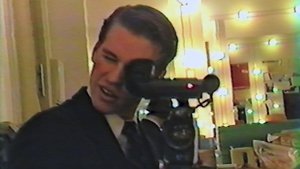
For over 40 years Val Kilmer, one of Hollywood’s most mercurial and/or misunderstood actors has been documenting his own life and craft through film and video. He has amassed thousands of hours of footage, from 16mm home movies made with his brothers, to time spent in iconic roles for blockbuster movies like Top Gun, The Doors, Tombstone, and Batman Forever. This raw, wildly original and unflinching documentary reveals a life lived to extremes and a heart-filled, sometimes hilarious look at what it means to be an artist and a complex man.
2021
Rastros que Deixamos
2021
The Happy Ones
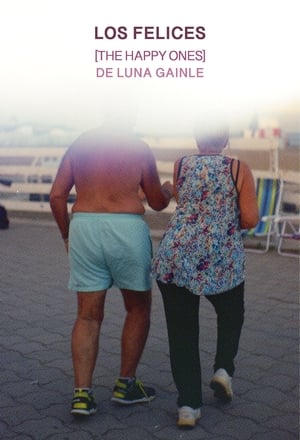
A love letter to Mar del Plata made of images, times and a road trip. "The Happy Ones" is an experimental short documentary composed of past and present family footage. It portrays a place in the summer, the city of Mar del Plata, with a span of 20 years between past and present images (January 2000 and 2020). Despite the time that passed by, it's beaches, essence and people remain, always willing to keep dancing.
2021
O Cinema é Minha Vida
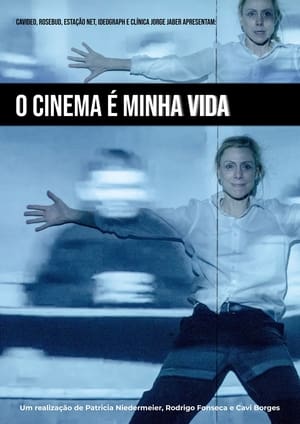
In the dressing room of the French cinema, minutes before attending a lecture, François Truffaut recalls his trajectory
2021
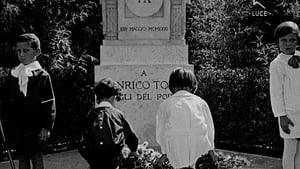
The Imperial Lullaby
The armies of Fascist Italy conquered Addis Ababa, capital of Abyssinia, in May 1936, thus culminating the African colonial adventure of the ruthless dictator Benito Mussolini, by then lord of Libya, Eritrea and Somalia; a bloody and tragic story told through the naive drawings of Pietro Dall'Igna, an Italian schoolboy born in 1925.
2020
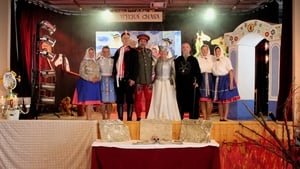
Make Moravia Great Again
2020
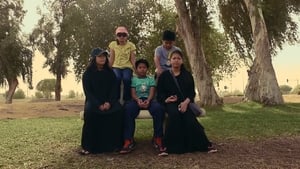
Spring by the Sea
Alternating Philippines and Saudi Arabia as her home, the filmmaker uses personal home videos and present footage to tell the story of her family.
2019
Letters to a Father
The author's personal confession. This essay film about the relationship between father and son is filmed exclusively in 16mm film in Prague, Slovenia, India, England and France. An important component of Brajnik's film narration is the musical composition and accompanying voiceover of the artist's alter ego.
2016
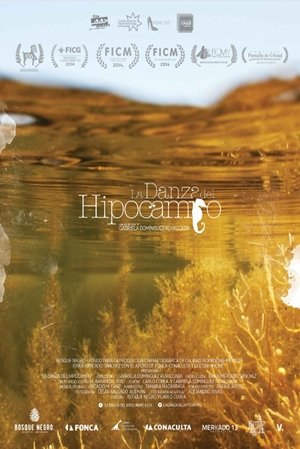
The Dance of Memory
Memory mechanisms are mysterious: we only see the stories we choose in order to construct our own reality. Every mark is a message in time, the invocation of an absence. To travel in the memory is to walk in time, zigzagging, a long road permeated by a dark, indecipherable logic… if we could choose seven moments to sum up our entire life, which ones would they be? The Dance of the Memory is a documentary-essay that guides us in that autobiographical search, where image and memory intertwine. It mixes archive material with an aesthetic and subjective tone.
2014
Locations: Looking for Rusty James
A personal meditation on Rumble Fish, the legendary film directed by Francis Ford Coppola in 1983; the city of Tulsa, Oklahoma, USA, where it was shot; and its impact on the life of several people from Chile, Argentina and Uruguay related to film industry.
2013
The Red Bank. James Joyce: His Greek Notebooks
This documentary aims to register this unknown side of James Joyce: His Greek Notebooks. Trieste. Bloomsday, 2013. Dance in slow motion, accompanied by text. By deconstructing the body, we turn it into a memory: of the body, of life, of texts. The biographical references to Joyce and Mando Aravantinou, combined with the diagonal slicing of the image, cancel the realism of the landscape, including that of the Narrator’s space/study. As a culmination, Joyce’s letter “A request for a loan in Greek” functions as a timely denunciation. Various routes through cities, such as Trieste, London, New York, and Athens; languages such as Greek and English. In addition to the primal myth of Ulysses, there is another issue: Greek is “the language of the subject of Ulysses”
2013
Visions of Europe
Twenty-five films from twenty-five European countries by twenty-five European directors.
2004
Bohemia Docta or the Labyrinth of the World and the Lust-House of the Heart (A Divine Comedy)
A labyrinthine portrait of Czech culture on the brink of a new millennium. Egon Bondy prophesies a capitalist inferno, Jim Čert admits to collaborating with the secret police, Jaroslav Foglar can’t find a bottle-opener, and Ivan Diviš makes observations about his own funeral. This is the Czech Republic in the late 90s, as detailed in Karel Vachek’s documentary.
2000
My Father's Camera
Home movies and their unique place in popular culture are the subject of My Father's Camera. Director Karen Shopsowitz weaves the history of home movies together with footage shot by her father--amateur filmmaker Israel Shopsowitz. Equipped with her dad's old Super 8 camera, Karen traces the history of home movies from the 1920s through to the amateur explosion of the '30s and '40s and beyond. She interviews a lively line-up of scholars and collectors, such as early members of the Toronto Film Club, a Japanese-American archivist who sees home movies as an expression of cultural diversity and a collector who hosts popular Webcasts that highlight new acquisitions.
2000
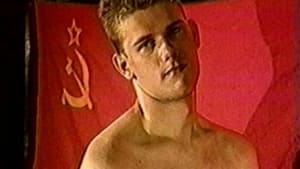
The Fall of Communism as Seen in Gay Pornography
Every image in The Fall of Communism as Seen in Gay Pornography comes from gay erotic videos produced in Eastern Europe since the introduction of capitalism. The video provides a glimpse of young men responding to the pressures of an unfamiliar world, one in which money, power and sex are now connected.
1998

Ôrí
A look at the Brazilian black movement between 1977 and 1988, going by the relationship between Brazil and Africa.
1989