Watch Wheel of Time (2003) Online Free
Wheel of Time is Werner Herzog's photographed look at the largest Buddhist ritual in Bodh Gaya, India.
Cast
Werner Herzog, Tenzin Gyatso, Lama Lhundup Woeser, Takna Jigme Sangpo, Matthieu Ricard, Tenzin Dhargye, Ven. Geshe, Manfred Klell, Chungdak D. Koren, Thupten Tsering Mukhimsar, Madhureeta Anand
More Like This
The Search for the Meaning
"The Search for the Meaning" is a collective experience, carried out with the audiovisual contribution of countless people who record their testimonies and spiritual experiences in 19 countries, to show a new spirituality that is being born...
2019

The Unreserved
The Unreserved is an inquiry into the lives of passengers who use the Unreserved Compartment, the cheapest way to travel across India on the Indian Railways system. The film portrays the passengers’ aspirations, efforts and opinions through conversations and personal stories.
2017
The Kali of Emergency
During social and political turmoil, what is the manifestation of divine intervention? How do the gods and goddesses act in the volatility of the contemporary world? If they walk on earth as men and women, how do they endure the chaos of modernity? Centering on the terrible and majestic incarnations of Goddess Kali and her celestial avatars, this film is a metaphysical contemplation in times of perpetual emergencies. Avikunthak’s remarkable sense of forms finds expression in the extraordinary combination of performance and essayistic cinematic practices.
2017
The Karma Killings
"The Karma Killings," is a modern-day crime thriller mixed in with Indian mythology and class warfare. The documentary delves into India's most infamous serial killings and its impact on a nation. Told through the people directly involved, the film unravels the complexities of the case and goes beyond the sensational headlines to present a suspenseful and scary mystery. And has a huge twist - one of the killers maybe innocent?
2016
Sacred
Sacred explores cultural and religious ritual as it relates to life’s cycles: birth, adolescence, marriage, aging and other key passages of life.
2016
Fascinating India
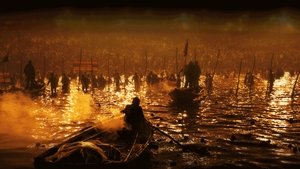
"Fascinating India" spreads an impressive panorama of India’s historical and contemporary world. The film presents the most important cities, royal residences and temple precincts. It follows the trail of different religious denominations, which have influenced India up to the present day. Simon Busch and Alexander Sass travelled for months through the north of the Indian subcontinent to discover what is hidden under India’s exotic and enigmatic surface, and to show what is rarely revealed to foreigners. The film deals with daily life in India. In Varanasi, people burn their dead to ashes. At the Kumbh Mela, the biggest religious gathering of the world, 35 million pilgrims bathe in holy River Ganges. This is the first time India is presented in such an alluring and engaging fashion on screen.
2014

OLO, the Boy from Tibet
A 6-year-old Tibetan boy leaves his family and flees to a refugee camp in northern India.
2012
Undercover in Tibet
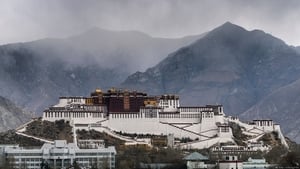
Undercover in Tibet reveals the regime of terror which dominates daily life and makes freedom of expression an impossibility. Tash meets victims of arbitrary arrests, detention, torture and ‘disappearances’ and uncovers evidence of enforced sterilizations on ethnic Tibetan women. He sees for himself the impact of the enormous military and police presence in the region, the hunger and hardship being endured by many Tibetans and hears warnings of the uprising taking place across the provinces now.
2008
Palna's Daughters
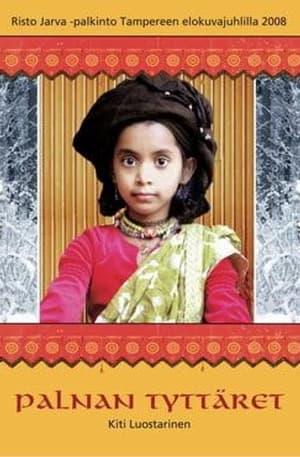
A film about memory, identity and the overwhelming power of love. One-year-old Devi was found starving at a railway station in Delhi. The police took her to Palna, an orphanage, where she lived for a year. When Devi learned to talk she often wanted to talk about Amma, her first mother. In the film, the 6-year-old Devi journeys to her own past, as her family adopts another daughter from Palna, a baby sister for Devi.
2007
How to Cook Your Life
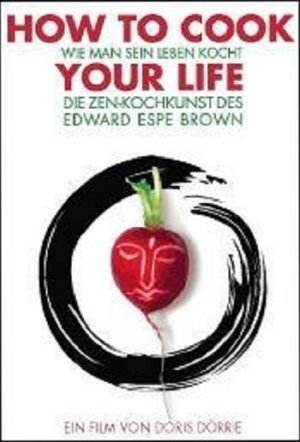
A Zen priest in San Francisco and cookbook author use Zen Buddhism and cooking to relate to everyday life.
2007
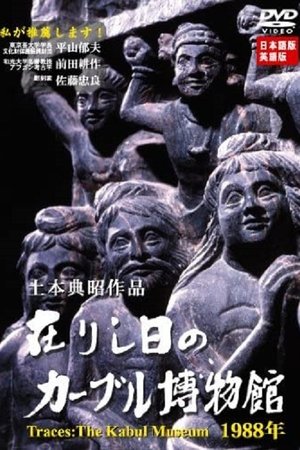
Traces: The Kabul Museum 1988
The Kabul National Museum, once known as the "face of Afghanistan," was destroyed in 1993. We filmed the most important cultural treasures of the still-intact museum in 1988: ancient Greco-Roman art and antiquitied of Hellenistic civilization, as well as Buddhist sculpture that was said to have mythology--the art of Gandhara, Bamiyan, and Shotorak among them. After the fall of the Democratic Republic of Afghanistan in 1992, some seventy percent of the contents of the museum was destroyed, stolen, or smuggled overseas to Japan and other countries. The movement to return these items is also touched upon. The footage in this video represents that only film documentation of the Kabul Museum ever made.
2003
Nehru
Divided into three parts — The Awakening, The Struggle, and Freedom — this is a biographical film on Pandit Jawaharlal Nehru, the first Prime Minister of independent India. Relying on Nehru's writings and speeches, the film traces the evolution of Nehru from his birth through his life. It also deals with the effect of history on Nehru and in turn his impact on the world.
1984
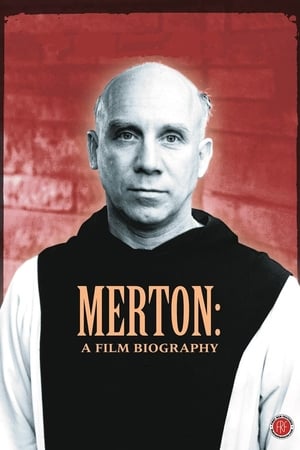
Merton: A Film Biography
In his lifetime, Thomas Merton was hailed as a prophet and censured for his outspoken social criticism. For nearly 27 years he was a monk of the austere Trappist order, where he became an eloquent spiritual writer and mystic as well as an anti-war advocate and witness to peace. Merton: A Film Biography provides the first comprehensive look at this remarkable 20th century religious philosopher who wrote, in addition to his immensely popular autobiography The Seven Storey Mountain, over 60 books on some of the most pressing social issues of our time, some of which are excerpted here. Merton offers an engaging profile of a man whose presence in the world touched millions of people and whose words and thoughts continue to have a profound impact and relevance today.
1984
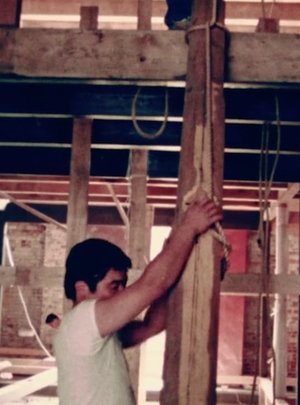
Rebuilding an Old Japanese House
Five Japanese carpenters came to Boston that summer to reconstruct a Kyoto silkweaver's 150 year old townhouse that had been packed in crates and shipped to Boston Children's Museum. This first-hand observation of traditional tools and woodworking techniques chronicles the assembly process. In the progress of construction the contractor performed three Shinto housebuilding ceremonies.
1981
Fried Shoes Cooked Diamonds
After World War II a group of young writers, outsiders and friends who were disillusioned by the pursuit of the American dream met in New York City. Associated through mutual friendships, these cultural dissidents looked for new ways and means to express themselves. Soon their writings found an audience and the American media took notice, dubbing them the Beat Generation. Members of this group included writers Jack Kerouac, William Burroughs, Allen Ginsberg. a trinity that would ultimately influence the works of others during that era, including the "hippie" movement of the '60s. In this 55-minute video narrated by Allen Ginsberg, members of the Beat Generation (including the aforementioned Burroughs, Anne Waldman, Peter Orlovsky, Amiri Baraka, Diane Di Prima, and Timothy Leary) are reunited at Naropa University in Boulder, CO during the late 1970's to share their works and influence a new generation of young American bohemians.
1979
Indian Youth: An Exploration
A documentary on the life of the youth in post-Independence India.
1968
Music of India
Short documentary on classical Indian music.
1966

Six Years of Freedom
This documentary highlights the achievements of India in the political, economic, and international fields since she attained Independence. The framing of her Constitution, the integration of the States and the general elections, the rehabilitation of displaced persons, the river valley projects, and the setting up of a chain of National Laboratories are some of the achievements shown here.
1953

Ladakh
A stunning trek from the vale of Kashmir, via Sind Valley and Kargil and Lamayaru Monastry.
1943
Seil und Tau Fabrikation in Howrah bei Kalkutta
A short film showing the industrial process of jute works in India.
1909