Watch Women of the Gulag (2017) Online Free
Loading Cinehub...
Through unique and candid interviews the film tells the compelling and tragic stories of the six women – last survivors of the Gulag, the brutal system of repression and terror that devastated the Soviet population during the regime of Stalin.
More Like This
Frosia, une femme libre au Goulag
2024

Andrey Tarkovsky. A Cinema Prayer
An account of the life and work of Russian filmmaker Andrey Tarkovsky (1932-86) in his own words: his memories, his vision of art and his reflections on the fate of the artist and the meaning of human existence; through extremely rare audio recordings that allow a complete understanding of his inner life and the mysterious world existing behind his complex cinematic imagery.
2019
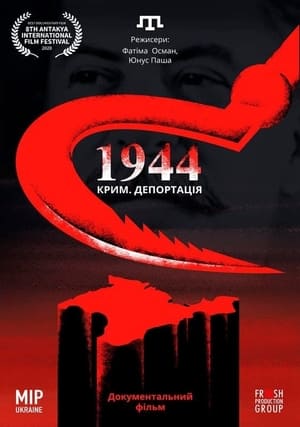
1944. Deportation
In 1944 Crimean Tatars has suffered a long road in exile. It was accompanied by famine, illness and loss. In the first years of exile, almost half of deported Crimean Tatars died. But those, who survived, dreamed of only one thing - to return to Crimea. The documentary 1944 tells about the tragedy of all Crimean Tatars through several separate life stories. They are cherished by each Crimean Tatar family and must be remembered by all generations to come.
2019

Flying Supersonic
Thundering across the sky on elegant white wings, the Concorde was an instant legend. But behind the glamour of jet setting at Mach 2 were stunning scientific innovations and political intrigue. Fifteen years after Concorde's final flight, this documentary takes you inside the historic international race to develop the first supersonic airliner. Hear stories from those inside the choreographed effort to design and build Concorde in two countries at once - and the crew members who flew her.
2018
TaMtAm - Music of the time of troubles
Documentary film about the first St. Petersburg music club TaMtAm. It existed since 1991 upon 1996 and was held by Vsevolod Gakkel, ex-cellist of "Аквариум". The concept was modelled on cult NY club CBGB-OMFUG. Despite its controversial history this is the place where a new generation of Russian punk music was discovered.
2017
Chernobyl 30 Years On: Nuclear Heritage
Thirty years after the Chernobyl disaster, which occurred on the night of April 26, 1986, its causes and consequences are examined. In addition, a report on efforts to strengthen the structures covering the core of the nuclear plant in order to better protect the population and the environment is offered.
2015

Leninland
At the peak of Perestroika, in 1987, in the village of Gorki, where Lenin spent his last years, after a long construction, the last and most grandiose museum of the Leader was opened. Soon after the opening, the ideology changed, and the flow of pilgrims gradually dried up. Despite this, the museum still works and the management is looking for ways to attract visitors. Faithful to the Lenin keepers of the museum as they can resist the onset of commercialization. The film tells about the modern life of this amazing museum-reserve and its employees.
2013

Cannibal Island
A disturbing chapter in Russian history is explored in this documentary. In 1933, Joseph Stalin sent 6000 "unwanted" citizens of Moscow and Leningrad to a desolate Siberian island - with no food or clothes to speak of. Decades later this documentary returns to the island.
2009
Gulag
This excellent and breathtaking documentary is the result of a long study on the Gulag to try to understand why more than 60 million Soviet citizens were sent to the camps from 1918 to 1956, how such a massive confinement could take place during two generations. From the Solovki in the north-west to the Kolima in Siberia, from Lenine to Kroutchev, a polar geography is erected into the Gulag system. One does not escape from camps. After ten years of imprisonment, one dies. Some survived, some left traces; they witness: organisation, work and discipline, but also resistance, repression and revolt.
2006
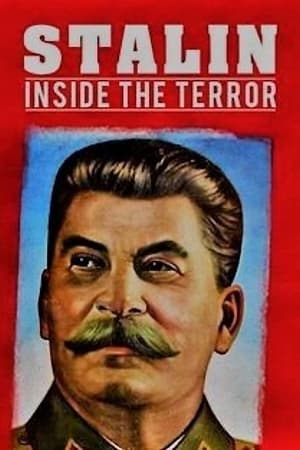
Stalin: Inside the Terror
This program is an overview of the life and career of Joseph Stalin. It concentrates on describing and attempting to explain the origins of the policy of “terror” instigated by Stalin as leader of the USSR. There are interviews with surviving family members and experts all of whom attempt some sort of personality “analysis” of the dictator to explain his behaviour and policies. Another question that is examined is, given his record of “terror”, why was he so popular? Why did so many Russians mourn his death in 1953? This could be an overview and introduction to a study of both Stalin and USSR in the post revolution period.
2003
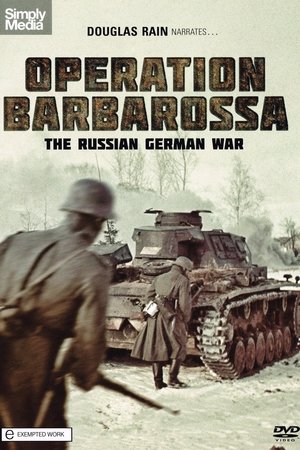
The Russian German War
This is a rare look at one of the worst horror stories in the long infamous history of warfare. This series features captured German and Russian film footage, much of which has never been seen before. For decades the Cold War prevented us from looking closely at what really happened between the Russians and the Germans on the Eastern Front during World War II. More than a struggle between nations, it pitted maniacal tyrant against maniacal tyrant, evil ideology against evil ideology. The lives of tens of millions of human beings were consumed by its raging hatreds and appalling indignities. One in every ten Russians died. One in every four Poles died. Whole divisions of Italians, Romanians, Hungarians disappeared with barely a trace. An average of 17,800 people died on every single day and this, the war on the Russian German Front, lasted for 1,400 days. This series features captured German and Russian film footage, much of which has never been seen before.
1995
Moscow Central
This documentary follows the election campaigns of a journalist, a local crime boss, a formerly exiled oligarch, and a local access TV host as they compete for a spot in the Moscow Central Constituency, in Russia's first free elections since 1917
1994
Understanding The Georgian Republic
1993

The Human Face of Russia
Documentary on the USSR
1984
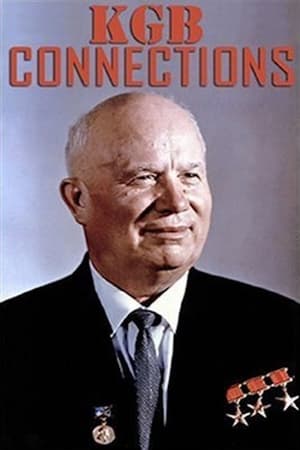
The KGB Connections: An Investigation into Soviet Operations in North America
This 1982 film explains the KGB infiltration of America. Who they are, what they are doing, and how well they have infiltrated North America.
1981
Our March
Compilation short film about the Communist Revolution and Soviet Union.
1970
Test of a clean hydrogen bomb with a yield of 50 megatons
Documentary movie about testing of the largest nuclear weapon in history, the Tsar Bomba. Declassified and made available to the public in 2020.
1961
This Is Russia!
Documentary footage of late 1950s Russia covers such cities and towns as Moscow, Leningrad, Kiev, Yalta, the Black Sea, Kharkov, Sochi, Sukumi, Gori, Bukhara, Samarkand, Frunzo and Siberia.
1957
In Memory of Sergo Ordzhonikidze
The film is about the life and work of Grigory Ordzhonikidze Konstantinoviche, an important personality in both the Communist Party and the Soviet state. The film includes speeches by his bereaved friends who attended his funeral. In 1937, after the unexpected death of Sergo Ordzhonikidze, Vertov received an urgent order from the government to produce a film about the life of Ordzhonikidze. He was ordered to work together with Yakov Bliohom and the director of the film "Battleship Potemkin" distributed by Goskino (Soviet State Committee for Cinematography).
1937
Man with a Movie Camera
A cameraman wanders around with a camera slung over his shoulder, documenting urban life with dazzling inventiveness.
1929