Watch Winter in den Alpen (1955) Online Free
A documentary camera journey along a tourist route through well-known winter sports centers from Garmisch to Lake Garda.
More Like This
Camp Courage
Made refugees by the war in Ukraine, Olga and her granddaughter Milana travel to a summer camp in the Austrian Alps to test the limits of their own bravery, and to strengthen their growing bond.
2023
White Winter
In southern Germany, winter can still be admired in all its glory every year. With its white coat of snow and icicles and myriads of small crystals that look like geometric works of art. In the valleys and on the slopes the snow is still so thick every year that the alpine huts are snowed in up to the windows. Cows and dairymen are safe in their farms at lower altitudes. But not the wild creatures of the mountains! They need strategies to survive the cold season and to defy snow masses, cold and ice. And some seem to do it so easily that they even raise their young in the middle of winter. But how do animals, plants and fungi cope with the annually recurring ice age, which from our perspective is a time of need? The many adaptations in nature prove that winter is an integral part of the natural cycle of the year and the living environment of species. They are adapted to cold and frost. That is why the animals and plants at the edge of the Alps suffer particularly from climate change!
2022
Solace
On | Solace – Running the Alps in 30 days – Karel Sabbe's Via Alpina FKT In the summer of 2021, ultrarunner Karel Sabbe ran the Via Alpina trail in just 30 days. Averaging two marathons on a daily basis, he navigated the route 14 days faster than anybody else. As well as the Alps, Karel overcame sleep deprivation, illness and extreme weather. And he did it all with a camera crew in tow, documenting every step.
2021
A Marmot's Life
The marmot is a beloved and iconic animal of the Alps, known for its chubby figure and entertaining demeanor. In the film, we follow the life of Mox, a young male who emerges from his burrow at 6500 feet altitude for the first time after four weeks of being born. He has a limited window of time to build up enough fat reserves to survive his six-month hibernation underground. During this period, Mox engages in playful activities with his peers, mutual grooming, and feasts on succulent plants. He also learns to identify the scent of each colony member, the peaceful presence of chamois and ibex, and the dangers that lurk above. When Mox wakes up the following year from hibernation, he is exhausted, emaciated, and vulnerable to predators such as eagles, foxes, and wolves that still roam the snow and avalanche-covered slopes.
2021
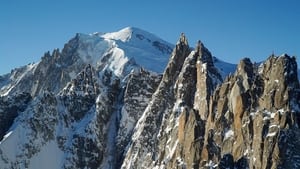
The Alps
The Alps – wild mountains, extreme lives, but also a magical world. This majestic mountain range connects eight countries and reaches heights of up to 4,000 metres above sea level. At a length of 1,200 kilometres, the Alps form both a connecting bridge between western and eastern Europe and a high barrier between southern and central Europe. The mountains act as a mighty water reservoir and continental watershed, feeding innumerable rivers that flow into three different oceans. Their highest peak, Mont Blanc, is surrounded by long, soaring mountains with ice-covered slopes. These great summits are just one reason the so-called “Roof of Europe” continues to fascinate – across the continent and around the world. The incredible diversity of landscapes, flora and fauna makes the Alps a unique natural treasure at the heart of Europe.
2020
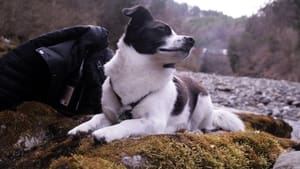
Refugee Poetry
The Kurdish Iraqi poet and actor Zeravan Khalil travels with his dog through an Alpine gorge after fleeing from IS war and genocide. As he remembers the abomination, he writes a poem with the title “You drive me mad” in Kurmanji Kurdish. In his home country, Yazidic Kurds are forbidden to work in his profession. Then he eats his apple and wanders through Europe’s middle with more hope.
2016
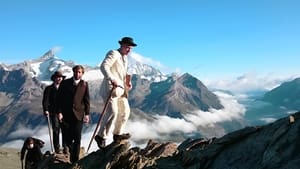
Cervin 1865, une première tragique
The first ascent of the Matterhorn was made on July 14, 1865 by Edward Whymper, Francis Douglas, Charles Hudson, Douglas Hadow, Michel Croz and two guides from Zermatt, Peter Taugwalder father and son. Douglas, Hudson, Hadow and Croz are killed on the descent after Hadow slips and drags the other three men down the north face. Whymper and the two Taugwalders, who survive, are later accused of having cut the rope that connected them to the rest of the group so as not to be dragged into the fall, but the ensuing investigation finds no evidence of their guilt and they are acquitted. The Matterhorn is the last great peak in the Alps to be conquered and its ascent marks the end of the golden age of mountaineering. One hundred and fifty years later, a team undertakes the same expedition in order to unravel the mystery.
2015
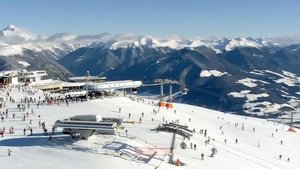
The Alps from Above: Symphony of Summits
The most important mountain range in Europe is more than a holiday destination for sports and relaxation. The Alps are not just an unpredictable force of nature against which humans have to assert themselves again and again, or an area steeped in history, but also a landscape that enchants. The documentary takes a foray through the history and geography of the Alps.
2014

Objectif Mont Blanc, sur les traces d'un géant
A climatologist, a physicist, and a volcanologist set out to conquer the highest peak in the Alps. Through exceptional images, the film recounts their odyssey and reveals the immense wealth of this natural laboratory. Straddling France, Italy, and Switzerland, the Mont Blanc massif was formed 240 million years ago. Four times the size of Paris, it covers 400 km2. Its summit, the highest in Western Europe, rises to 4,810 meters. Three scientists begin its ascent: Martine Rebetez, a Swiss climatologist; Étienne Klein, a philosopher and physicist at the French Atomic Energy Commission; and Jacques-Marie Bardintzeff, a geologist and volcanologist. Advancing in two roped teams, they are accompanied by Jean-Franck Charlet and François-Régis Thévenet, mountain guides, as well as physiologist Hugo Nespoulet.
2014
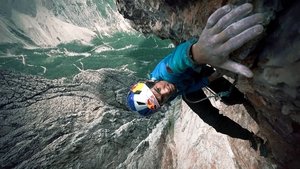
David Lama - Off Limits on Rock and Ice
The Tyrolean David Lama has climbed an 8a route already at the age of ten, and he has become several times Youth World Champion and European Youth Champion in bouldering and lead climbing. In 2010, at the age of 20 years, David decided to leave the indoor climbing and competition world behind him. Since then, he is focusing on Alpinism, the most difficult routes and first ascents in the Alps, but as well in India and America. This documentary portrays David Lama from his first climbing attempts as a little boy to his big adventures in present time. We see famous locations, such as the climbing paradise on Lake Garda, the notorious Sagwand Face in the Zillertal Alps, and the 7.821m high Masherbrum in the Karakorum with its still untouched north east face.
2014
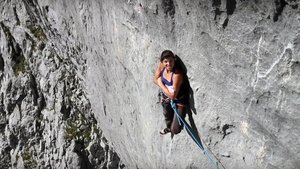
Silbergeier
Silbergeier is a long pitch route (8b+ max) built by Pietro del Pra in 1993 and organized by Beat Kammerlander. In this film, Nina Caprez achieves the first female ascent with her then partner Cédric Lachat. A beautiful production by Vladimir Cellier, carried by essential music.
2012
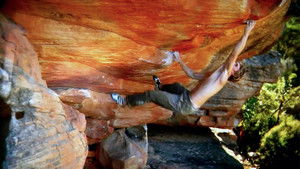
Pure
PURE is 19 extraordinary climbers in six countries on three continents; Nalle Hukkataival: This young climber from Finland spent his time on the World Cup circuit and now focuses on climbing some of the toughest rocks on the planet. Kevin Jorgeson: Exclusive footage of his first solo ascents in California. A unique perspective on the mental control needed to solo and the re-education needed when making a mistake. Kilian Fischhuber: Winner of the 2008 Men's Bouldering World Cup. Anna Stoehr: Aged 20, she won the 2008 Women's Bouldering World Cup. Fred Nicole: The legend of bouldering, author of achievements in hardest boulders in the world. The leader and grandmaster of the sport. Cody Roth: Enthusiastic about climbing just about anything, he achieves breathtaking first ascents here from Rocklands to Europe.
2009
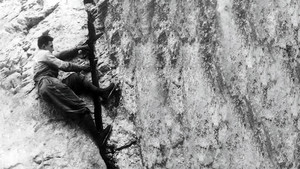
Giusto Gervasutti - Il Solitario Signore delle Pareti
Giusto Gervasutti (1909-1946) was an Italian mountaineer, considered by many to be the best mountaineer of his generation and one of the greatest of the post-war era. He achieved his first feats in 1930 and revolutionized mountaineering in the Western Alps by repeating and opening routes of extreme difficulty that are still considered absolute routes today: the east face of the Grandes Jorasses (with his friend Boccalatte), the northeast spur of the Aiguille Noire de Peuterey, the north face of the Grandes Jorasses, the Gervasutti route on the Gugliermina, the east face of Mont Blanc du Tacul (where he died in 1946), among an incredible list of climbs. The film, made to mark the centenary of Giusto Gervasutti's birth, portrays a solitary and tormented mountaineer, endowed with an impeccable moral sense, an advocate of light and ethical mountaineering, always in search of an unattainable happiness.
2009
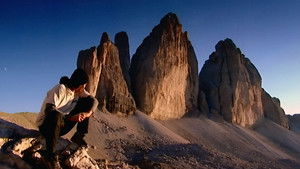
Faszination Bergfilm - Himmelhoch und Abgrundtief
A fascinating chronology of 100 years of mountain film history in the Alps. This documentary focuses primarily on films shot on the Matterhorn, the Eiger, and the Grandes Jorasses, considered until the 1930s as the "last problems of the Alps," and shows the evolution of mountain filmmaking through numerous excerpts from documentaries and feature films – notably on the Matterhorn in 1901. The genre, appropriated as a means of mass exaltation by "fascist" regimes during the Second World War, was reinvented in the 1950s by Gaston Rebuffat, Marcel Ichac, and Lionel Terray in the Mont Blanc massif, avant-garde figures of French mountain cinema, who reintroduced, beyond performance, the values of the mountains – and in color – poetry, humor, and sharing among people from all walks of life.
2008
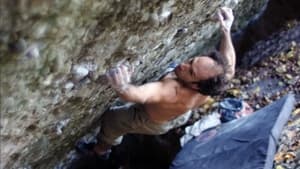
Des Blocs En Valais
Boulders in Valais presents the canton of Valais in Switzerland, its bouldering climbing spots and some of its historical and current actors and driving forces including Lucien Abbet, Benoît Dorsaz, Fred Nicole, Dave Graham... Frédéric and François Nicole gives us spectacular demonstrations of this sport, showing us routes like "Radja", the world's first 8b+. A topo-video part contains 28 climbing sites with a geographical map, and more than 160 video sequences for as many chosen blocks... more than 2h30 of climbing.
2008
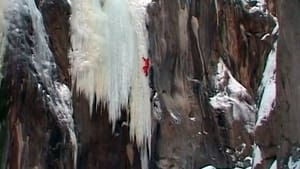
Ice Up
Unique shapes, no two the same, formed by the action of water and frost. The water that once ran from the summits in torrents and waterfalls is immobilized for a few weeks. The thing is to be there, in time, just at the moment when they become solid, just before they return to water. A question of balance. Around seven top-level climbers who represent all the richness of the activity, these images will highlight different techniques and different approaches. Although the athletic performance is impressive, it is there only to emphasize the dazzling shapes, the warmth of friendships, the stories of teamwork.
2005

The Unfamous of Mont Blanc
Mont Blanc, the highest peak in the Alps, rises to 4,810 m and was first climbed on August 8, 1786. Chamonix natives Jacques Balmat and Michel Paccard set out on the afternoon of August 7 and returned victorious on the morning of the 9th, after two nights spent outdoors. This film is a staging that reconstructs this great event with all the problems it created and resolved, thus contributing to the emergence of the modern concept of mountaineering. Denis Ducroz, guide and filmmaker, immerses us in the minds and times of these two men, 224 years later.
1986
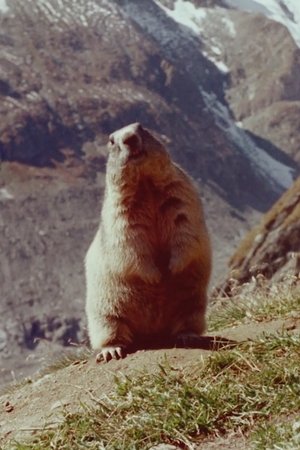
Marmot
A wildlife documentary about marmot.
1966
Entre Terre et Ciel
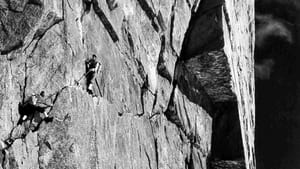
This is Gaston Rebuffat's fourth film, in which, with several close friends, he discovers the sublime landscapes of the Alps. “Mont-Blanc is beautiful. I climbed it several times depending on the time, the color of the sky and the shape of the cornices and ridges. Because of the weather and also because of this feeling of altitude, Mont-Blanc provides great pleasure. For the guide, Mont Blanc is his garden, but the garden becomes more beautiful when shown to a friend. Personally, I really like the bivouacs; only there one penetrates a little the mystery of the altitude. That's why I immediately accepted when Tazieff expressed the desire to spend the night at the top of Mont Blanc in an igloo. The film won the Grand Prix at the Trento Film Festival in 1961.
1961
Maratona Bianca
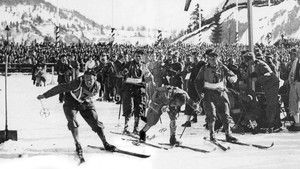
Documentary on one of the first editions of the Trofeo Mezzalama, the highest ski mountaineering race in Europe, at more than 4,200 meters above sea level, which takes place on the glaciers of Monte Rosa, from Breuil to Gressoney-La-Trinité, crossing the summits of Castor (4,199 meters) and Nez du Liskamm (4,100 meters). The film recounts the last hours of feverish preparation before the start, the teams preparing for the race linked in ropes, then follows the stages of the competition by following the groups of skiers from a plane. Created in 1933, the Trofeo Mezzalama was contested until 1938, before falling into oblivion during the war. A second version was organized from 1970 to 1973. A third biannual version has been organized since 1997.
1935