Watch What Is My Face? Online Free
A short doc about how faces are perceived: by scientists, by artists, by animals. How do we remember faces so well if we can barely describe them with words? Why do we see them everywhere? What even are they? What is my face?
More Like This
Your Brain
How does your brain create your reality? Are you in control, or is your brain controlling you? Discover the surprising answers based on the latest research in this eye-opening journey into the human brain with neuroscientist Heather Berlin. Your brain – for centuries a black box – is slowly giving up its secrets to modern neuroscience, shedding light on big questions that go to the very heart of who you are.
2023
The Brain
Is it possible to replicate the human brain on a computer? To connect it to machines? Research aimed at understanding the functioning of our biological brain is being matched by spectacular progress in the development of artificial intelligence.
2021

The Secret Science of Sewage
Dr George McGavin and Dr Zoe Laughlin set up base camp at one of the UK's biggest sewage works to investigate the revolutionary science finding vital renewable resources and undiscovered life in human waste. Teaming up with world-class scientists, they search for biological entities in sewage with potentially lifesaving medical properties, find out how pee can generate electricity, how gas from poo can fuel a car and how nutrients in waste can help solve the soil crisis. They follow each stage of the sewage treatment process, revealing what the stuff we flush can tell us about how we live today, and the mindboggling biotechnology being harnessed to clean it, making the wastewater safe enough to return to the environment.
2021
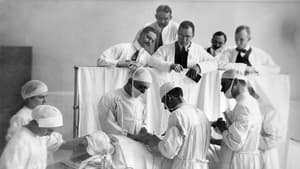
The Mayo Clinic
The Mayo Clinic tells the story of a unique medical institution that has been called a "Medical Mecca," the "Supreme Court of Medicine," and the "place for hope where there is no hope." The Mayo Clinic began in 1883 as an unlikely partnership between the Sisters of Saint Francis and a country doctor named William Worrall Mayo after a devastating tornado in rural Minnesota. Since then, it has grown into an organization that treats more than a million patients a year from all 50 states and 150 countries. Dr. Mayo had a simple philosophy he imparted to his sons Will and Charlie: "the needs of the patient come first." They wouldn't treat diseases...they would treat people. In a world where healthcare delivery is typically fragmented among individual specialties, the Mayo Clinic practices a multi-specialty, team-based approach that has, from its beginnings, created a culture that thrives on collaboration.
2018

Bermuda Triangle: The Deadly Secrets
New discoveries reveal the deadly secrets of the Bermuda Triangle as experts use cutting-edge science and technology to investigate the strange disappearances in this mysterious place.
2018

Food Evolution
As society tackles the problem of feeding our expanding population safely and sustainably, a schism has arisen between scientists and consumers, motivated by fear and distrust. Food Evolution, narrated by Neil deGrasse Tyson, explores the polarized debate surrounding GMOs. Looking at the real-world application of food science in the past and present, the film argues for sound science and open-mindedness in a culture that increasingly shows resistance to both.
2017
Fight For Space
In 1962, spurred by the Cold War, President John F. Kennedy famously made the bold proclamation that NASA would send astronauts to the moon by the end of the decade, not because it was easy, but because it was a challenge. The Space Race inspired a generation to pursue careers in science and technology, but as the balance of world power shifted, interest in space exploration declined. "Fight for Space" serves as an urgent call to re-awaken our sense of wonder and discovery.
2016
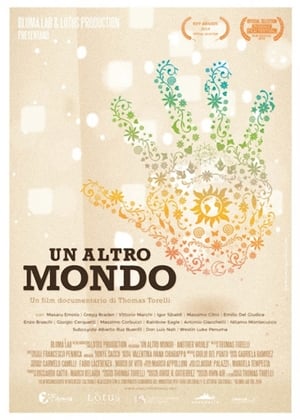
Another World
A feature documentary about the journey of mankind to discover our true force and who we truly are. It is a quest through science and consciousness, individual and planetary, exploring our relationships with ourselves, the world around us and the universe as a whole.
2014
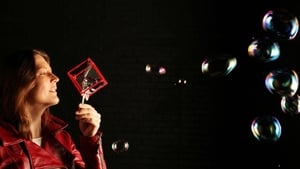
Pop! The Science of Bubbles
Physicist Dr Helen Czerski takes us on a journey into the science of bubbles - not just fun toys, but also powerful tools that push back the boundaries of science.
2013
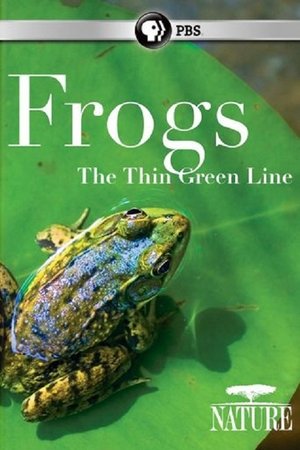
Frogs: The Thin Green Line
An examination of the extinction threat faced by frogs, which have hopped on Earth for some 250 million years and are a crucial cog in the ecosystem. Scientists believe they've pinpointed a cause for the loss of many of the amphibians: the chytrid fungus, which flourishes in high altitudes. Unfortunately, they don't know how to combat it. Included: an isolated forest in Panama that has yet to be touched by the fungus, thus enabling frogs to live and thrive as they have for eons.
2009
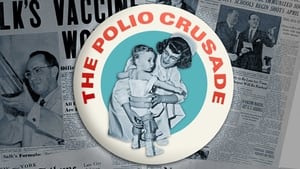
The Polio Crusade
The film interweaves the personal accounts of polio survivors with the story of an ardent crusader who tirelessly fought on their behalf while scientists raced to eradicate this dreaded disease. Based in part on the Pulitzer Prize-winning book Polio: An American Story by David Oshinsky, Features interviews with historians, scientists, polio survivors, and the only surviving scientist from the core research team that developed the Salk vaccine, Julius Youngner.
2009
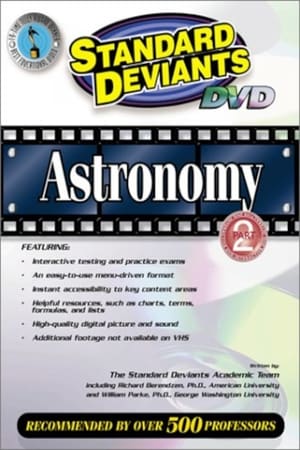
The Standard Deviants: The Really Big World of Astronomy, Part 2
In Astronomy Part 2, you will learn all about the planets, asteroids, comets, meteoroids, the layers of the sun, fusion, and more. The Standard Deviants make learning astronomy easier with their unique teaching style, which incorporates humor, mnemonics, and sophisticated computer graphics.
2000
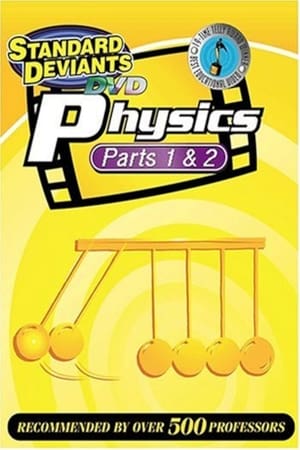
The Standard Deviants: The Gravity-Packed World of Physics, Parts 1&2
Physics is a system of models of nature according to which all phenomena are explained in terms of matter and force. Sound confusing? It doesn't have to be! Whether you need help with high school physics, need to review for a college physics class, or you're studying for the AP Physics Exam, this physics tutorial will help you understand the basics, such as Newton's Laws, the Law of Universal Gravitation, Kepler's Law and more.
2000
Rocketships
A look back at the origins of rocket science and forward to the cutting edge technology of reusable rockets and shuttles. Using computer animation, the program also explores the future of space travel that may some day carry commercial passengers or "tourists" into space.
1998
Secret Satellite
Documentary that explores the birth and growth of satellite espionage.
1996
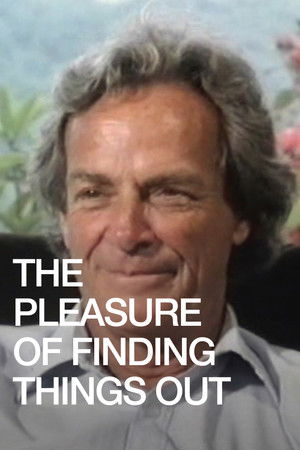
The Pleasure of Finding Things Out
Richard Feynman was a scientific genius with - in his words - a "limited intelligence". This dichotomy is just one of the characteristics that made him a fascinating subject. The Pleasure of Finding Things Out exposes us to many more of these intriguing attributes by featuring an extensive conversation with the acclaimed Nobel Prize winner. During the course of the interview, which was conducted in 1981, Feynman uses the undeniable power of the personal to convey otherwise challenging scientific theories. His colorful and lucid stories make abstract concepts tangible, and his warm presence is sure to inspire interest and awe from even the most reluctant student of science. His insights are profound, but his delivery is anything but dry and ostentatious.
1981
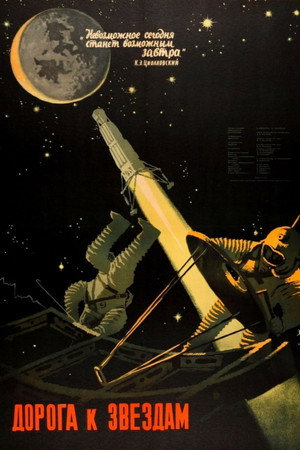
Road to the Stars
This film consists of three parts. The first dramatizes the life of the founder of Soviet astronautics, Konstantin Tsiolkovsky; the second describes the development of rocket technology; and the third visualizes the future with enactments of the first manned spaceflight, spacewalk, space station construction and humans on the moon.
1957
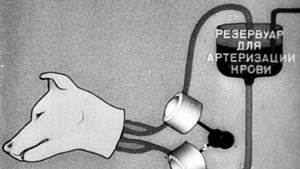
Experiments in the Revival of Organisms
This film shows experiments performed by Soviet scientists reviving the lungs, heart, and even the head of a dead dog.
1940
X-rays
This short documentary presents an early scientific visualization of X-ray technology, documenting the discovery of Röntgen rays and their application in medical diagnostics. Through staged demonstrations and instructional imagery, the film illustrates the principles of radiographic imaging and its emerging role in modern medicine.
1937
Unstoppable Solar Cycles
Concern over global climate change may be at an all-time high, but climate change is nothing new - the earth's climate always followed natural cycles of warming and cooling. In Unstoppable Solar Cycles, Dr. Willie Soon and Dr. David Legates challenge the popular idea that human-generated CO2, is causing catastrophic global warming. These scientists propose an alterantive theory - that the current warming has more to do with solar activity than with human activity.