Watch What a Glorious Feeling: The Making of 'Singin' in the Rain' (2002) Online Free
Movie and stage icon Debbie Reynolds hosts the making of "Singin' in the Rain". The short documentary includes Donald O'Connor, who played the comical "Cosmo Brown", Stanley Donen, one half of the directors next to Gene Kelly, and Kathleen Freeman, who played Phoebe Dinsmore, Lina Lamont's (Jean Hagen) voice coach.
Cast
Debbie Reynolds, Cyd Charisse, Donald O'Connor, Rudy Behlmer, Betty Comden, Stanley Donen, Kathleen Freeman, Adolph Green
More Like This
I ké volé
Alix left his native island, Martinique, and its musical culture, to study opera singing in Paris. Portrait of a young man who now embraces all his singularities: his rare countertenor voice, his kohl and his done nails. He works hard to realize his dream of becoming a professional artist.
2024

United in Grief
Suffering debilitating grief from the passing of his best friend who introduced him to the world of dance, Derrick must confront a monster that seeks to separate him from everything he loves.
2023
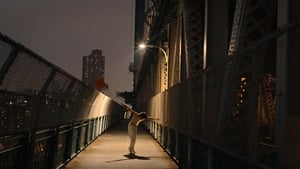
The Performance
Hussein learnt to breakdance from a soldier in Iraq as a kid, then chased his American Dream to NYC. Now a choreographer, he mistakes a shot at success for a breakthrough and loses everything, but will do whatever it takes to keep dreaming.
2023
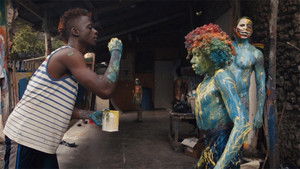
Kite Zo A: Leave the Bones
In 1791, in Haiti, Dutty Boukman presided over a Vodou ritual in Bois-Caïman that led to the creation of the first Black republic. Since then, rituals of transformation and artistic expression have been at the core of a thriving culture as the country faces oppression, poverty, and natural disasters. "Kite Zo A” (Leave the Bones) is a sensorial film about rituals in Haiti, from ancient to modern, made in collaboration with poets, dancers, musicians, fishermen, daredevil rollerbladers, and Vodou priests, set to poetry by Haitian author Wood-Jerry Gabriel.
2022
Vanity
2022
Walter Hus, a Musical Journey
During his thirty-year career, Walter Hus, a Belgian composer and pianist, has taken a thousand musical faces. While he wanted to compose a new work, a crisis blocked his creation. During an exchange with his therapist, he comes to an existential question: "Who am I musically? » Through the portrait of this composer, as abundant as it is fascinating, the film aims to give access to his creative process and thus to the endurance and beauty of creation.
2021

Gorillaz: Reject False Icons
Focused on the life of the band and their collaborators over the 3 vital years in which they developed critically acclaimed albums, 'Humanz' and 'The Now Now', and undertook their most ambitious world tour to date.
2019
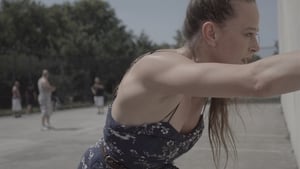
Bobbi Jene
A love story, portraying the dilemmas and inevitable consequences of ambition. It is a film about a woman's fight for independence, a woman trying to succeed with her own art in the extremely competitive world of dance.
2017
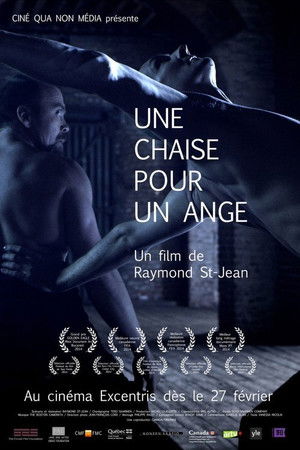
A Chair Fit for an Angel
For two hundred years, the Shakers have been America's most successful utopian society. While seeking harmony, order and perfection in every aspect of their lives, they built minimalistic furniture and buildings that influenced modern design. The Shakers wrote songs of exquisite beauty and danced to the point of ecstasy during their religious meetings. Inspired by this music and dance, choreographer Tero Saarinen created Borrowed Light, a dance piece about communal life and individual sacrifice. Shot in Finland and the United States, featuring interviews and excerpts from Borrowed Light, this documentary explore the cultural legacy of this religious group devoted to creating heaven on earth.
2014
Los posibles
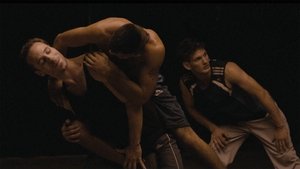
Santiago Mitre co-directs his first movement following The Student together with choreographer Onofri Barbato. Although it would have been more accurate to say “his first film-story-adventure-movie-great movie following The Student”, the word movement fits perfectly in Los posibles, the most overwhelmingly kinetic work Argentine cinema has delivered in many, many years. The film deals with the adaptation of a dance show directed by Onofri together with a group of teenagers who came to Casa La Salle, a center of social integration located in González Catán, trying to find some refuge from hardship. Already entitled Los posibles, the piece opened in the La Plata Tacec and was later staged in the AB Hall of the San Martín Cultural Center. Now, it dazzles audiences out of a film screen, with extraordinary muscles and a huge heart: Los posibles is a rhapsody of roughen bodies and torn emotions. Precise and exciting, it’s our own delayed, necessary, and incandescent West Side Story.
2013
Woven Songs of the Amazon
The Shipibo-Konibo people of Peruvian Amazon decorate their pottery, jewelry, textiles, and body art with complex geometric patterns called kené. These patterns also have corresponding songs, called icaros, which are integral to the Shipibo way of life. This documentary explores these unique art forms, and one Shipibo family's efforts to safeguard the tradition.
2007
Rize
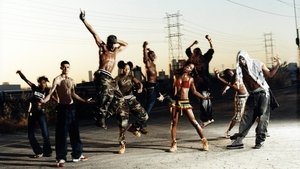
A documentary film that highlights two street derived dance styles, Clowning and Krumping, that came out of the low income neighborhoods of L.A.. Director David LaChapelle interviews each dance crew about how their unique dances evolved. A new and positive activity away from the drugs, guns, and gangs that ruled their neighborhood. A raw film about a growing sub-culture movements in America.
2005

Von Trier's 100 Eyes
Although at first sight this might look like a simple ‘making of DANCER IN THE DARK’, the later developments in the film reveal the whole drama of Lars von Trier’s inner life during the shooting process. All his doubts and insecurities in collaborating with the crew and actors - especially actresses - are exposed. The biggest drama started when Björk walked off the set. Nobody knew whether she would be back or not. Admitting that he feels threatened by women, who can ‘make him feel embarrassed’, the director gives this documentary the nature of a personal diary. When he discusses the importance, purpose and beauty of the use of a hundred cameras in a certain sequence or the meaning of the Dogma 95 rules, the audience is witnessing the process of the artist’s search. Is the pain that the director went through during the shooting really visible in the final result, as Lars von Trier claims in this film? (from: http://www.idfa.nl/)
2000
Martha Graham: The Dancer Revealed
Released on DVD as part of The Criterion Collection's "Martha Graham: Dance on Film" collection.
1994
Dance of Darkness
The dark sensibilities and cultural resonances of Butoh, the radical Japanese dance movement, are explored in this multilayered work. Profoundly rooted in both traditional and contemporary Japanese culture, Butoh arose in a spirit of revolt in the early 1960s. Characterized by frank sexuality and bodily distortions, Butoh transforms traditional dance movements into new forms, stripping away the taboos of contemporary Japanese culture to reveal a secret world of darkness and irrationality.
1989

Mouth Music
Mouth Music demonstrates the distinctive modes of the human voice, the most influential of all musical instruments, takes on in southern folk music and folk culture. These modes can span traditional a cappella performance styles as well as unique expressive vocal forms that have evolved as part of daily life, work, and play: hollerin’, jump-rope rhymes, “eephing,” nonsense songs, auctioneering, drill sergeant’s patter and others.
1981
The Art of Meditation
This VHS video includes two short documentaries by Elda Hartley. In the first, THE ART OF MEDITATION, Alan Watts gives us techniques and advice for meditating. Elda Hartley herself narrates the second film, MEDITATION: THE JOURNEY INWARD, which exposes viewers to different cultural approaches to meditation. Hartley then discusses how meditation enriches one's life, and what it can reveal to us.
1971
Beginning of the Serpentine
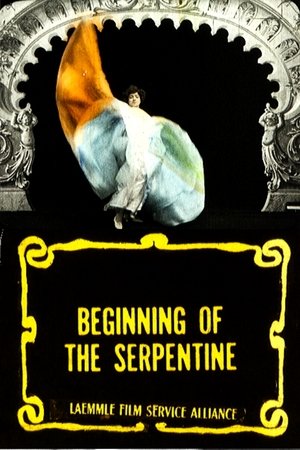
A serpentine dancer is bathed in alternating hand-colored frames underneath an elaborate archway.
1908
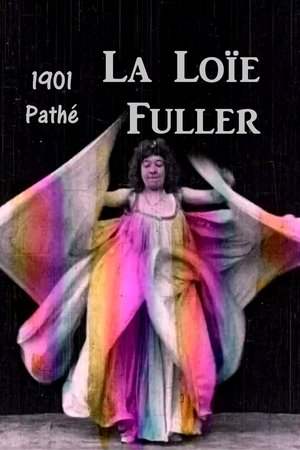
Loïe Fuller
Serpentine dance with stenciled rainbow coloring, in the style of Fuller. Dancer unidentified. Pathé film no. 766a.
1901

Bon Odori
Bon Odori dives into the world of karaoke and the ways this Japanese tradition has taken root and evolved in Brazil. Through an event that brings together young Japanese-Brazilian descendants and participants with no prior connection to Japanese culture, the documentary reveals encounters, memories, and exchanges across generations. Amid touching stories, striking voices, and charismatic personalities, the film crafts a sensitive portrait of belonging, respect, and cultural preservation—celebrating the power of the connections that emerge when differences are embraced.