Watch We Don't Care About Music Anyway (2011) Online Free
From radical turntablism (Otomo Yoshihide) to laptop music innovation (Numb), via classical instrument hijacking (Sakamoto Hiromichi), Tokyo's avant-garde music scene is internationally known for its boldness. While introducing some of the greatest musicians of this scene, "We Don't Care About Music Anyway..." offers a kaleidoscopic view of Tokyo, confronting music and noise, sound and image, reality and representation, documentary and fiction.
Cast
Hiromichi Sakamoto, Tomoko Shimazaki, Ken Takehisa, Fuyuki Yamakawa, Yoshihide Otomo
More Like This
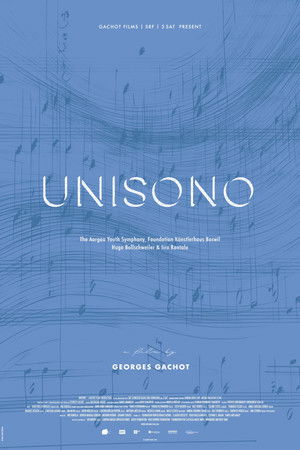
Unisono
When young musicians come together to play classical music, they send out a strong signal to our today’s world. The film follows talented young Swiss musicians as they work, search for inspiration, but also expose their thought how to play nowadays the “old” Classical music.
2026
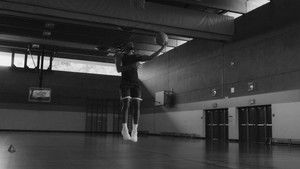
LIVE at the Court
Three basketball players step onto the court, each with a rhythm of their own. As their movements are studied and reimagined, their game is then recontextualized into jazz, revealing the artistry within sport and the music hidden in motion.
2025
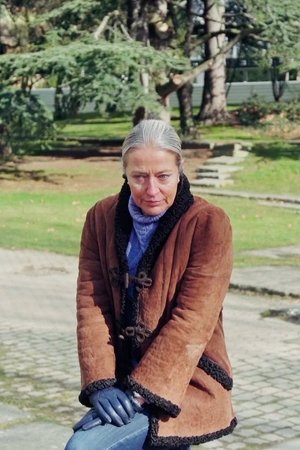
Taube Feuer
With noise-canceling headphones, they communicate with an inaudible counterpart. Decoupled, they move around the room and meet their surroundings. Intimate stories and needs are discussed. The personal blends into a shared portrait.
2024

A Bright Nowhere: Journeying Into Improvisation
An important audio-visual record of a landmark series of four concerts staged in London in 2022 when more than 30 musicians joined improviser, percussionist and animateur Eddie Prévost to mark his 80th birthday. The film takes a close look at improvisers who create music in the moment, free from the authority of a composer, score or conductor. Ranging from profound delicacy to subversive atonality, the “awkward wealth” of this music raises vital questions about artistic freedom, individual responsibility and what it means for people to make music together in the 21st Century. Featuring performances by John Butcher, Sue Lynch, Ute Kanngiesser, Marjolaine Charbin, Nathan Moore, Seymour Wright, Veryan Weston, Alan Wilkinson, John Tilbury and Eddie Prévost amongst others. Plus readings by musician and author David Toop. The film includes the last ever concert by AMM, the pioneering improvising group co-founded by Eddie Prévost in the mid-1960s.
2023

Fainting Flicker
Two young strangers meet in Naples and begin to flirt and dance in the street.
2016

The Improv: 50 Years Behind the Brick Wall
Several comic greats pay tribute to the legendary stand-up stage founded by Budd Friedman in 1963.
2013
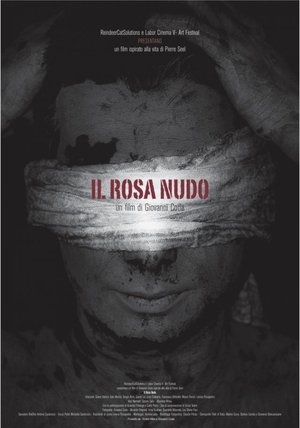
Naked Rose
Among the millions of victims of the Nazi madness during the Second World War, Pierre Seel was charged with homosexuality and imprisoned in the Schirmeck concentration camp. He survived this terrifying experience of torture and humiliation, and after the war he married, had three children, and tried to live a normal life. In 1982, however, he came to terms with his past and his true nature and decided to publicly reveal what he and thousands of other homosexuals branded with the Pink Triangle had undergone during the Nazi regime. Il Rosa Nudo (Naked Rose), inspired by the true story of Pierre Seel, depicts in a theatrical and evocative way the Homocaust, focusing on the scientific theories of SS Physician Carl Peter Værnet for the treatment of homosexuality, which paved the way for the Nazi persecution of gay men.
2013
Vezdekhod
Image by Carlos Casas. Double screen projection with live soundtrack. Images and sound captured on location. Somewhere in the tundra, Chukotka Region, Northeastern Siberia, Russian Federation. Music by Prurient. Published by Von Archives. N 66° 37’ 916, W 172° 40’ 353, Sept 2006.
2012
Cairo Chorus
"Filmed in Cairo, in Al-Azhar Park, sunset during Isha'a praying time. The city becomes a Chorus. Dedicated to the people of Cairo. With love and hope." Part of the Azan series & the Cairo fieldworks.
2010
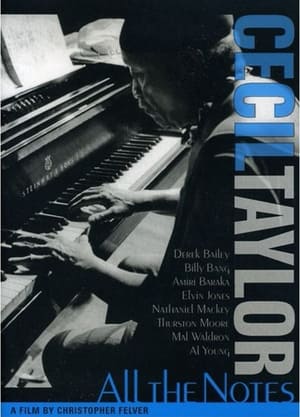
Cecil Taylor: All The Notes
Cecil Taylor was the grand master of free jazz piano. "All the Notes" captures in breezy fashion the unconventional stance of this media-shy modern musical genius, regarded as one of the true giants of post-war music. Seated at his beloved and battered piano in his Brooklyn brownstone the maestro holds court with frequent stentorian pronouncements on life, art and music.
2005
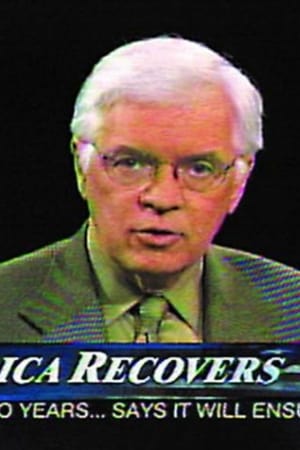
CNN Concatenated
An 18-minute long single-channel video which uses CNN footage cut so that each word is spoken by a different newsperson. The pieces literally asks the viewers questions about media authenticity and give CNN a distinct voice
2002

Waiting for Guffman
Aspiring director Corky St. Clair and the marginally talented amateur cast of his hokey small-town musical production go overboard when they learn that Broadway theater agent Mort Guffman will be in attendance.
1997
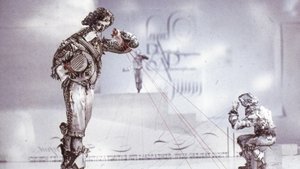
Anamorphosis
The Quays' interest in esoteric illusions finds its perfect realization in this fascinating animated lecture on the art of anamorphosis. This artistic technique, often used in the 16th- and 17th centuries, utilizes a method of visual distortion with which paintings, when viewed from different angles, mischievously revealed hidden symbols.
1993
Black Hole Radio
Black Hole Radio is an installation that consists of taped confessions of callers of the New York City Phone Confession Line and video images. The Phone Confession Line is based on anonymous callers ringing to confess on things they had done or thought like adultery, theft, murder or regrets. Thereafter anybody could call and listen to the confessions. Although making a confession was free, listening to a confession costs money. After Cohen got his hands on the confessions, he used them as an audio heartbeat to accompany video-images of every day life in New York City he had taken over the years. This installation is a portrait of the city with its dark secrets, hushed voices and nocturnal images. In this way Cohen tries to bring across an experience to the viewer that relies on absence, waiting and the effort to hear something in the dark.
1992
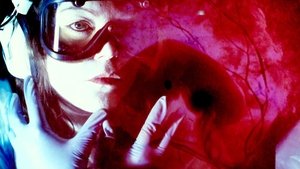
Selva. A Portrait of Parvaneh Navaï
Trance dances and out of body projection. In front of the camera, Parvaneh Navaï becomes a mediator who enters in contact with and immerses into the energies of Nature, while her own energy radiates and echos in the forest ("selva"). The camera amplifies and expands her presence, transforming the forest into an imaginary space. The camera becomes a painter's brush.
1982
Dawn
Szirtes's masterful experimental work is a dazzling composition of several years of filming within an industrial macro/microcosm, an abstract model of revolution and the beauty of daybreak.
1979
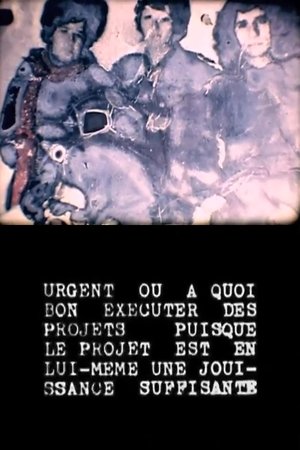
Urgent ou à quoi bon exécuter des projets puisque le projet est en lui-même une jouissance suffisante
Gérard Courant applies the Lettrist editing techniques of Isidore Isou to footage of late 70's pop culture. Courant posits that his cinema offers an aggressive détournement to the French mainstream, reifying a Duchampian view of film: "I believe in impossible movies and works without meaning... I believe in the anti-movie. I believe in the non-movie. I believe in Urgent... My first full length movie that is so anti-everything that I sometimes wonder if it really does exist!"
1977
Under a Bridge
In this tape, Ko Nakajima and Video Earth Tokyo interview a homeless man. The subject is initially angry and frustrated, but gradually opens up and shares stories about his life. Under A Bridge was later broadcast on cable television.
1974
Ludwig van
An odyssey through Beethoven’s lasting presence and influence in our modern world – viewed through the eyes of the composer himself.
1970
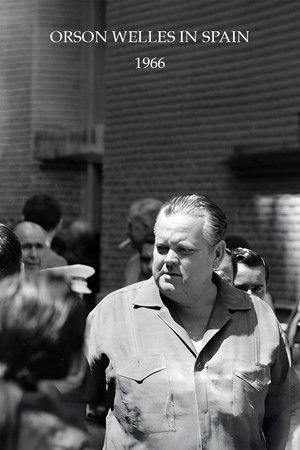
Orson Welles in Spain
Orson Welles presents a proposed film project to prospective investors in Spain. Speaking to an audience of wealthy arts patrons, Welles outlines his vision for an improvised, documentary-style fiction set in the world of bullfighting, centered on a solitary, existential matador who stands apart from his peers. As he expounds on cinema, performance, and the ritualized spectacle of death, the film captures a project that would ultimately remain unrealized.
1966