Watch Urgent ou à quoi bon exécuter des projets puisque le projet est en lui-même une jouissance suffisante (1977) Online Free
Gérard Courant applies the Lettrist editing techniques of Isidore Isou to footage of late 70's pop culture. Courant posits that his cinema offers an aggressive détournement to the French mainstream, reifying a Duchampian view of film: "I believe in impossible movies and works without meaning... I believe in the anti-movie. I believe in the non-movie. I believe in Urgent... My first full length movie that is so anti-everything that I sometimes wonder if it really does exist!"
Cast
John Lennon, Yoko Ono, Mouna, Marie-José Nat, Daniel Gélin, Marisa Mell, Alain Delon, Jean-Pierre Melville, Janine Bazin, Claude Berri, André S. Labarthe, Christian Fouchet
More Like This
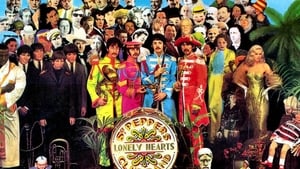
It Was Fifty Years Ago Today! The Beatles: Sgt. Pepper & Beyond
Featuring interviews with former employees, fellow musicians, family members and journalists, and supported by original and exclusive never-seen-before footage, this star-studded rockumentary offers a fascinating insight into the creation and recording of one of the most ground-breaking and influential albums in pop history.
2017
Kyoko
In 1971, John Lennon and Yoko Ono embark on a search for a girl named Kyoko. On April 23rd, they are arrested by the police at a hotel in Palma de Mallorca, Spain.
2017
Photooxidation
De-electronation of a molecular entity as a result of photoexcitation. Light increases its oxidation state, at the same time it releases free radical electrons. Light goes through human work as a natural photodegradation. It mutates within its own limits, from a solar irradiation to its impossible perception in an absent retina.
2013
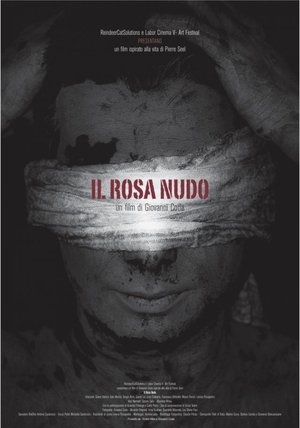
Naked Rose
Among the millions of victims of the Nazi madness during the Second World War, Pierre Seel was charged with homosexuality and imprisoned in the Schirmeck concentration camp. He survived this terrifying experience of torture and humiliation, and after the war he married, had three children, and tried to live a normal life. In 1982, however, he came to terms with his past and his true nature and decided to publicly reveal what he and thousands of other homosexuals branded with the Pink Triangle had undergone during the Nazi regime. Il Rosa Nudo (Naked Rose), inspired by the true story of Pierre Seel, depicts in a theatrical and evocative way the Homocaust, focusing on the scientific theories of SS Physician Carl Peter Værnet for the treatment of homosexuality, which paved the way for the Nazi persecution of gay men.
2013
The Trick Brain
A dark and magical visit to the fabled Parisian address Rue Fontaine 42. This was the residence of André Breton, the mastermind of surrealism, who surrounded himself with an impressive collection of modern, Western art and ethnographic objects from Oceania and North America. The collection was sold and divided up in 2003 at a controversial auction. 'The Trick Brain' is a delirious montage and a trip back in time to Breton's private art collection, where Atkins has been scouring the archives and come up with a possessing interior film of the place that once was, complete with surrealistic paintings, scores of Indian figures and hundreds of other displayed rarities. The film's soundtrack is provided by an observant narrator, who reveals to us that the objects shown are not necessarily what they claim to be - but instead are catalysts for some kind of wonderful linguistic virus which reveals the real identity of things.
2013
Vezdekhod
Image by Carlos Casas. Double screen projection with live soundtrack. Images and sound captured on location. Somewhere in the tundra, Chukotka Region, Northeastern Siberia, Russian Federation. Music by Prurient. Published by Von Archives. N 66° 37’ 916, W 172° 40’ 353, Sept 2006.
2012
Zamboanga
Images and sound captured in Zamboanga city Mindanao, Philippines. During sunset. Part of the Azan series & the Philippines fieldworks.
2011
Cairo Chorus
"Filmed in Cairo, in Al-Azhar Park, sunset during Isha'a praying time. The city becomes a Chorus. Dedicated to the people of Cairo. With love and hope." Part of the Azan series & the Cairo fieldworks.
2010
Film Is. 7-12
The second half of Gustav Deutsch's experimental Film ist. series, constructing new narratives and moods out of existing footage, mostly from early silent era films.
2002
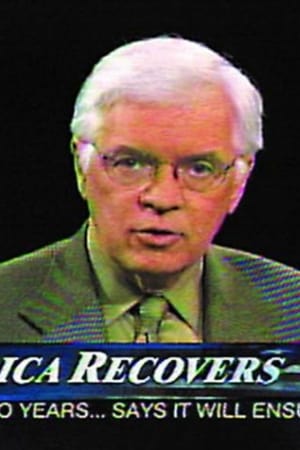
CNN Concatenated
An 18-minute long single-channel video which uses CNN footage cut so that each word is spoken by a different newsperson. The pieces literally asks the viewers questions about media authenticity and give CNN a distinct voice
2002
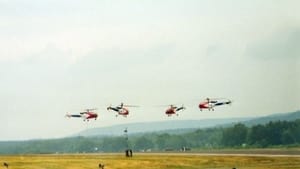
Helicopter String Quartet
One morning, the late Karlheinz Stockhausen awoke from a dream that told him to take to the sky. Stockhausen envisioned four helicopters swirling in the clouds, with each of a quartet’s members tucked inside his own chopper, communicating through headsets, stringing away in sync to the rotor-blade motors. He immediately set forth to make that dream a reality. In 1995, Dutch film director Scheffer followed Stockhausen in the days leading up to the premiere performance of his Helicopter String Quartet in Amsterdam. The resulting film offers a rare glimpse of Stockhausen as he patiently dictates every agonizingly detailed measure to the Arditti Quartet.
1996
Black Hole Radio
Black Hole Radio is an installation that consists of taped confessions of callers of the New York City Phone Confession Line and video images. The Phone Confession Line is based on anonymous callers ringing to confess on things they had done or thought like adultery, theft, murder or regrets. Thereafter anybody could call and listen to the confessions. Although making a confession was free, listening to a confession costs money. After Cohen got his hands on the confessions, he used them as an audio heartbeat to accompany video-images of every day life in New York City he had taken over the years. This installation is a portrait of the city with its dark secrets, hushed voices and nocturnal images. In this way Cohen tries to bring across an experience to the viewer that relies on absence, waiting and the effort to hear something in the dark.
1992
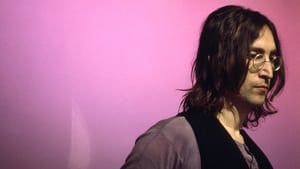
Imagine: John Lennon
The biography of former Beatle, John Lennon—narrated by Lennon himself—with extensive material from Yoko Ono's personal collection, previously unseen footage from Lennon's private archives, and interviews with David Bowie, his first wife Cynthia, second wife Yoko Ono and sons Julian and Sean.
1988
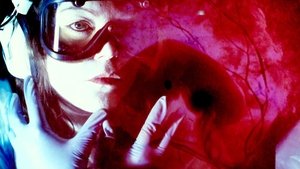
Selva. A Portrait of Parvaneh Navaï
Trance dances and out of body projection. In front of the camera, Parvaneh Navaï becomes a mediator who enters in contact with and immerses into the energies of Nature, while her own energy radiates and echos in the forest ("selva"). The camera amplifies and expands her presence, transforming the forest into an imaginary space. The camera becomes a painter's brush.
1982
Dawn
Szirtes's masterful experimental work is a dazzling composition of several years of filming within an industrial macro/microcosm, an abstract model of revolution and the beauty of daybreak.
1979
The Society of the Spectacle
Guy Debord's analysis of a consumer society.
1974
Under a Bridge
In this tape, Ko Nakajima and Video Earth Tokyo interview a homeless man. The subject is initially angry and frustrated, but gradually opens up and shares stories about his life. Under A Bridge was later broadcast on cable television.
1974
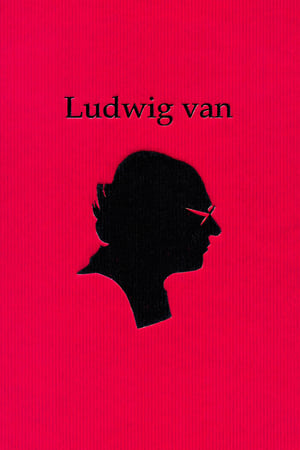
Ludwig van
An odyssey through Beethoven’s lasting presence and influence in our modern world – viewed through the eyes of the composer himself.
1970
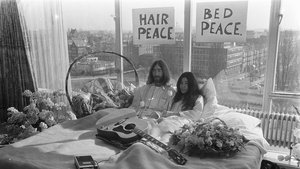
Bed Peace
John and Yoko in the presidential suite at the Hilton Amsterdam, which they had decorated with hand-drawn signs above their bed reading "Bed Peace." They invited the global press into their room to discuss peace for 12 hours every day.
1969
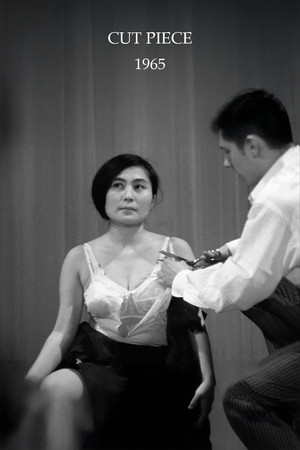
Cut Piece
Filmed at New York’s Carnegie Hall, Cut Piece documents one of Yoko Ono’s most powerful conceptual pieces. Performed by the artist herself, Ono sits motionless on the stage after inviting the audience to come up and cut away her clothing in a denouement of the reciprocity between victim and assailant.
1965