Watch Watch the Tempo (2018) Online Free
On 18th of December 2017, the Filarmonica Teatro Regio Torino, directed by Timothy Brock, presented "The Gold Rush" by Charles Chaplin, with live performance of the soundtrack. But let's go back a few days: this short film takes us in the backstage of the concert!
Cast
Timothy Brock
More Like This
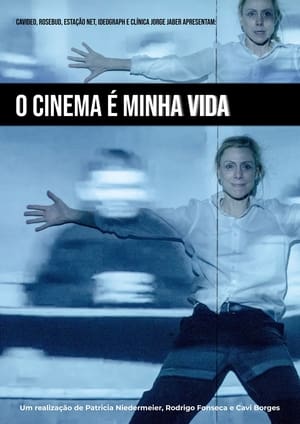
O Cinema é Minha Vida
In the dressing room of the French cinema, minutes before attending a lecture, François Truffaut recalls his trajectory
2021
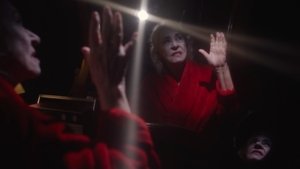
Inês
Triggered by congressman Jair Bolsonaro’s homage to the torturer Carlos Alberto Brilhante Ustra, during president Dilma Rousseff’s impeachment hearing in 2016, Inês, a 70 year-old actress, starts a fragmented narrative of her own history, transforming the memories of her youth as an artist and guerrilla fighter during the military dictatorship into performances. Using as a starting point her participation in Teatro Oficina's 1967 production of the play "King of The Candle", by Oswald de Andrade, Inês creates a manifesto in defense of art's political strength, intertwined with memories of lost love and resistance.
2020
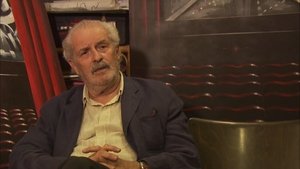
Red Chairs - Parma and the Cinema
The relations between Parma and cinema were so strong for almost the whole of the twentieth century that this city became an early laboratory of ideas and theories on cinema and a set chosen by some of the greatest Italian authors and beyond. Furthermore, a considerable number of directors, actors, screenwriters and set designers were born in Parma who have made their way internationally, testifying to the fact that in this small city in Northern Italy there was a decidedly cinematic air. Red armchairs takes up the thread of this story, wondering why, unique among the Italian provincial cities, Parma has given so much to the cinema, accompanying the viewer on a journey backwards that from the first projections of the Lumière cinema reaches the ultramodern experience of new multiplexes. During this journey we will meet the characters who created the conditions for this diffusion of cinematographic culture in Parma.
2014
Lorenzo Jovanotti Cherubini - Live Ora In Tour
2011
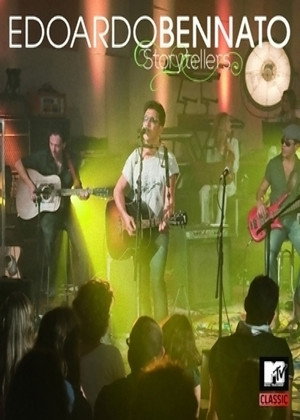
MTV Storytellers: Edoardo Bennato
2010
Disney: Through the Looking Glass
Tito del Amo, a passionate 72-year-old researcher, takes the final step to unravel the enigma about the alleged Spanish origin of the American cartoonist Walt Disney, making the same journey that his supposed mother made to give him up for adoption in Chicago. A journey that begins in Mojácar, Almería, Spain, and ends in New York. An exciting adventure, like Alicia's through the looking glass, to discover what is truth and what is not, with an unexpected result.
2010
Rockooper Ruja
Rock opera on the rise and fall of Estonian prog rock band "Ruja"
2008
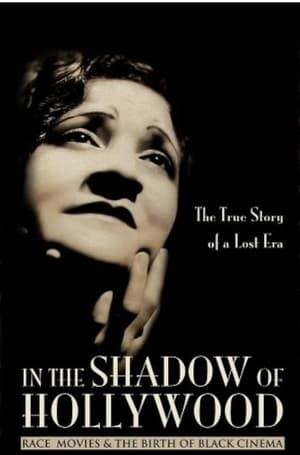
In the Shadow of Hollywood: Race Movies and the Birth of Black Cinema
This documentary captures the sounds and images of a nearly forgotten era in film history when African American filmmakers and studios created “race movies” exclusively for black audiences. The best of these films attempted to counter the demeaning stereotypes of black Americans prevalent in the popular culture of the day. About 500 films were produced, yet only about 100 still exist. Filmmaking pioneers like Oscar Micheaux, the Noble brothers, and Spencer Williams, Jr. left a lasting influence on black filmmakers, and inspired generations of audiences who finally saw their own lives reflected on the silver screen.
2007
The Dawn of Sound: How Movies Learned to Talk
Film historians, and survivors from the nearly 30-year struggle to bring sound to motion pictures take the audience from the early failed attempts by scientists and inventors, to the triumph of the talkies.
2007
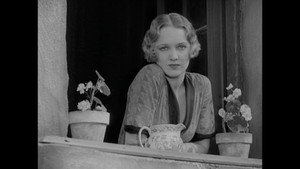
Chaplin Today: City Lights
In 1928, as the talkies threw the film industry and film language into turmoil, Chaplin decided that his Tramp character would not be heard. City Lights would not be a talking picture, but it would have a soundtrack. Chaplin personally composed a musical score and sound effects for the picture. With Peter Lord, the famous co-creator of Chicken Run and Wallace & Gromit, we see how Chaplin became the king of slapstick comedy and the superstar of the movies.
2003
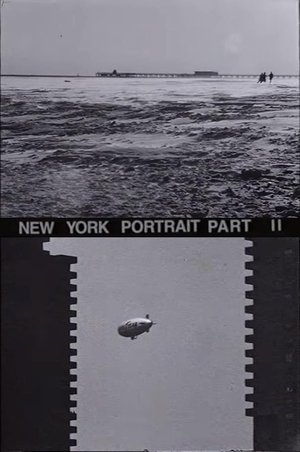
New York Portrait, Chapter II
Chapter Two represents a continuation of daily observations from the environment of Manhattan compiled over a period from 1980-1981. This is the second part of an extended life's portrait of New York.
1981
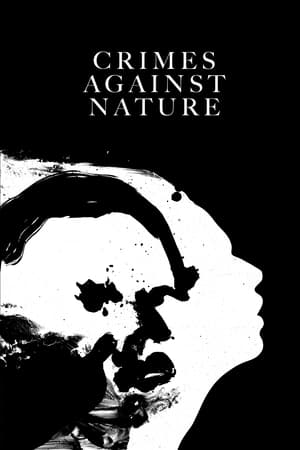
Crimes Against Nature
Described in the 70’s as "A Chorus Line for gay people," Crimes Against Nature remains vital today as a communal disclosure of roles that gay people adopt in order to survive in a world that devalues homosexual feelings. It features individual actors delivering revealing monologues, during which the other members of the collective play background roles (parents, schoolmates, etc.). One by one, the actors detail the ways in which they have buried their true selves in order to survive and be accepted in the world: repression, drug use, shyness, being agreeable, putting experiences into "little boxes," acting "butch," and so on.
1979
El circo
Madrid, Spain, 1949. The Circo Americano arrives in the city. While the big top is pitched in a vacant lot, the troupe parades through the grand avenues: the band, a witty impersonator, the Balodys, acrobats, jugglers, acrobatic skaters, clowns and… Buffallo Bill.
1950
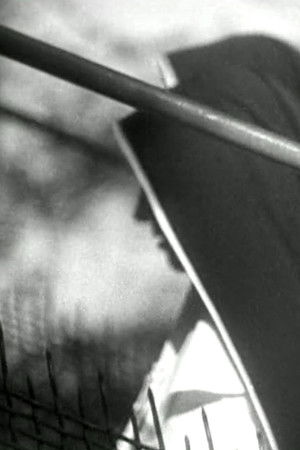
Visions of Lourdes
Charles Dekeukeleire, then a questioning Catholic, was spurred into making this documentary on a pilgrimage with the Catholic Young Workers’ Movement. The director’s approach is one of critical reflection; A film emotional and fervent, even acerbic.
1932
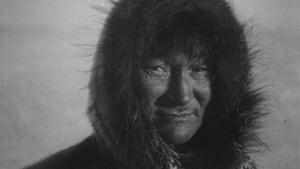
Nanook of the North
This pioneering documentary film depicts the lives of the indigenous Inuit people of Canada's northern Quebec region. Although the production contains some fictional elements, it vividly shows how its resourceful subjects survive in such a harsh climate, revealing how they construct their igloo homes and find food by hunting and fishing. The film also captures the beautiful, if unforgiving, frozen landscape of the Great White North, far removed from conventional civilization.
1922
Hesteomnibussen ("Bussen") Gennem Strøget
Horse carriages seen at the Copenhagen Town Square.
1913
Den Sidste Stump Af Østervold Graves Bort For At Give Plads Til Boulevardbanen
The remains of the Baltic Violence have been eroded away by the large steam excavator. There is a man standing at the railway cutting as trains pass. He throws something into the railway cutting. This person is seen in several of the recordings from 1913. It may be journalist Anker Kirkeby.
1913
Hestesporvognen ("Hønen") Gennem Nørregade
The horse-drawn tram "Hønen" comes running along Nørregade and into the Old Square. "Hønen"'s last trip was on June 14, 1915.
1913

Roald Amundsen's South Pole Expedition
Roald Amundsen's South Pole Journey is a Norwegian documentary film that features Roald Amundsen's original footage from his South Pole expedition from 1910 to 1912.
1912
The Strength and Agility of Insects
A short, early documentary work showing insects exhibiting extreme strength and agility.
1911