Watch Was Tun (2022) Online Free
Faced with a documentary film that included an interview with a young girl forced into prostitution, Michael Kranz asked himself the apparently banal question of “what can be done?” He travelled to Bangladesh and began to search for the girl. A film that is both self-critical and critical of society about the desire to at least do something and not to simply and passively give in to the injustices in this world.
Cast
Michael Kranz, Monika Padma
More Like This

'Independence 2.0'
This desktop documentary portrays the student movement in July and August 2024, the fall of the Sheikh Hasina regime, and its aftermath.
2024

Topsy-Turvy
As Cyclone Remal approached, we arrived in Debpur village of Dhankhali Upazila, Bangladesh. What struck us immediately was the stark contrast between the official warnings of impending devastation and the villagers' apparent lack of preparedness. Over the following days, amidst the unfolding chaos, we documented the lives of individuals as they grappled with the imminent threat of destruction. The film captures the overbearing anxiety that grips entire communities in the face of an approaching cyclone. Through intimate encounters, and candid interviews, we witness firsthand the resilience and fear of those directly in Remal's path. Their voices echo the overwhelming power of nature and the human spirit in adversity.
2024

Comme si j'étais morte
It's a black number: the prostitution of minors. The main victims are young girls placed in children's welfare homes. Comme si j'étais mort recounts the sexual slavery suffered by three young women, and the struggle of educators to save them.
2024
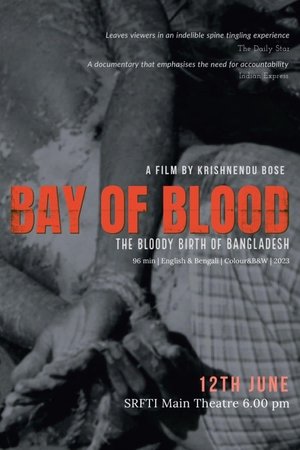
Bay of Blood
March 25th 1971, a horrific 'Genocide' was unleashed on the unarmed civilians of East Pakistan. This was done by their own Pakistani Army. An estimated 3 million people were killed, 10 million people were displaced to India as refugees and 400,000 women and girls were raped by the Pakistani soldiers. But Pakistan was not alone in perpetrating this violence. The then-American president and the National Security Advisor were supporting the Pakistani dictator. The cold war triggered this geopolitical escalation. Finally, India pressurized by the 10 million refugees within its borders, went to war with Pakistan. and joining forces with the local rebels, the Mukti Bahini, helped liberate Bangladesh. Cradled in the blood of innocents, a new nation was born in the closing days of 1971. "Bay of Blood", brings this 50-odd-year-old story to life.
2023
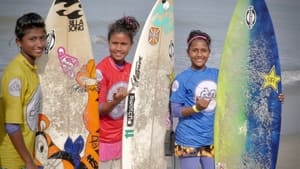
Bangla Surf Girls
Three working-class teenage girls in a port city in Bangladesh escape daily hardships and stifling family lives by riding waves on their surfboards and grabbing hold of the fleeting and thrilling sense of freedom that brings.
2021

Pornotropic
When French writer Marguerite Duras (1914-96) published her novel The Sea Wall in 1950, she came very close to winning the prestigious Prix Goncourt. Meanwhile, in Indochina, France was suffering its first military defeats in its war against the Việt Minh, the rebel movement for independence.
2020

Dark Suns
An epic investigation into countless murders in Mexico. Presented in chapters, the film unfolds methodically through unsettling testimonials, sketching a portrait of an entire country transformed into a gigantic mass grave thanks to a climate of impunity established by both criminal gangs and state authorities.
2019
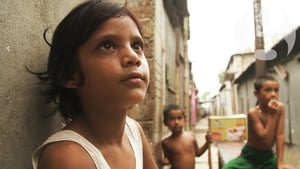
The children trapped in Bangladesh's brothel village
Daulatdia is an entire village in Bangladesh dedicated to prostitution. Every day, 1,600 trafficked, enslaved and abandoned women and girls sell themselves for £2 a time. In the midst of the trade live 300 children, many born in the village. Some will be groomed to be the future of the business like their mothers and grandmothers. With education programmes and support provided by Save The Children, a few may find their way out.
2016
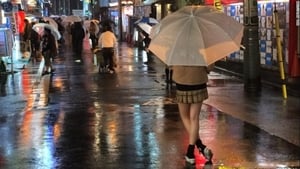
Schoolgirls for Sale
Japan’s obsession with cutesy culture has taken a dark turn, with schoolgirls now offering themselves for “walking dates” with adult men. Last year the US State Department, in its annual report on human trafficking, flagged so-called joshi-kosei osanpo dates (Japanese for “high school walking”) as fronts for commercial sex run by sophisticated criminal networks.
2015

Crowned Species
A journalistic investigation, built not on rumors and assumptions, but on direct evidence, revealing the true mechanisms of podium coronations. Hidden camera footage of negotiations with the owners of the largest national beauty contests and an attempt to answer the question of why these people are not yet in prison. Famous people on the jury are not a guarantee of fair judging. Irrefutable evidence of the corruption of the so-called “stars” who elect the next Miss and Mrs. The collection and subsequent theft of funds for charity is a side business of the owners of fraudulent shows. What actually awaits the titled Misses after purchasing the prize? And what do children's beauty pageants turn out to be like for young participants?
2013
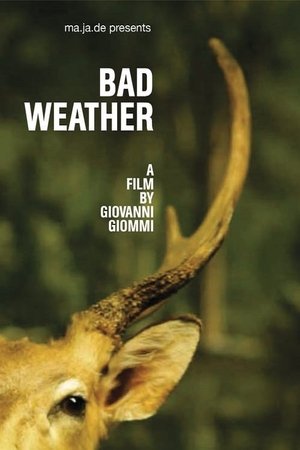
Bad Weather
Off the coast of Bangladesh in the Bay of Bengal is a tiny 'brothel island' populated by women forced to sell their bodies to men who arrive by the boatload. Each of the women came to inhabit the 100m long and 10m wide piece of land for different reasons, whether through a sister, the need for money, or in search of love and affection, but for all of them it is a life tougher than they could have imagined. Deepening their troubles is the island's existence at the frontline of climate change, and with the increase of cyclones, floods and soil erosion the prospect of losing their homes, and the island itself, is closer than ever. Beautifully shot and subverting expectation, Bad Weather is a documentary that carves out a message of hope in extreme adversity.
2011
Whores' Glory
In Bangkok, Thailand, women punch a clock and wait for clients in a brightly lit glass box; in the red-light district of Faridpur, Bangladesh, a madam haggles over the price of a teenage girl; and in the border town of Reynosa, Mexico, crack-addicted women pray to a deity named Lady Death.
2011
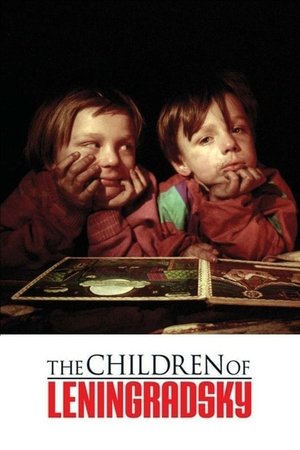
The Children of Leningradsky
Since the fall of the Iron Curtain an estimated four million children have found themselves living on the streets in the former countries of the Soviet Union. In the streets of Moscow alone there are over 30,000 surviving in this manner at the present time. The makers of the documentary film concentrated on a community of homeless children living hand to mouth in the Moscow train station Leningradsky. Eight-year-old Sasha, eleven-year-old Kristina, thirteen-year-old Misha and ten-year-old Andrej all dream of living in a communal home. They spend winter nights trying to stay warm by huddling together on hot water pipes and most of their days are spent begging. Andrej has found himself here because of disagreements with his family. Kristina was driven into this way of life by the hatred of her stepmother and twelve-year-old Roma by the regular beatings he received from his constantly drunk father. "When it is worst, we try to make money for food by prostitution," admits ...
2005
Born into Brothels: Calcutta's Red Light Kids
Documentary depicting the lives of child prostitutes in the red light district of Songachi, Calcutta. Director Zana Briski went to photograph the prostitutes when she met and became friends with their children. Briski began giving photography lessons to the children and became aware that their photography might be a way for them to lead better lives.
2004
A Kind of Childhood
This is a film which challenges our notions of child labor. It peeks into a world where the concept of childhood as we know it has no meaning, where children support their parents, and where work is just another part of growing up. This is Dhaka, Bangladesh. Following several children over a period of six years, A KIND OF CHILDHOOD is an attempt to focus on the realities of child labor, with real children, their struggles and dreams.
2002
Rahman: Father of Bengal
Documentary about the politician Sheikh Mujibur Rahman.
1973
Surviving Cyclones
Using film footage shot by the Genevese film director, Fernand Reymond, in Bangladesh in 1972, this documentary film describes the cyclone prevention programme drawn up by the governmental authorities and the League of Red Cross Societies. It particularly depicts the cyclone warning system set up to protect the population. (League Film Library Catalogue Supplement No. 2, p. 39)
1973

The Concert for Bangladesh
A film about the first benefit rock concert when major musicians performed to raise relief funds for the poor of Bangladesh. The Concert for Bangladesh was a pair of benefit concerts organised by former Beatles guitarist George Harrison and Indian sitar player Ravi Shankar. The shows were held at 2:30 and 8:00 pm on Sunday, 1 August 1971, at Madison Square Garden in New York City, to raise international awareness of, and fund relief for refugees from East Pakistan, following the Bangladesh Liberation War-related genocide.
1972

Slave Trade in the World Today
The film documents modern slave trade through a number of African countries, under dictatorship rule. The filming was conducted both in public places, and sometimes with the use of hidden cameras, for high impact scenes of nudity, sex, and violence - and a few surprises, as slaves made out of peregrins to Asia, and slave traders paid in traveller checks.
1964
Silent Verdict
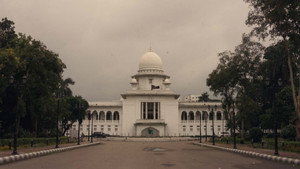
Silent Verdict is a hard-hitting human rights documentary that exposes the injustice surrounding rape cases in Bangladesh. Through powerful re-enactments and survivors’ own testimonies, it revisits five infamous cases that shook the nation yet remain unresolved. Legal experts and doctors reveal the deep loopholes in law and medicine that fail victims, while data and research underscore the scale of the crisis. Balancing stark revelations with a vision for change, Silent Verdict is both an unflinching confrontation of truth and a call to action for justice.