Watch Bangla Surf Girls (2021) Online Free
Three working-class teenage girls in a port city in Bangladesh escape daily hardships and stifling family lives by riding waves on their surfboards and grabbing hold of the fleeting and thrilling sense of freedom that brings.
More Like This
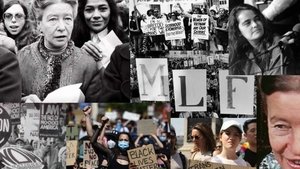
Le deuxième sexe : Sur les traces de Simone de Beauvoir
Published in 1949, The Second Sex became the bible of global feminism. An essential work that passionately advocates for gender equality, women's independence, and the liberation of morals. Today, how does this seminal work continue to resonate in our contemporary world? Conceived as an initiatory journey to the origins of Simone de Beauvoir's thinking, the film The Second Sex: In the Footsteps of Simone de Beauvoir takes us to the United States, to the places that inspired the philosopher and nourished her theories. An American road trip bringing together the worst and the best, predatory capitalism and mad love. A unique reinterpretation in the company of the great thinkers of our century.
2025
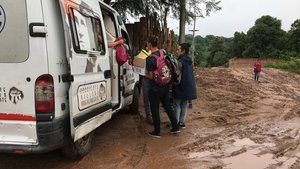
Las Brigadistas
tells the experience of a group of medical students who travel to the north of Argentina to assist different indigenous communities that suffer the dispossession of their lands and structural poverty.
2024

Sisters of Wrestling
Sisters of Wrestling paints an intimate portrait of Azaelle, LuFisto and Loue O'Farrell, three ring warriors for whom wrestling is both a passionate love and an outlet from everyday life.
2023

Pussy Riot: Rage Against Putin
Pussy Riot make a comeback after a long absence to stand with Ukraine. Their story and their struggle are told through archival footage and interviews with the group’s members.
2023
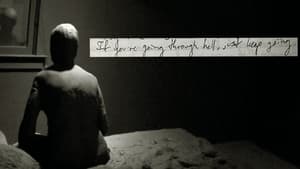
The Afterlife
A young adult's first-hand account of "accidentally becoming human again" after, and with, trauma induced depression. Lo-fi, vulnerable, and uniquely youthful, "The Afterlife" is a melancholic affirmation of life after death.
2023
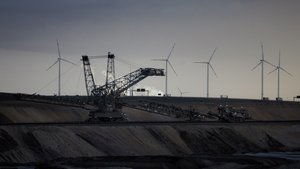
The Unpredictable Factor
In today's climate debate, there is only one factor that cannot be calculated in climate models - humans. How can we nevertheless understand our role in the climate system and manage the crisis? Climate change is a complex global problem. Increasingly extreme weather events, rising sea levels, and more difficult living conditions - including for us humans - are already the order of the day. Global society has never faced such a complex challenge. For young people in particular, the frightening climate scenarios will be a reality in the future. For the global south, it is already today. To overcome this crisis, different perspectives are needed. "THE UNPREDICTABLE FACTOR" goes back to the origins of the German environmental movement, accompanies today's activists in the Rhineland in their fight against the coal industry and gives a voice to scientists from climate research, ethnology and psychology.
2022
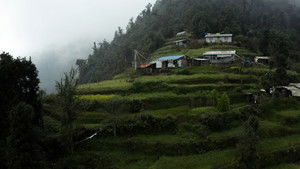
Helambu
A stranger arrives in a remote Himalayan valley seeking to provide access to education to the community.
2022

Vous serez parés pour le vent
In Saint Pierre et Miquelon, a tiny French archipelago in the North Atlantic, a group of teenagers have just graduated from high school. Urged to continue their studies, it's time to leave for mainland France and Canada. Manon, Evie, Enguerrand and their friends are about to spend their last summer on the islands together. In the turmoil that precedes this leap into the void, these budding adults, like previous generations, are confronted with this particular moment in their lives. They'll have to leave. But they are islanders, and this departure has the air of exile, of uprooting with no certainty of return. As they leave adolescence, they will be uprooted from their land, crossing a border that is both symbolic and physical. The idea is that something happens here that is more observable than elsewhere, something that concentrates and accelerates the transformations of the teenagers' personalities.
2022

I’m Not a Slut, I’m a Journalist
More than twenty sports journalists – working mainly on television (BeIN Sports, RMC Sport, France Télévisions, Canal+, TF1) but not only (L'Équipe, Radio France) – testify to the anger, despondency and helplessness they felt when they had to endure the “Yucky jokes”, the « culture de boy’s club » and degrading insults on social networks, while at the same time the presence of women in these programs and in the press has increased. Without forgetting the misogynistic comments, the heaps of small sentences on the physique or the competence, the sexual innuendos… until the moral or sexual harassment.
2021
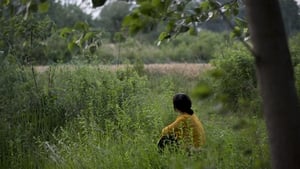
Still Tomorrow
Yu Xiuhua was raised to hope for little from her life in the rural Chinese province of Hubei. At 19, Xiuhua’s mother encouraged her to marry a man nearly twice her age, fearful no one else would accept a wife with Xiuhua’s condition — cerebral palsy. But as her 20th anniversary approaches, Xiuhua’s poetry goes viral, and she becomes the voice of a rising feminist movement throughout China.
2017

Soldier
A young man decides to join the army. He becomes the drummer in the military band, and his everyday life is now a combination of military training and music. What does the Argentine Army do these days, more than thirty years after the dictatorship? What does it mean to be a soldier in a country without wars?
2017

Los posibles
Santiago Mitre co-directs his first movement following The Student together with choreographer Onofri Barbato. Although it would have been more accurate to say “his first film-story-adventure-movie-great movie following The Student”, the word movement fits perfectly in Los posibles, the most overwhelmingly kinetic work Argentine cinema has delivered in many, many years. The film deals with the adaptation of a dance show directed by Onofri together with a group of teenagers who came to Casa La Salle, a center of social integration located in González Catán, trying to find some refuge from hardship. Already entitled Los posibles, the piece opened in the La Plata Tacec and was later staged in the AB Hall of the San Martín Cultural Center. Now, it dazzles audiences out of a film screen, with extraordinary muscles and a huge heart: Los posibles is a rhapsody of roughen bodies and torn emotions. Precise and exciting, it’s our own delayed, necessary, and incandescent West Side Story.
2013
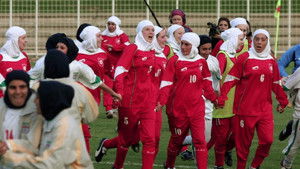
Football Under Cover
David Asmmann's Football Under Cover documents the hard work involved in setting up an exhibition soccer match, known as a "friendly," between a German girls squad and Iranian women's team. In addition to showing how the two groups come from very different cultures, the documentary showcases what playing the game means to the members of both teams, and displays how passionate the fans of these two squads are.
2008

Blood and Water
When the 2004 tsunami hit the coast of Sri Lanka, 65-year-old Anton Ambrose's wife and daughter were killed. "In five minutes," he says, "I lost everything." A year later, Anton returns to Sri Lanka. With him is his nephew, award-winning filmmaker Rohan Fernando. A Tamil, Anton moved to California in the 1970s and became a very successful gynecologist. His daughter, Orlantha, made the opposite journey, returning to Sri Lanka where she ran a non-profit group that gave underprivileged children free violin lessons. Blood and Water is the story of one man's search for meaning in the face of overwhelming loss, but it is also filled with improbable characters, unintentional comedy and situational ironies.
2007

Thumbsucker - Behind the Scenes
2006

Homeland
Following four Lakota families over three years, Homeland explores what it takes for the Lakota community to build a better future in the face of tribal and government corruption, scarce housing, unemployment, and alcoholism. Intimate interviews with a spiritual leader, a grandmother, an artist, and a community activist from South Dakota’s Pine Ridge Indian Reservation reveal how each survives through family ties, cultural tradition, humor, and a palpable yearning for self-reliance and personal freedom.
2000
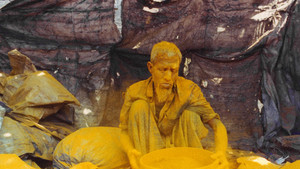
Megacities
Megacities is a documentary about the slums of five different metropolitan cities.
1998

Morte e Vida Severina
The story of Severino, a man who tries to escape the misery and the drought prevailing in the rural backcountry of the Northeast of Brazil. He heads for Recife, passing through desert and forest regions, expecting to find a better life.
1977
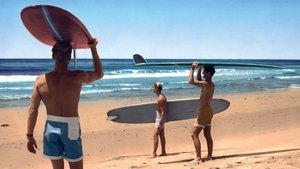
The Endless Summer
Bruce Brown's The Endless Summer is one of the first and most influential surf movies of all time. The film documents American surfers Mike Hynson and Robert August as they travel the world during California’s winter (which, back in 1965 was off-season for surfing) in search of the perfect wave and ultimately, an endless summer.
1966

Land Without Bread
An exploration —manipulated and staged— of life in Las Hurdes, in the province of Cáceres, in Extremadura, Spain, as it was in 1932. Insalubrity, misery and lack of opportunities provoke the emigration of young people and the solitude of those who remain in the desolation of one of the poorest and least developed Spanish regions at that time.
1933