Watch Use enough DEATH (2013) Online Free
It has been seven years since I have had a new movie; not since 2005 when I filmed Death Rush. In between I produced two excellent movies, “Greatest Hippo Charges” and “Greatest Buffalo Hunts” which were composites of previously viewed footage. In Use Enough Death…all of the footage is brand new!
Cast
Mark Sullivan
More Like This

Prey
Young ecologist demonstraters travel to the countryside to confront hunters. But one of them is willing to do anything to stop them.
2025

The Way Back
The Year of Return is an initiative of the government of Ghana that is intended to encourage African diasporans to come to Africa to settle and invest in the continent. This film documents one diasporan family as they return to Africa.
2024
Blood Lions
Every single day in South Africa at least two to three captive bred or tame lions are being killed in canned hunts. And hundreds more are slaughtered annually for the lion bone trade. The Blood Lions story is a compelling call to action to have these practices stopped.
2015
Hitler's Jurassic Monsters
This is the untold story of a Nazi vision, that went far beyond the military conquest of European countries. As part of their crazed dream to create a thousand-year Reich they developed detailed blueprints for Aryan settlements and vast hunting parks for ‘Aryan’ animals. Goering and Himmler employed Germany’s best scientists to launch a hugely ambitious programme of genetic manipulation to change the course of nature itself, both in the wild and for domestic use. In a fascinating blend of politics and biology, Hitler's Jurassic Monsters is the true and asthonishing story of how the Nazis tried to take control of nature and change the course of evolution.
2014
Wildlife South Africa 3D
In this three part documentary we look at all topics South Africa has to offer. THE BIG FIVE focuses on the kings of animals, lion, rhinoceros, elephant, leopard and the African buffalo. Armed with 3D cameras, we visited the Kings of the savannah and the jungle, where we sensed the fascination that emanates from the largest animals in the wild. In SAFARI we look behind the scenes of a park and found out what it means to pursue eco-tourism and just what the opportunities and the risks are. Finally, we discover the WEST CAPE region and its unique flora and fauna, swim with whales and sea lions, follow penguins and – as a highlight – we meet the white sharks. Join us on a spectacular 3D journey.
2012
Kaali Goes for Seal Hunting
One day in the lives of an average Greenlandic family, which happens to be of great importance for 8-year old Kali - he's about to catch his first prey with the harpoon. The whole family is looking forward for the huge step in boy's maturation.
1985
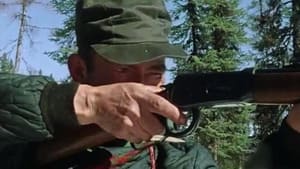
Cree Hunters of Mistassini
An NFB crew filmed a group of three families, Cree hunters from Mistassini. Since times predating agriculture, this First Nations people have gone to the bush of the James Bay and Ungava Bay area to hunt. We see the building of the winter camp, the hunting and the rhythms of Cree family life.
1974
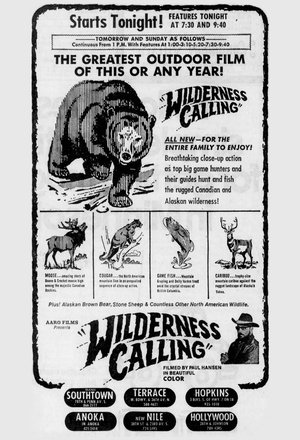
Wilderness Calling
A young boy from the Dakota prairies grows up heeding the "call of the wilderness." He hunts for pheasant in the Illinois cornfields; ducks and geese in the northern lakes; deer in the Dakota Bad Lands; mountain sheep, goats, caribou, moose, and mountain lions in British Columbia and the Yukon; and brown bears on the Alaskan peninsula. He fishes in British Columbia's mountain streams for grayling and along the Bering Sea coast for trout. The film includes footage of swans, eagles, cnd ptarmigans; a beaver colony repairing a dam; battling rams; and sheep at rest in the mountains.
1969
Nuestros safaris
Argentinian short film which shows local fauna and hunting.
1969
Rivers of Fire and Ice
A Wildlife Safari through Africa.
1968

The Outdoorsman
A group of outdoorsmen demonstrate duck hunting as a preliminary to traveling the various hunting and fishing centers of the world. They begin their journey with a trip to the Rocky Mountains to hunt elk and mountain lions and to fish in the freshwater lakes. They travel to Lac la Ronge in Saskatchewan and to Anchorage and the Katmai Peninsula in Alaska to fish for trout, salmon, and grayling and hunt moose and bear. In the Arctic, the hunters go with a group of Eskimos for their biggest catch, the polar bear. The hunters travel south by plane, to the Fishing Club of Panama to fish for marlin, tuna, shark, and dolphin in the Gulf of Panama. In South Africa and the Zambesi River basin, they often hunt with only a camera. Accompanied by native beaters, they hunt elephants, antelope, buffalo, crocodiles, and hippopotami. As conservationists they capture some almost extinct white rhinoceros and take them to a game preserve for protection.
1968
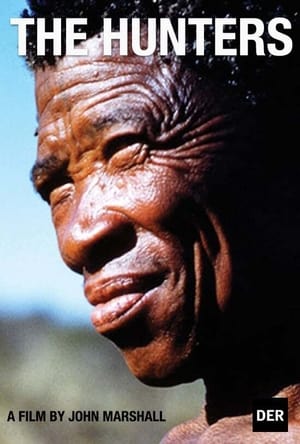
The Hunters
An ethnographic documentary following four Ju/’hoansi (!Kung) men during a multi-day giraffe hunt in the Kalahari Desert, filmed during the Smithsonian–Harvard Peabody expedition of 1952–53.
1957
The Last Wilderness
Archery expert Howard Hill and a cameraman go to Wyoming to film this wild-animal three-reel short. Besides the scenery, the scenes include a buffalo killed by an arrow shot by Hill (for food); a wildcat and a coyote in a battle, and a fight-to-the-death between a mother bear protecting her cubs against a killer male bear.
1935
Duck Hunters' Paradise
This short follows two duck hunters in the Sacramento River Valley.
1933

Uti
Snapshots of colonial life around Tamil Nadu, plus a visit to the Toda tribe.
1925

Our Greatest Ambassador
Richly detailed record of the Prince of Wales' Indian tour.
1922

Edward Prince of Wales' Tour of India: Bikaner, Lucknow, Benares, Nepal and Great Tiger Shoot
The future Edward VIII enjoys receptions, playing polo and hunting tigers on his royal tour.
1922

Duke of Connaught's Indian Tour
The Duke rides an elephant as he ventures on safari in Bengal.
1921
Wolf Hunting in Russia
Russian hunters on horse and a pack of borzois hunt down and kill a wolf.
1910
Lion Hunting
Two hunters set out on safari with their African guide. They observe zebras, an ostrich, and a hippopotamus, capture a monkey, and camp for the night. After a lion kills their goat and horse, they shoot it by the water’s edge and later kill a second. The animals are skinned, and the hunters relax with cigarettes beside their trophies. (Note: Produced by Nordisk Film in 1907, Løvejagten gained notoriety because founder Ole Olsen purchased lions from Copenhagen Zoo, released them on an island, and filmed their killing. Supplemented with zoo footage to simulate Africa, the film caused public outrage yet drew huge audiences, establishing Nordisk’s reputation worldwide.)
1908