Watch Un viaje hacia nosotros (2021) Online Free
Spanish actor Pepe Viyuela embarks on a personal journey on the trail of his grandfather Gervasio, a soldier in the Republican Army during the Spanish Civil War.
Cast
Pepe Viyuela, Camila Viyuela
More Like This

Violets
In 1945, beneath the oppressive shadow of the Francoist dictatorship, Juan, a university teacher assistant, meets Manuel during a chance encounter at night in a park. With their initial reservations, a complex love story unfolds between them, shaped by the turbulent political climate and the misunderstanding of those around them.
2025
Fragmentos de otra historia
2025
Ni una sola flor
2025

Staden brinner
When a group of Eritrean refugees arrive in the small town of Härnösand there is a growing sentiment against them from the locals. 17-year old Sara Westin decides to found an anti-racist group to combat these feelings but when Sara and her best friend are murdered by Sara's Eritrean ex-boyfriend the feelings in the city reach a boiling point.
2025

Aisha's Story
A Palestinian grain miller in a Jordanian refugee camp safeguards her culture and shares her people’s history through food prepared with love, longing, and sumud—the Palestinian spirit of steadfastness.
2025

Corps et âme
Aïcha is 59. She's been through some hard times. She decided to turn to helping others. Seeing firsthand the government's lack of support, she tries in her own way to remedy the lack of care for refugees. She dedicates the majority of her time to helping refugees in the greater Paris area, first as part of the "Solidarité Migrants Wilson" organization operating in the suburbs north of Paris, then in the nonprofit she founded, "la Team du Coeur", with the help of one of her daughters, her son-in-law, a Sudanese refugee himself, and a friend. Together, they offer on-street support and enter refugee camps daily to talk, provide material support and a listening ear.
2024

Agustina González. La zapatera que miraba a las estrellas
2023
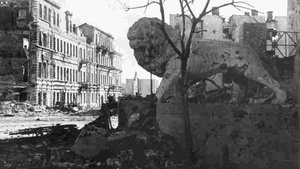
Stalingrad - Stimmen aus Ruinen
Featuring excerpts from diaries and letters written by local residents and soldiers from both sides, the documentary tells the story of the Battle of Stalingrad through the voices of those who lived it.
2023

To See El Aaiún
In the depths of the Algerian desert the Sahrawi people have been dwelling in the refugee camps for over 40 years. Camps gradually turned into settlements, named after towns in their homeland Western Sahara. One of them is called El Aaiún.
2020

Hamada
Filled with vitality, humor and unexpected situations, Hamada paints an unusual portrait of a group of young friends living in a refugee camp in the middle of nowhere. Western Sahara is known as “the last colony in Africa” and this conflict is the longest and one of the least known ongoing disputes in the continent, but the Sahrawi people refuse to become invisible.
2019
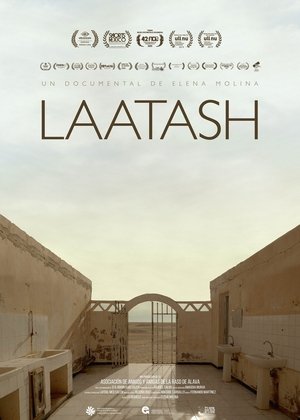
Laatash
The Saharawi women face the thirst of the hamada, the curse of the desert, every day. They’ve built their refuge in a land where no one could survive before. For more than forty years they’ve been holding out and taking care of their people there. They ensure every drop of water is distributed according to the needs of each family … and they wait. But there’s an even more terrible thirst in their throats, for which they find no relief.
2019
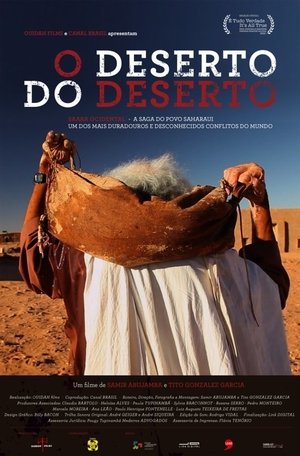
The Desert of the desert
'The Desert of the Desert' is a feature documentary about one of the longest-running and least- known colonial conflicts and the plight of the Sahrawi desert nomads of Western Sahara since Morocco's 1975 invasion. Shot in Jan./Feb. 2014 in the Saharawi Liberated Territories of Western Sahara, and in the Saharawi Refugee Camps in Tindouf, Algeria, the film shows the saga of the Sahrawis, their struggle to regain their homeland and the sad paradox of a nomadic people forced to live in confinement. During production, the crew made a rare treck through 3,000 kilometers of bleak and dangerous desert, becoming unwitting participants in the conflict when their jeep was blown up by an anti-tank mine less than a kilometer from their destination on Western Sahara's Atlantic coast.
2016

Coría and the sea
This is a story about women who are fighters, tenacious, hopeful, active women…who were capable of lifting, from nothingness, in the harshest landscape of the world, life. They are the Sahrawi women. 40 years ago, they were forced into exile; the men of this region, marched to war and the women created “temporary cities”: The Refugee Camps. They invented a new day to day life which made possible a sustainable existence and a hope, of one day returning home. Coría every night dreams of the sea; the majestic image of its water, the sound of its waves, are the echoes that join the people with their homeland. The will beats in the hearts of the Sahrawi women who maintain their unbreakable spirit, ever moving forward.
2014
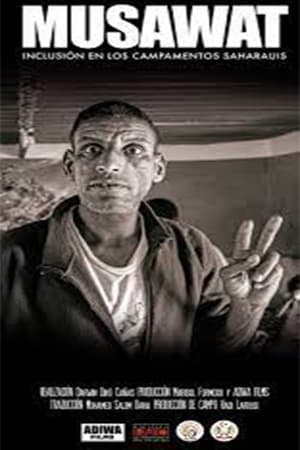
Musawat, inclusion in the Sahrawi camps
Education Center for disabled children located in the Sahrawi refugee camps in Algeria. Despite the precarious conditions in which this population lives since 40 years ago, the Polisario Front as the representative of the Sahrawi people has promoted inclusion as a way to avoid marginalization and discrimination of one of the most vulnerable populations within these territories: children with special needs. "Castro" is the man who devotes his life to this beautiful project fighting all odds: physical, psychic, social, economic, and even the incomprehensions of his own society. The Sahrawis are living (resisting) in one of the harshest deserts on Earth but Castro has the magic formula to achieve the inclusion of these wonderful beings in his society and in the rest of the world: MUSAWAT, EQUALITY.
2014
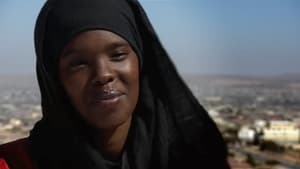
Escape from the World's Most Dangerous Place
Successful model Samira Hashi makes an emotional return to Somalia, one of the most dangerous places in the world and the place she was born. Civil war broke out in 1991, 10 days after Samira's birth, but two years later her family managed to flee the country and she grew up in the UK.Now, as Samira and the war both turn 21, she's going back for the first time to visit the people and places she left behind. The contrast with her safe and glamorous life in London could not be starker as she experiences firsthand the war's effect on a generation of young people growing up in conflict.
2012

Robbed of Truth
This is the true story of Fetim Salam, a Saharawi refugee falsely portrayed as a slave in the Australian documentary 'Stolen'. Australian filmmakers, Violeta Ayala and Daniel Fallshaw, travel to the Saharawi refugee camps in Tindouf, Algeria in 2007 and claim to discover 20,000 slaves in the camps run by the independence movement Polisario Front. Refugees are outraged for being portrayed as slaves, and humanitarian aid workers are incredulous about these allegations as they know the camps intimately. Filmmaker Carlos Gonzalez retraces their steps in search of the truth and finds a web of lies, misinformation and Moroccan operatives reshaping the truth.
2011
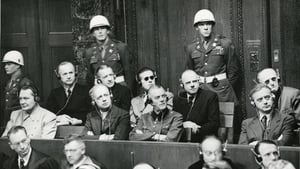
Nuremberg: The Nazis Facing their Crimes
The documentary of the Nuremberg War Trials of 21 Nazi dignitaries held after World War II.
2006
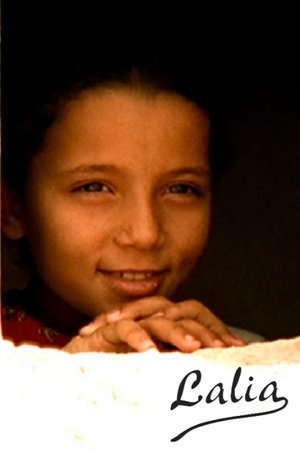
Lalia
Lalia is a Saharaui girl who lives in a refugee camp in Algiers. She has only heard her grandmother and grandfather talk about her country, about the Sahara, that was taken away by Morroco. She dreams of one day seeing the ocean, seeing her real country. The reality she lives in is different... the uncertainty of the refugee camps, the political unbalance... but she is strong... and she knows that there can be change... she won't stop dreaming, and she won't stop longing..
1999

Band of Exile
Here in Toronto, four young Somali refugees are finishing high school. What did they bring with them? What did they find in Canada? Their testimonies, about us and about themselves, interspersed with newsreel footage and sequences of a theatrical creation in which they put all their soul, make them immediately endearing and overturn many prejudices held against refugees. A film that makes you want to get to know them better.
1994
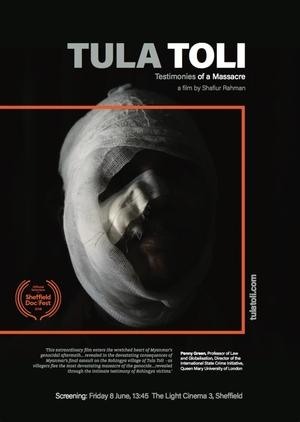
Testimonies of a Massacre: Tula Toli
Filmed along the Myanmar-Bangladesh border and within Rohingya refugee camps, Shafiur Rahman’s documentary on the 2017 Tula Toli massacre exposes chilling interviews and evidence of Myanmar military’s premeditated atrocities. The film documents mass killings, sexual violence, and the systematic destruction of the village of Tula Toli, highlighting a humanitarian crisis that forced over half a million people—many of them children—to flee in an exodus of historic scale.