Watch Twenty Years of Academy Awards (1948) Online Free
More Like This
Mekong
Shared intimacy mingles with unabashed voyeurism in a distilled, complex rumination on the pleasures and problems of gazing. Mark LaPore had intended to create a soundtrack for this film, but never did. However, it was initially shown and circulated as a silent work, so it was decided to release MEKONG into regular distribution as-is. – Mark Toscano. Preserved by the Academy Film Archive in 2014.
2002
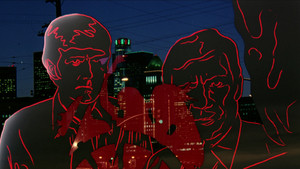
Trouble in the Image
Optical printing pioneer Pat O’Neill uses “his skills in special effects production to extrapolate metaphysical meaning from the ordinariness of industrialized culture” (Scott Stark). In O’Neill’s playful film, “trouble in the image” may take the form of a disturbing moment in a narrative, how-to instructions for creating an image, or pictures that break apart and lose their literal meaning. O'Neill: “The film [is] made up of dozens of performances dislodged from other contexts. These are often relocated into contemporary industrial landscapes, or interrupted by the chopping, shredding, or flattening of special-effects technology turned against itself. The reward is to be found in immersion within a space of complex and intricate formal relationships”. Preserved by the Academy Film Archive in 2016.
1996
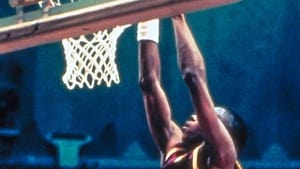
Hoop Dreams
Every school day, African-American teenagers William Gates and Arthur Agee travel 90 minutes each way from inner-city Chicago to St. Joseph High School in Westchester, Illinois, a predominately white suburban school well-known for the excellence of its basketball program. Gates and Agee dream of NBA stardom, and with the support of their close-knit families, they battle the social and physical obstacles that stand in their way. This acclaimed documentary was shot over the course of five years.
1994
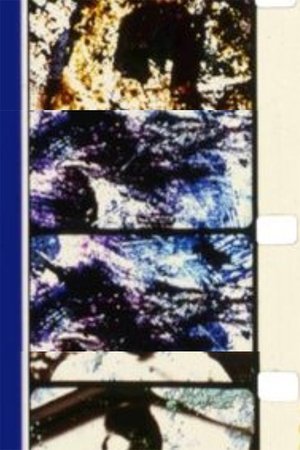
Cannot Exist
The hand-painting of this film is interrupted by, and interspersed with, a geometrically structured Mask of Death (one of those frightening human idea-shapes of dying) immediately caught-up in threads of streaming, polarized crystals of Light (elaborately step-printed, with simultaneous frame-to-frame dissolves and printer "pull-backs" creating an effect as if the room in which the film is being viewed was inhaling viscous strands of Life's chemical material). The blurred photo-image of a person appears briefly superimposed on these "streamings": then there is a short visual "exhale" of this "crystallized" light, as the screen appears to re-absorb its imagery and resolve itself into a pale violet scattering of dust, is it? ... a nebulae, perhaps – i. e., some semblance both earthly and cosmic and (as such) as enigmatic as "the face of God." Collaboration with Sam Bush.
1994

Light Traps
In the 1970s, Californian artist Louis Hock created a number of studies in the effects of pure colour. The late 1960s saw the rise of the ‘colour field’ vogue which arose in abstract painting in reaction to the emphasis on individual expressive gestures in Abstract Expressionism. ‘Colour field’ artists like Mark Rothko and Barnett Newman sought to empty the image plane out into broad, flat areas of colour. With its humming bars of pure hues, Light Traps is like a moving ‘colour field’ painting – a ‘colour field’ film. Preserved by the Academy Film Archive in 2013.
1975
Deus Ex
I have been many times very ill in hospitals; and I drew on all that experience while making DEUX EX.
1971
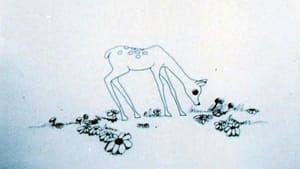
Bambi Meets Godzilla
A deer, disillusioned by the consumerism that defines his life. A lizard, ostracized from society, forever wandering. A chance meeting in the middle of a field. Who will survive? And who will transcend existence? Preserved by the Academy Film Archive in 2009.
1969
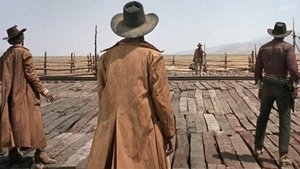
Once Upon a Time in the West
As the railroad builders advance unstoppably through the Arizona desert on their way to the sea, Jill arrives in the small town of Flagstone with the intention of starting a new life.
1968
Boy and Crows
An early short film by Penelope Spheeris about a boy enjoying the age-old pleasures of making a wish on a dandelion. Preserved by the Academy Film Archive in 2016.
1968
Grateful Dead
A chaotic film featuring the Grateful Dead. The songs that are included are Sitting on Top of the World, Good Morning Little Schoolgirl, Cold Rain and Snow, and something that might be Viola Lee Blues. Preserved by the Academy Film Archive in 2007.
1967
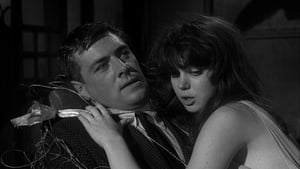
Spider Baby
In a dilapidated rural mansion, the last generation of the degenerate, inbred Merrye family lives with the inherited curse of a disease that causes them to mentally regress from the age of 10 or so on as they physically develop. The family chauffeur looks out for them and covers up their indiscretions. Trouble comes when greedy distant relatives and their lawyer arrive to dispossess the family of its home.
1967

Shoppers Market
UCLA Student Color Film. "a documentary film of marked lyrical and experimental tendency which was photographed and recorded in a L.A. supermarket. It consists of five sequences: 1) description of people 2) Comedy 3) choreographing natural movements 4) transformation fo visual reality 5) empathy". Preserved by the Academy Film Archive in 2011. Filmed at Shopper's Market, Santa Monica, CA.
1963
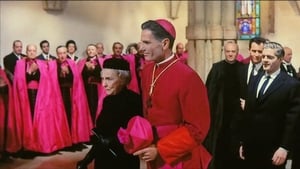
The Cardinal
A young Catholic priest from Boston confronts bigotry, Nazism, and his own personal conflicts as he rises to the office of cardinal.
1963
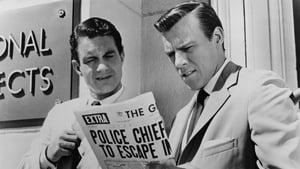
Underworld U.S.A.
A bitter young man sets out to get back at the gangsters who murdered his father.
1961
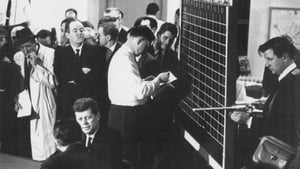
Primary
Primary is a documentary film about the primary elections between John F. Kennedy and Hubert Humphrey in 1960. Primary is the first documentary to use light equipment in order to follow their subjects in a more intimate filmmaking style. This unconventional way of filming created a new look for documentary films where the camera’s lens was right in the middle of what ever drama was occurring. Preserved by the Academy Film Archive in partnership with The Film Foundation in 1998.
1960
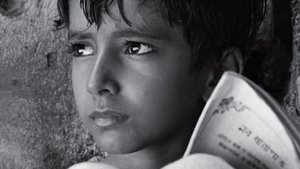
Pather Panchali
Impoverished priest Harihar Ray, dreaming of a better life for himself and his family, leaves his rural Bengal village in search of work. Alone, his wife, Sarbojaya, looks after her rebellious daughter, Durga, and her young son, Apu, as well as Harihar's elderly aunt Indir. The children enjoy the small pleasures of their difficult life, while their parents suffer the daily indignities heaped upon them.
1955
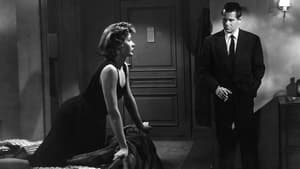
The Big Heat
After the suspicious suicide of a fellow cop, tough homicide detective Dave Bannion takes the law into his own hands when he sets out to smash a vicious crime syndicate.
1953
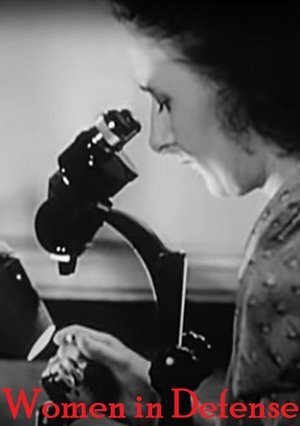
Women in Defense
Short documentary extolling the virtues and necessity for women to participate in America's preparation for war, showing women working in scientific, industrial, and voluntary-services activities. Preserved by the Academy Film Archive in 2008.
1941
Calling All Workers
Documentary short about the government census of unemployed but employable workers. Preserved by the Academy Film Archive, Academy War Film Collection, in 2009.
1941
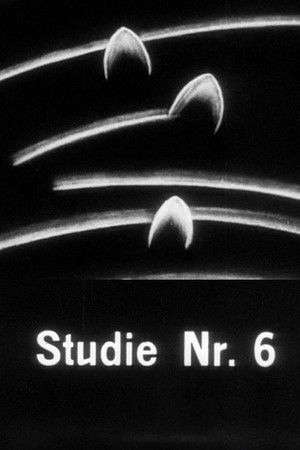
Study No. 6
The first Studies were synchronized with records (Fischinger made a total of 13 Studies all without sound). It was only with the introduction of sound, beginning with Study No 6 that the films did full justice to this musical principle. The play of the white lines, the arcs, and the upside-down U’s running hither and thither like ballet dancers was brought into perfect synchronization with the music, and thus the films offered an abstract illustration of the melodies. Study No 6 is certainly the best of his films in terms of forms. - Hans Scheugl and Ernst Schmidt, Jr. Preserved by the Academy Film Archive in 2001.
1930